Baharat, the seven-spice blend
Cloves, black pepper, allspice and cinnamon: the blend under most Syrian dishes. What goes into it, where the name came from, and how to buy it at the counter.
- Where to eat it
- Sold loose at herbalists' counters in Aleppo and Damascus; on the table in kebab mince, in makanik, in stuffed vegetables and in rice.
- Price
- Variable — ask the price by the kilo at the counter
- When it is eaten
- All year; freshest when it is ground for you at the counter
When a Syrian recipe says baharat it means a blend, not a single plant. In Arabic bahar is a spice and baharat is the plural; the word came in from Persian. Four items carry the mix: cloves, black pepper, allspice and cinnamon. Everything after that changes with the counter, the city and the dish.
What goes into it
Alongside the four come coriander, cumin, cardamom, nutmeg, ginger, turmeric and ground red pepper. The proportions are not fixed. Two herbalists in the same souq will sell you two different blends.
The version that settled in the Levant is named after its count: sabaa baharat, seven spices. The list is cinnamon, black pepper, white pepper, allspice, cloves, nutmeg and coriander. Some makers add ground red pepper or cassia bark on top of that, and the name stays at seven anyway.
Blends for sweets are made separately, and there cinnamon, anise, mahlab, cardamom, saffron and mastic take the lead. Dipping the meat jar into a tray of pastry is the mistake cooks warn about most.
Where the name came from
The blends are older than the word. Kitab al-Tabikh, written in the 10th century by Ibn Sayyar al-Warraq, and Al-Wusla ila’l-Habeeb, written in Aleppo in the 13th century, both give recipes for spice mixtures — but they are not called baharat. Their name is atraf al-teeb. One recipe in Al-Wusla lists nutmeg, cloves, rose buds and green cardamom. Baharat only came to mean a spice mix under the Ottomans.
One part of today’s blend is far more recent. Allspice reached the region from Central America in the 16th century, and appears in no recipe written before that. So one of the four core items joined the table centuries after the blend itself.
Which dishes carry it
This mix is what gives kebab halabi its identity: the minced lamb is worked with the city’s own blend, and what sets the plate apart is spice rather than sauce. In makanik, the small fried sausages, cinnamon and cloves come forward. Stuffed vegetables, rice, lamb stew and lentil soup all take their share from the same jar.
There is an instructive counter-example. No blend goes into the kebab of Deir ez-Zor: salt and a pinch of black pepper, and nothing else, because the meat is not meant to be covered. The mix is a choice, not a rule.
Buying it at the counter
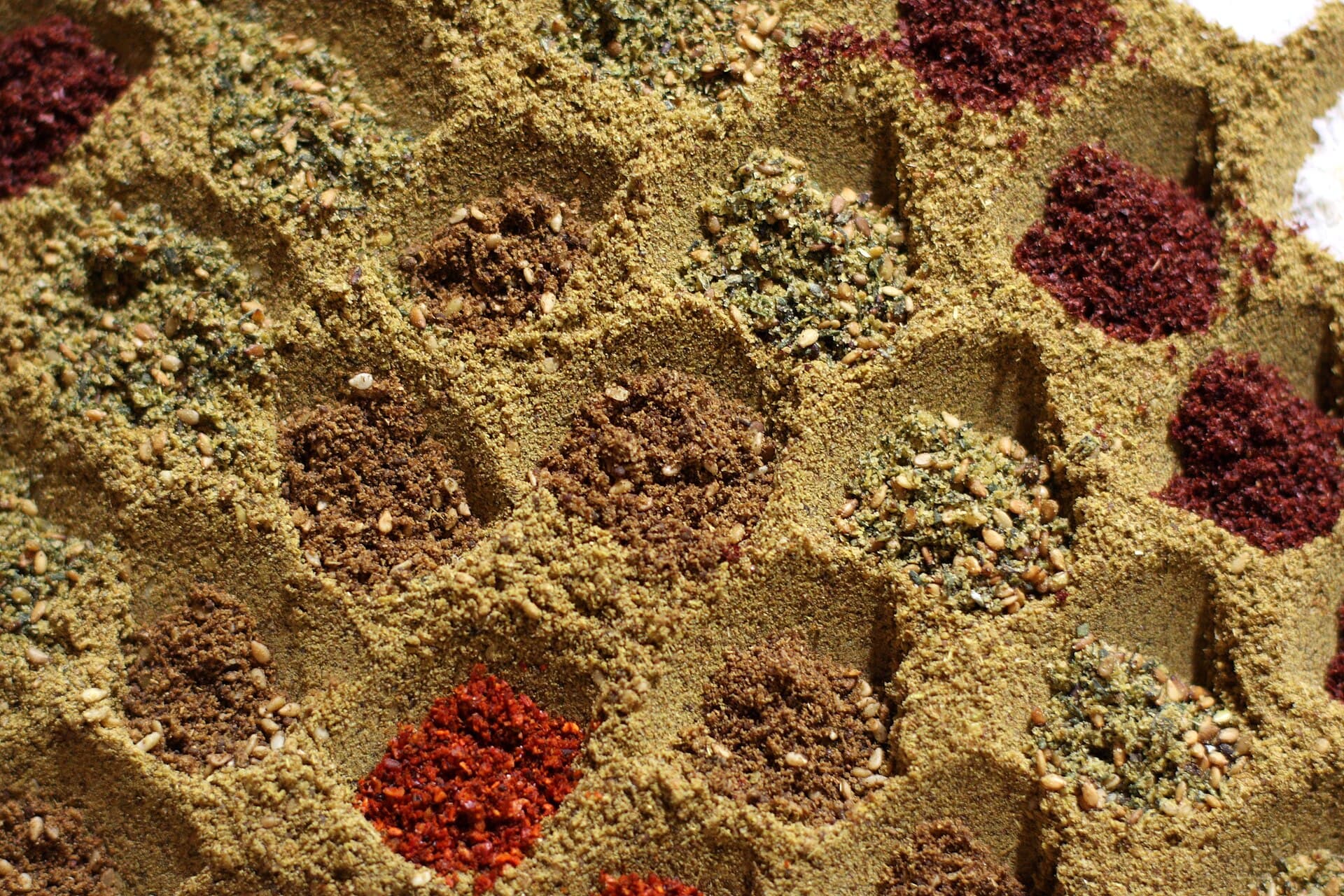
At the herbalist the blend sits open on a tray, and in most shops it is ground in front of you. Having it ground rather than buying a packet is worth it. The aroma is at its strongest for a few weeks after grinding and drops away quickly after that.
The colour should be a matt brown. A powder tending to bright orange usually means a heavy hand with ground red pepper; it makes the mix cheaper and turns the taste towards pepper. You can say how much cinnamon you want, and the blend is adjusted to order. Keep the jar sealed and cool.
Tips
- Skip the packet and have it ground at the counter — the aroma goes within weeks
- The meat blend and the pastry blend are two different things; say which you want
- The colour should be matt brown; bright orange means heavy red pepper
- Buy a small amount and keep it sealed and cool
Transparency
- How this was chosen
- Two kinds of record live here: the dish itself, and the place that serves it. Both are chosen and written by hand; ranking is not for sale and there are no sponsored entries. If a price range is not known for certain, it says so. Venues that serve alcohol are not listed on this site at all.
- Facts checked
- September 2026
- Last updated
- September 15, 2026