Choereg — Aleppo’s Armenian Sweet Bread
A braided sweet bread of milk and eggs, scented with mahlab. It reached Aleppo with the city’s Armenian bakeries and now sits on counters right across it.
- Where to eat it
- At bakeries in Aleppo's Armenian quarters all year; at home on Easter morning, and sliced beside tea through the day.
- Price
- Variable — ask the price per loaf at the bakery
- When it is eaten
- Easter week; the morning batch is gone by afternoon
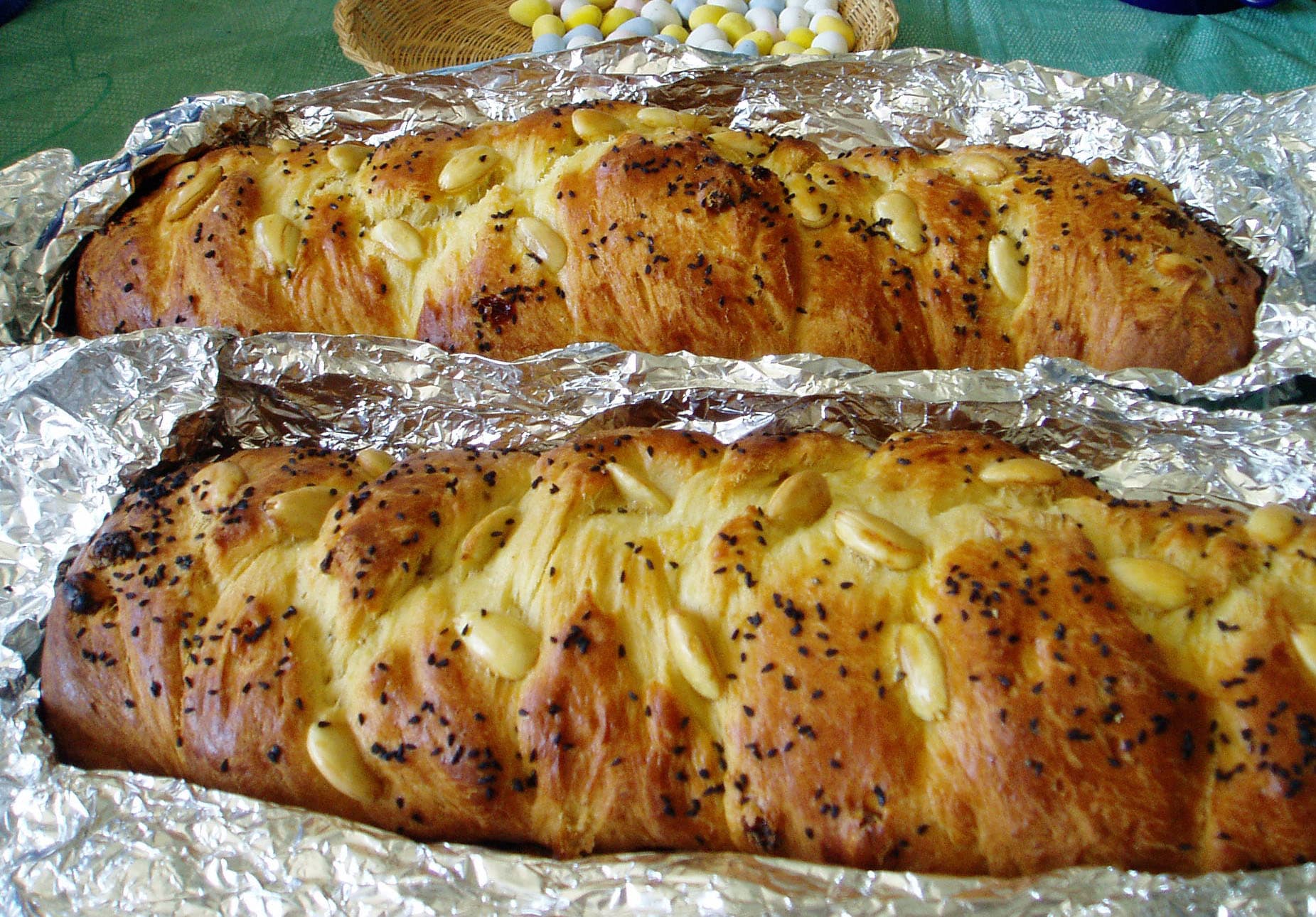
A braided sweet bread made with milk and eggs. It is brushed with egg and scattered with sesame before baking, and the smell comes from mahlab; some bakers put mastic in the dough as well. In Aleppo it is on the counter all year, but its real place is the Easter table.
What that smell is
Mahlab. The spice comes from the kernel of a wild cherry and sits somewhere between almond and cherry. It is what separates choereg from every other sweet bread. Where mastic goes in, the scent turns more resinous. The braid is worked from three strands or six, and the egg wash and sesame go on just before the loaf enters the oven.
How it reached Aleppo
With the bakeries of the Armenian community that settled in the city after 1915. Aleppo’s Armenians became known for baking, and choereg spread from their counters into the rest of the city; today bakeries with no Armenian connection sell it too. The names trace the same journey: choereg and katnahoonts in Armenian, tsoureki in Greek, paskalya coregi in Turkish. All three are heard in Aleppo.
How it differs from maarouk
Both are sweet breads and the two are often confused. Maarouk belongs to Ramadan: filled with date paste, heavy and filling. Choereg is braided, unfilled and light, sliced and eaten with tea. One is the bread of the iftar table, the other of the Easter table, in the same city and often in the same market.
Where to buy it
Bakeries in Jdeideh, Aziziyeh and Sulaymaniyah turn it out all year. In Easter week they bake more of it and the counter empties by the afternoon. It does not have to be bought warm: it stays soft for two days, and on the second day it is sliced and fried in a pan.
Tips
- Look for the mahlab; without it you have bought a plain milk bread
- On the second day, slice it and fry it in a pan — that is its best form
- Some bakers add mastic; ask when you order
- In Easter week go in the morning; the counter empties after noon
Transparency
- How this was chosen
- Two kinds of record live here: the dish itself, and the place that serves it. Both are chosen and written by hand; ranking is not for sale and there are no sponsored entries. If a price range is not known for certain, it says so. Venues that serve alcohol are not listed on this site at all.
- Facts checked
- September 2026
- Last updated
- September 15, 2026