Mahleb
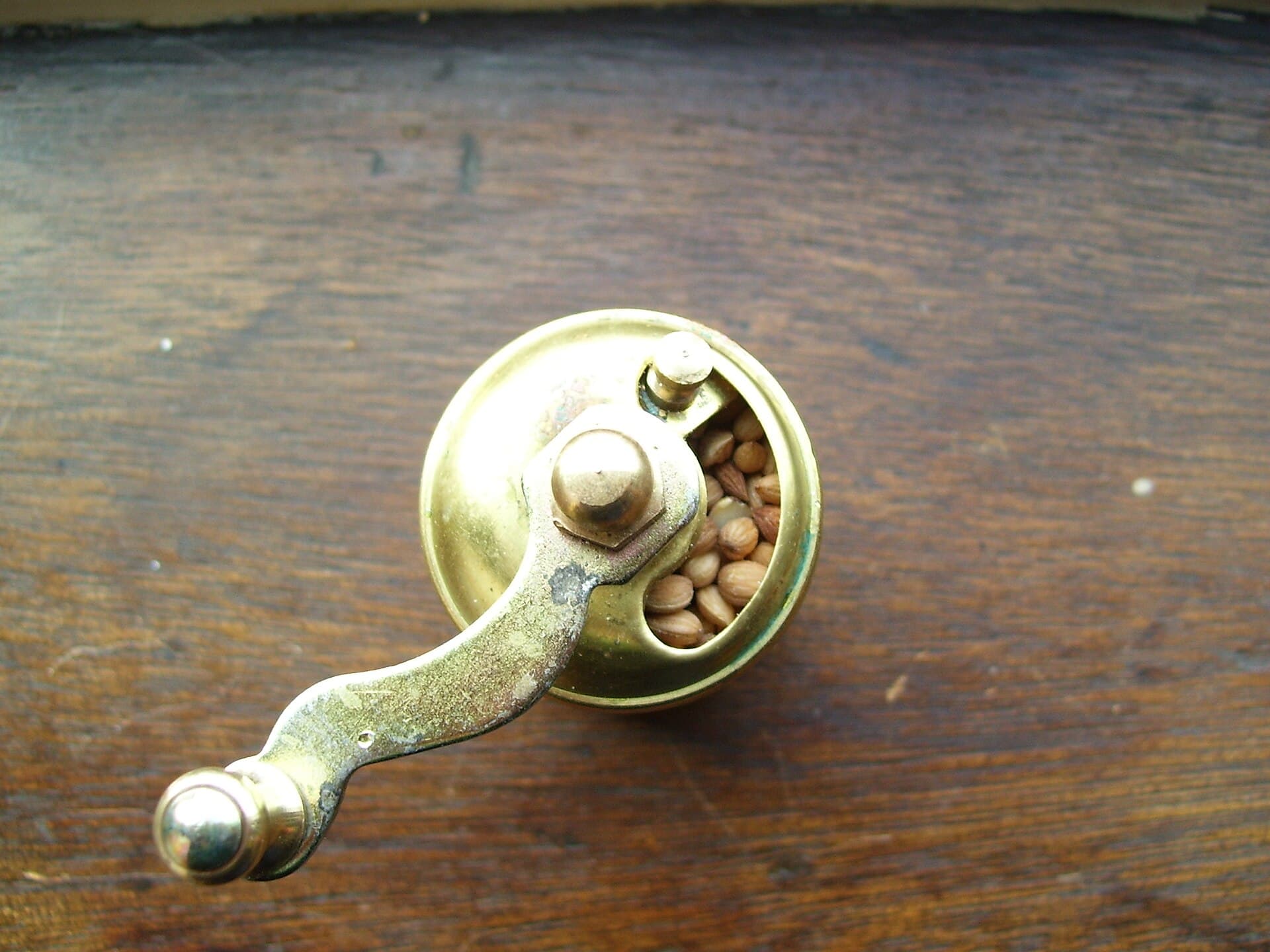
The seed inside the stone of the mahaleb cherry, smelling of bitter almond and cherry. It scents maamoul, maarouk and braided cheese, and Syria leads its export.
- Where to eat it
- In the dough of Eid maamoul, in Ramadan maarouk and inside braided cheese; sold as whole kernels by weight at spice merchants.
- Price
- Sold by weight; a small amount is enough, so ask the price at the spice shop
- When it is eaten
- Before Eid, in the maamoul weeks, when the shelves are fullest
Mahleb is the seed inside a stone. The hard stone of the mahaleb cherry is cracked and a kernel about 5 mm across comes out, soft when fresh and pale beige once ground. It smells of bitter almond and cherry and tastes faintly bitter. It gives dough scent rather than sweetness, and the measure is always small. Syria is the leading exporter of the spice.
Where you meet it
On three separate lines at once. In the dough of maamoul on the Eid tray; in maarouk on the Ramadan table; and at breakfast inside braided cheese, where that familiar note in mshallaleh comes from mahleb. The same spice goes into Turkish pogaca and into the festival breads of Greek and Armenian kitchens. One jar, three different meals.
How far back it goes
The written trail is long. The halub tree named in early Sumerian writing is thought to be this species. The Arabic word mahleb appears in medieval Islamic writing: in al-Razi (d. 925 or 932), in Ibn al-Baitar (d. 1248) and in Ibn al-Awwam. The last of these also explains in his book on agriculture how to grow the tree: it grows fast and takes little effort, but it will not stand a long drought.
How to buy it and keep it
Buy the whole kernels and grind them at home; the ground spice turns bitter quickly and loses its scent. The spice merchant sells it by weight, and a handful lasts a long time. Keep the jar closed on a cool shelf. Recipes hold the measure down, because the taste is slightly bitter and too much of it turns the dough.
Why Syria
Growing and using the tree is now largely confined to the lands that once formed the Ottoman Empire, and within that area Syria leads the export trade. The jar on a spice merchant’s shelf in Aleppo is not something brought in from far away. It is a local line, and the price reflects that.
Tips
- Buy it whole, not ground; the powder turns bitter fast
- Grind it at home in a mortar or a coffee grinder; a spoonful goes a long way
- The taste is faintly bitter; a little gives scent, too much turns the dough
- Keep the jar closed on a cool shelf; once the scent has gone it does no work
Transparency
- How this was chosen
- Two kinds of record live here: the dish itself, and the place that serves it. Both are chosen and written by hand; ranking is not for sale and there are no sponsored entries. If a price range is not known for certain, it says so. Venues that serve alcohol are not listed on this site at all.
- Facts checked
- September 2026
- Last updated
- September 15, 2026