Mint Lemonade (Limon bi Na’na)
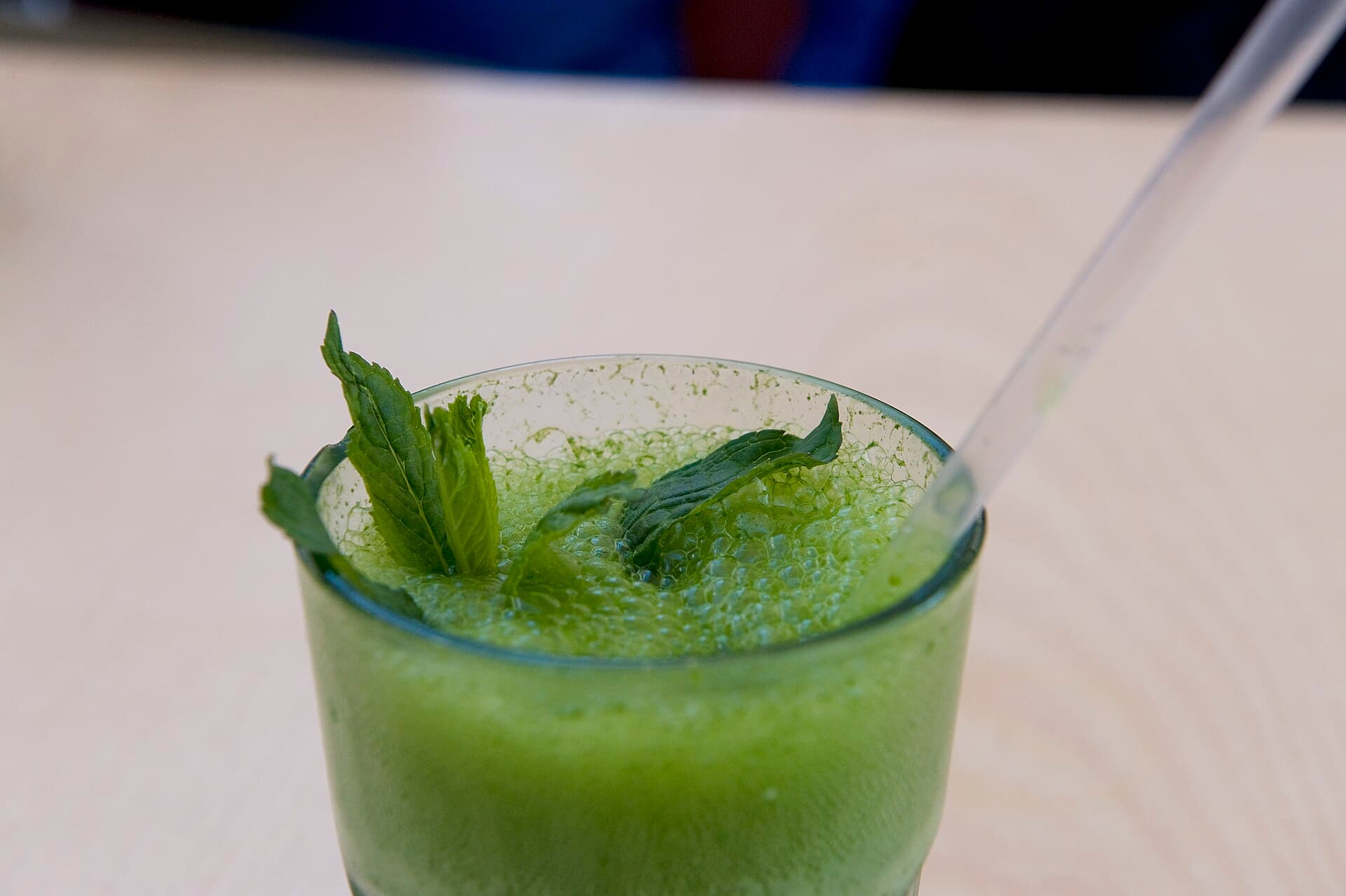
Fresh lemon, a fistful of mint, sugar and ice through a blender give a pale green, foaming glass. It is the fixed point of a Syrian summer menu in any city.
- Where to eat it
- On the summer menu in Damascus and Aleppo restaurants, by the glass at juice shops and cafés, and at home with a blender.
- Price
- Variable — ask the price of a glass at the restaurant
- When it is eaten
- All summer; in the afternoon heat
The glass is pale green, foaming on top, with a few mint leaves floating. Four things go into it: fresh lemon juice, a fistful of mint leaves, sugar and ice. From Damascus to Aleppo it is the most ordered glass on a summer menu, and it goes by the same name everywhere: limon bi na’na.
What goes in
Lemon juice, mint, sugar and ice turn together in the blender. The mint breaks up with the liquid, which is where the green comes from, and the crushed ice gives the foam. Proportions shift from kitchen to kitchen: some go heavy on mint and light on lemon, others the other way round.
How to order it
If it is not on the menu, say limon bi na’na and they will know. Mention the sugar when you order, because the default is sweet. The mint on top is not decoration; it is half the taste and it goes down with the glass.
Why mint
Mint is everywhere in Syrian cooking — in tabbouleh, in fattoush, in shanineh, on top of soup. This drink is its version in a glass. It does not replace ayran on the summer table; it sits next to it.
How old the glass is
The blended, iced version spread after the 1990s. Before that it was simpler: lemonade with pounded mint on top. Some households still make it the old way, and it comes out lighter in colour and finer in taste.
The argument about who invented it
The origin is disputed and two claims sit side by side. On one side, the claim that an Israeli advertising campaign in the 1990s invented the drink; on the other, the Palestinian objection that it was being made in Hebron long before that. Arabic Wikipedia reports both. This page reports the claims as claims and takes no side.
Tips
- If it is not on the menu, ask for limon bi na'na — almost every restaurant makes it
- Say so when you order if you want less sugar; the default is sweet
- The plain unblended version exists, but you have to ask for it
- The mint on top is not decoration; drink it with the glass
Transparency
- How this was chosen
- Two kinds of record live here: the dish itself, and the place that serves it. Both are chosen and written by hand; ranking is not for sale and there are no sponsored entries. If a price range is not known for certain, it says so. Venues that serve alcohol are not listed on this site at all.
- Facts checked
- September 2026
- Last updated
- September 15, 2026