Qabawat
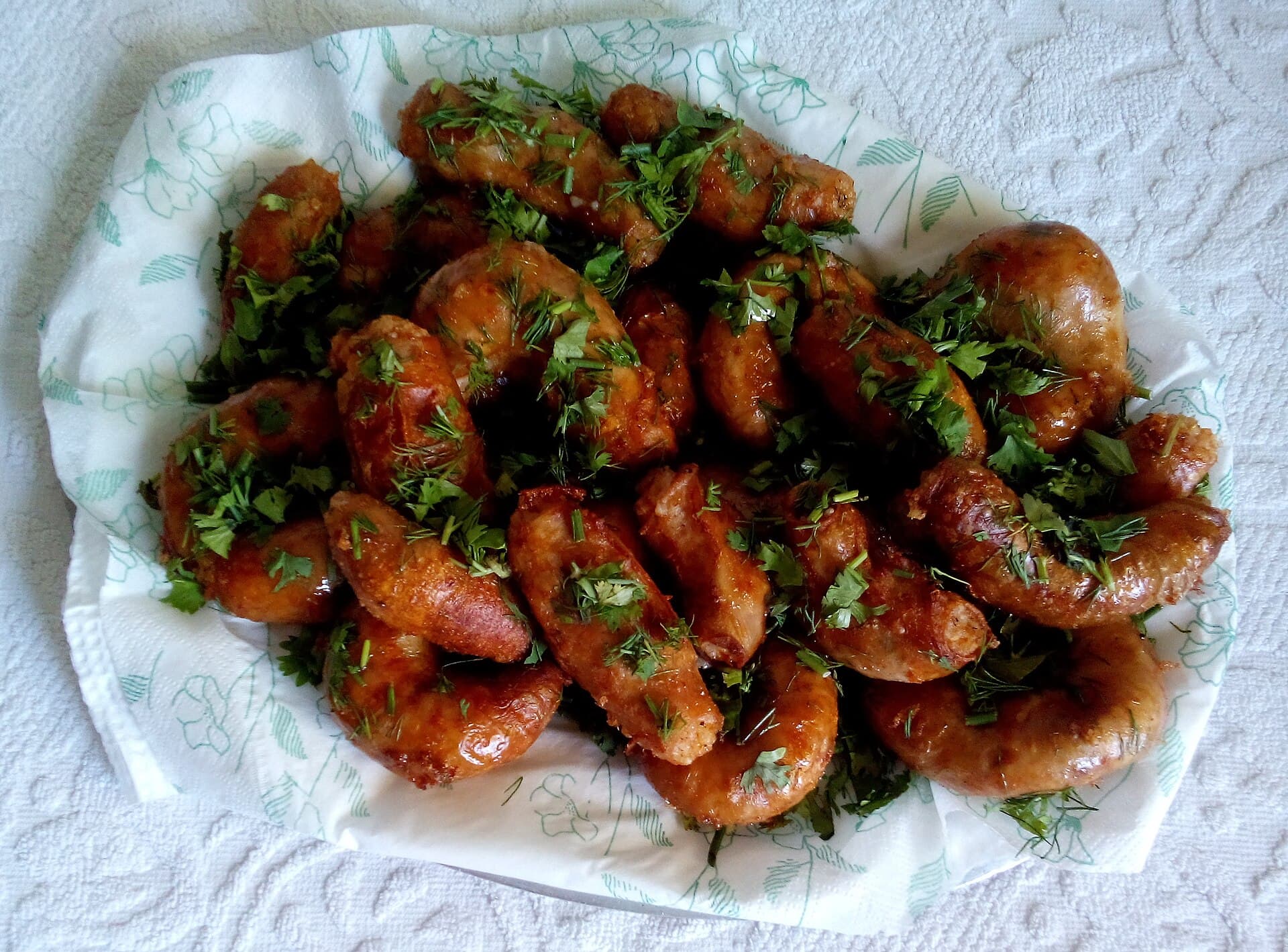
Lamb intestine stuffed with rice and mince, sewn shut, boiled and then fried in clarified butter. An Aleppo feast dish that changes name at every border.
- Where to eat it
- At the family table in Aleppo and on feast days; at the offal stalls of the souk and in home-style kitchens.
- Price
- Variable — ask the portion price when you order
- When it is eaten
- Ramadan and feast tables; through the winter as heavy food
Qabawat is made by filling the small intestine of a sheep with rice and minced meat. The casing is cleaned at length, the stuffing goes in, the end is sewn shut with thread, and the whole thing is boiled and then fried in clarified butter or finished in the oven. In Aleppo it is one of the heavy plates of the family table, and because the preparation runs close to half a day it counts as food for an occasion rather than for a weekday.
Why the name changes at every border
The same dish is mombar in Egypt, osban in Libya, Tunisia and Algeria, and qabawat or sandawanat in Syria. The word itself comes from Ottoman Turkish bumbar, which in turn comes from Persian. Turkey still calls it bumbar dolmasi, so the plate crosses borders more easily than its name does.
What goes into the stuffing
Rice, minced meat, onion and spice. The Damascus version adds almonds and pine nuts, which pushes the dish towards a faintly sweet register. The casing shrinks as it cooks, so the stuffing is packed loosely; filled tight, the intestine bursts in the pot and the rice scatters into the water. The sewing is the part that needs care.
Its place in the Ottoman record
The dish is written down with its recipe in the 19th century Ottoman cookbook Melceu’t-tabbahin. Priscilla Mary Isin notes that bumbar dolmasi was associated in particular with Ramadan, and the occasions on which it still appears bear that out. The name has a trail that runs back further, to the medieval Turkic dictionary Divanu Lugati’t-Turk.
When and where to find it
On Ramadan and feast tables, and through the winter as heavy food. It rarely appears on a restaurant menu. Ask for it at the offal stalls in the souk and at home-style kitchens that cook in pots, and it turns up. Plain rice or yoghurt comes with it.
Tips
- If it is not on the menu, ask; pot kitchens cook it without writing it down
- You can also ask for sandawanat — both names are used in Syria
- Making it at home, pack the stuffing loosely, or the casing bursts in the pot
- It is a heavy plate — ask for plain rice or yoghurt beside it rather than mezze
Transparency
- How this was chosen
- Two kinds of record live here: the dish itself, and the place that serves it. Both are chosen and written by hand; ranking is not for sale and there are no sponsored entries. If a price range is not known for certain, it says so. Venues that serve alcohol are not listed on this site at all.
- Facts checked
- September 2026
- Last updated
- September 15, 2026