Samneh
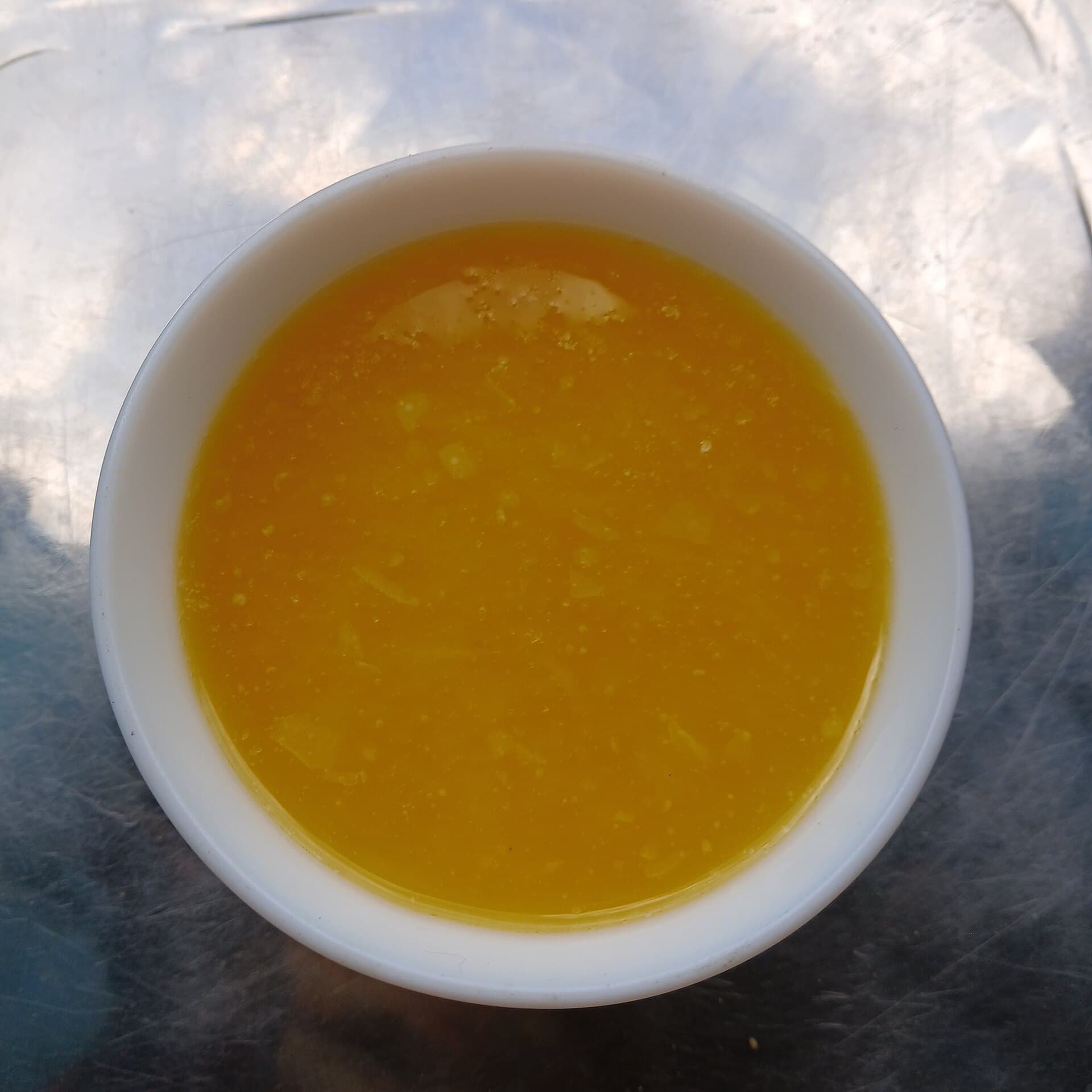
Sheep or goat butter boiled, skimmed, strained into a clay jar and salted. This is the fat that separates Aleppo cooking from the olive oil of the coast.
- Where to eat it
- At dairy and pantry shops in the souk, in jars; on the table inside qabawat, mahshi and the rice of a feast.
- Price
- Variable — ask the price by weight; the animal kind costs clearly more than the vegetable blend
- When it is eaten
- Late spring and early summer, when milk is most plentiful
Samneh is made by boiling and straining the butter that comes from sheep or goat milk. The butter boils for about 15 minutes, the foam that rises is skimmed off, and what remains is strained clear into a clay jar called a khubiya and salted. In many districts roasted fenugreek seed goes in as well, which is why the smell carries further than butter does.
Why it lives in the pantry
Straining leaves the milk solids and the water behind, so the fat keeps for months without refrigeration. No fridge, no spoiling. When the winter pantry is laid in, samneh is written down early, next to olive oil, makdous and kishk. Damascene cooking lists it with a short definition: strained butter, seasoned.
Aleppo against the coast
When Aleppo describes its own cooking it names two things first: lamb, and animal fat. Move down towards Latakia, Tartus and on into Lebanon and the fat of the dish becomes olive oil. The same recipe tastes different in two cities more often because of this than because of spice — samneh is fuller. It stays on the palate longer.
The dishes that measure in it
The stuffed ones. That is where it is counted out. The recipe for qabawat gives the measure plainly as half a cup of samneh, and the same fat goes into mahshi, into the frying of kibbeh, and over the rice of a feast. Trailing a spoonful over hot rice is a common way to finish a plate in Aleppo.
How to choose it
It is sold at dairy and pantry shops in the souk, in jars or in clay pots. Ask for the animal kind: the vegetable blend sold under the same name is a different product and costs noticeably less. Its texture at room temperature shifts with the season — clear and liquid in summer, opaque and spreadable in winter.
Tips
- Ask for the animal kind; the vegetable blend under the same name is another product
- Smell it — the fenugreek version has a scent distinctly its own
- The texture changes with the season; opaque in winter does not mean spoiled
- Cooking an Aleppo dish at home, do not substitute olive oil — that is where the taste parts
Transparency
- How this was chosen
- Two kinds of record live here: the dish itself, and the place that serves it. Both are chosen and written by hand; ranking is not for sale and there are no sponsored entries. If a price range is not known for certain, it says so. Venues that serve alcohol are not listed on this site at all.
- Facts checked
- September 2026
- Last updated
- September 15, 2026