Syrian Baklava
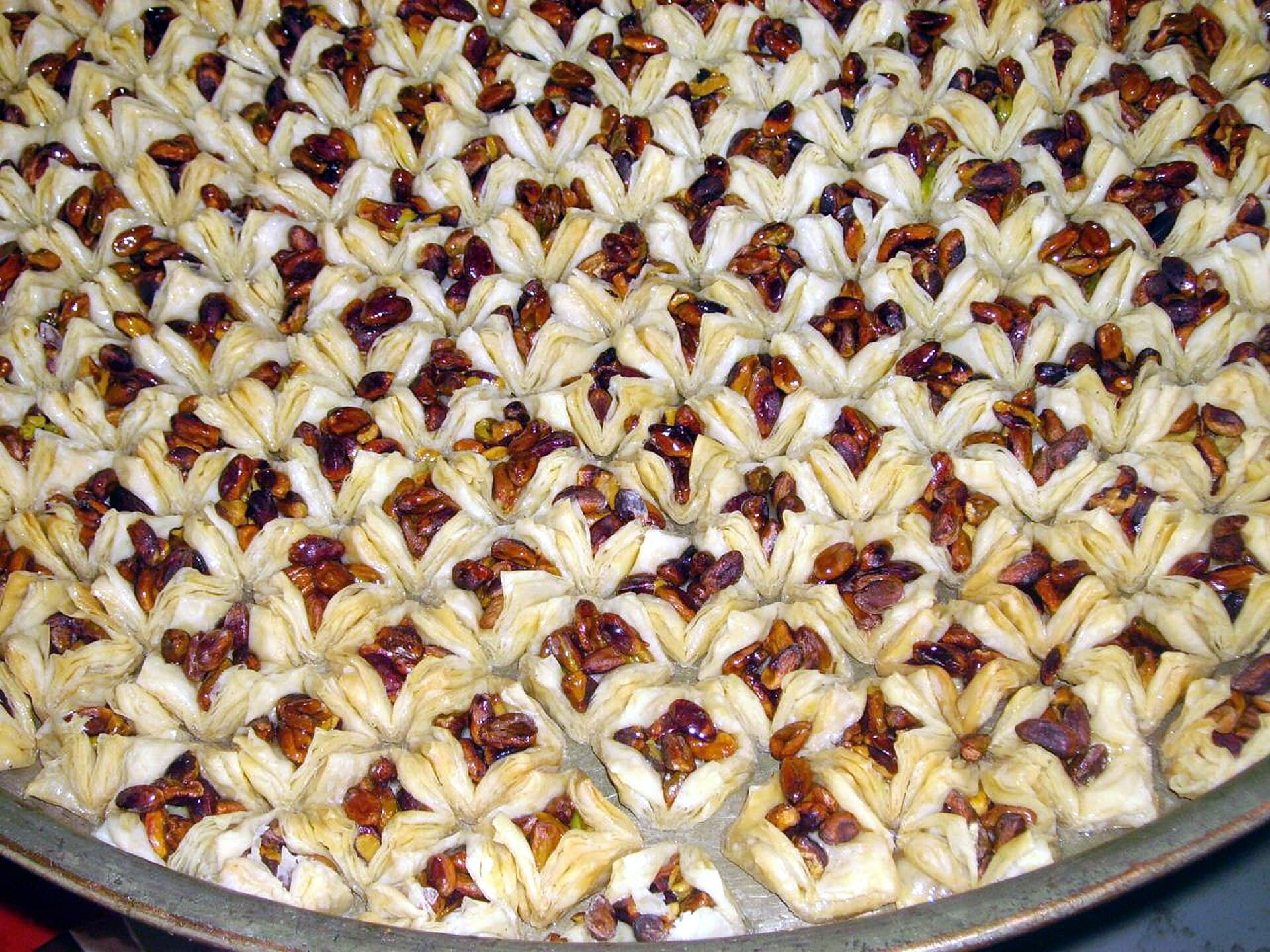
Paper-thin filo, coarsely broken Aleppo pistachio and cold sugar syrup. Most of the names in a Syrian sweet shop window are the same dough, cut another way.
- Where to eat it
- At the sweet shops of Aleppo and Damascus, sold by weight. On the feast tray, on the table for guests, beside bitter coffee.
- Price
- Variable — ask the price per kilo and the difference between pistachio and walnut
- When it is eaten
- Afternoon and evening; the dry ones keep for days
Filo, nuts and qatr — sugar syrup boiled and then left to cool. Syrian sweet-making rests on those three. Most of the names in a sweet shop window are not separate recipes at all; they are the same dough cut and rolled another way, and baklava sits in the middle of that family.
What it is made of
Sheets of filo are rolled out until they are as thin as paper and stacked, with coarsely broken pistachio or walnut between them. The tray is cut before it goes into the oven, and the qatr is poured over the moment it comes out. The pastry is hot and the syrup is cold. That difference is what keeps it crisp.
What sets the Syrian version apart
Not the filling but the raw material: Aleppo pistachio and samne baladi, the clarified butter made from animal milk. Damascene sweet shops tie quality straight to those two. The pistachio goes in broken, never ground, and a tray made with vegetable fat instead of samne is obvious to the shop and the customer alike.
The cut gives the name
Same filo, same pistachio, same syrup. Change the shape and the name changes with it. The close relatives on the tray:
- Mabroumeh — kadayif threads twisted around a stick of pistachio and cut into cylinders
- Ballorieh — pistachio between two layers of kadayif, cooked without colour so it stays white
- Osh el-bulbul — kadayif wound into a nest with pistachio in the middle
- Znoud el-sit — filo rolled and fried, filled with ashta cream
- Osmalieh — two layers of crumbled kadayif with cream between them
Dry, or with cream
The tray splits in two. The nawashef, the dry ones, have taken syrup but carry no cream, so they keep for days; these are what goes on the feast tray and into the box people carry abroad. Anything with cream is eaten the same day, and the shop will not sell it on the second.
How to buy it
It is sold by weight, and a mixed box is the ordinary order: you say how many kilos you want and the shop usually chooses. Two questions are worth asking — is the pistachio from Aleppo, and is the fat samne. The answer to both shows up in the price.
Tips
- Ask whether the pistachio is from Aleppo; that is where the price difference comes from
- Ask whether it is made with samne — vegetable fat makes the tray heavy
- Dry sweets travel well, the ones with cream are eaten the same day
- Order a mixed box rather than one kind; you get the whole family at once
Transparency
- How this was chosen
- Two kinds of record live here: the dish itself, and the place that serves it. Both are chosen and written by hand; ranking is not for sale and there are no sponsored entries. If a price range is not known for certain, it says so. Venues that serve alcohol are not listed on this site at all.
- Facts checked
- September 2026
- Last updated
- September 15, 2026