Tahini
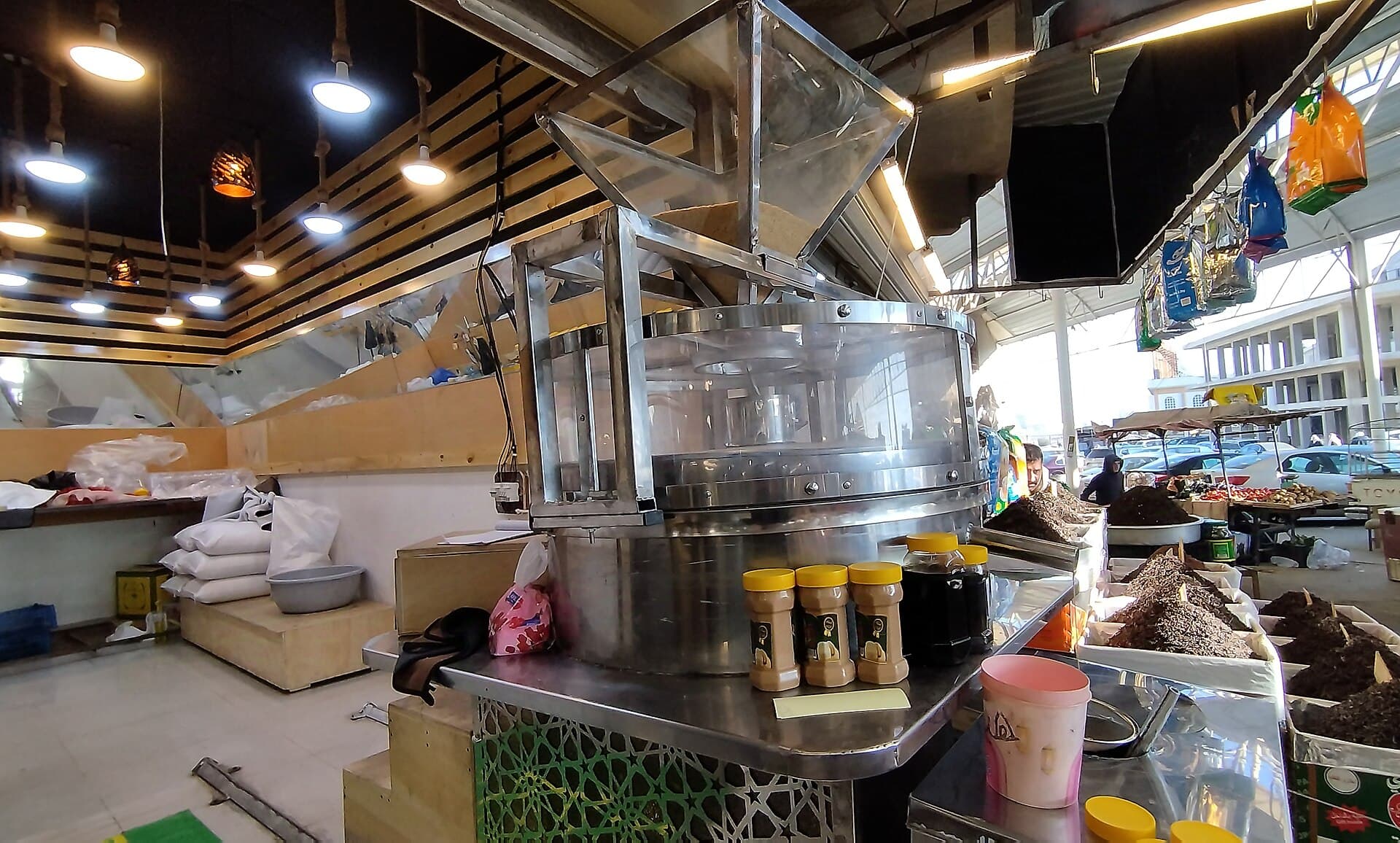
Roasted sesame ground on a stone mill. It is the layer under hummus, msabbaha, mutabbal, batersh and fatteh, and the raw material of halva and karabij.
- Where to eat it
- At the sesame mills and halva shops of the souk, loose or in jars; in restaurants inside hummus, mutabbal and tarator.
- Price
- Variable — ask the price by weight for the loose kind
- When it is eaten
- All year; for loose tahini, the morning hours in the souk
Roasted sesame goes through a stone mill and comes out as a dark paste that pours slowly. Tahini is almost never eaten on its own in Syria, but there are few cold dishes it does not sit under: hummus, msabbaha, mutabbal, batersh, fatteh and tarator all come out of the same jar. On the sweet side it is the raw material of halva and of the cream inside karabij.
Pale or dark
The souk sells two kinds. Tahini milled from hulled sesame is pale, runny and faintly sweet. Tahini milled with the hulls left on is darker and leaves a clear bitterness behind it. Cooks use the pale one in mezze sauces and the dark one in halva. Both sit on the same counter, so you have to say which you want.
Why it fights water
Add water to tahini and the opposite of what you expect happens: the mixture stiffens and seizes. Most people give up here. Keep stirring and the paste loosens all at once into a smooth cream. That turn is what a Syrian cook waits for, and lemon and garlic go in after it.
Where it turns up
In almost every cold plate. It gives hummus its texture and mutabbal the richness that sits beside the smoke of the aubergine. Tarator is thinned tahini under its own name, and it arrives in its own bowl next to fish. At breakfast it is stirred into grape molasses, and the mix is called tahin dibs.
Buying it
The oil separates and rises in the jar, so tahini used without stirring is dry at the bottom and greasy on top. The sesame mills of Aleppo and Damascus make halva under the same roof, which is why loose tahini usually turns up on a halva maker’s counter. Ask for a taste and you will get one.
Tips
- Say whether you want the pale or the dark one; one is for mezze, the other for halva
- Stir a jar down to the bottom before using it, because the oil rises
- Add water a little at a time in a sauce; the paste seizes first, then loosens
- Halva makers sell it loose and offer a taste — try it before you buy
Transparency
- How this was chosen
- Two kinds of record live here: the dish itself, and the place that serves it. Both are chosen and written by hand; ranking is not for sale and there are no sponsored entries. If a price range is not known for certain, it says so. Venues that serve alcohol are not listed on this site at all.
- Facts checked
- September 2026
- Last updated
- September 15, 2026