Walnut sujuk: the autumn sweet of Aleppo
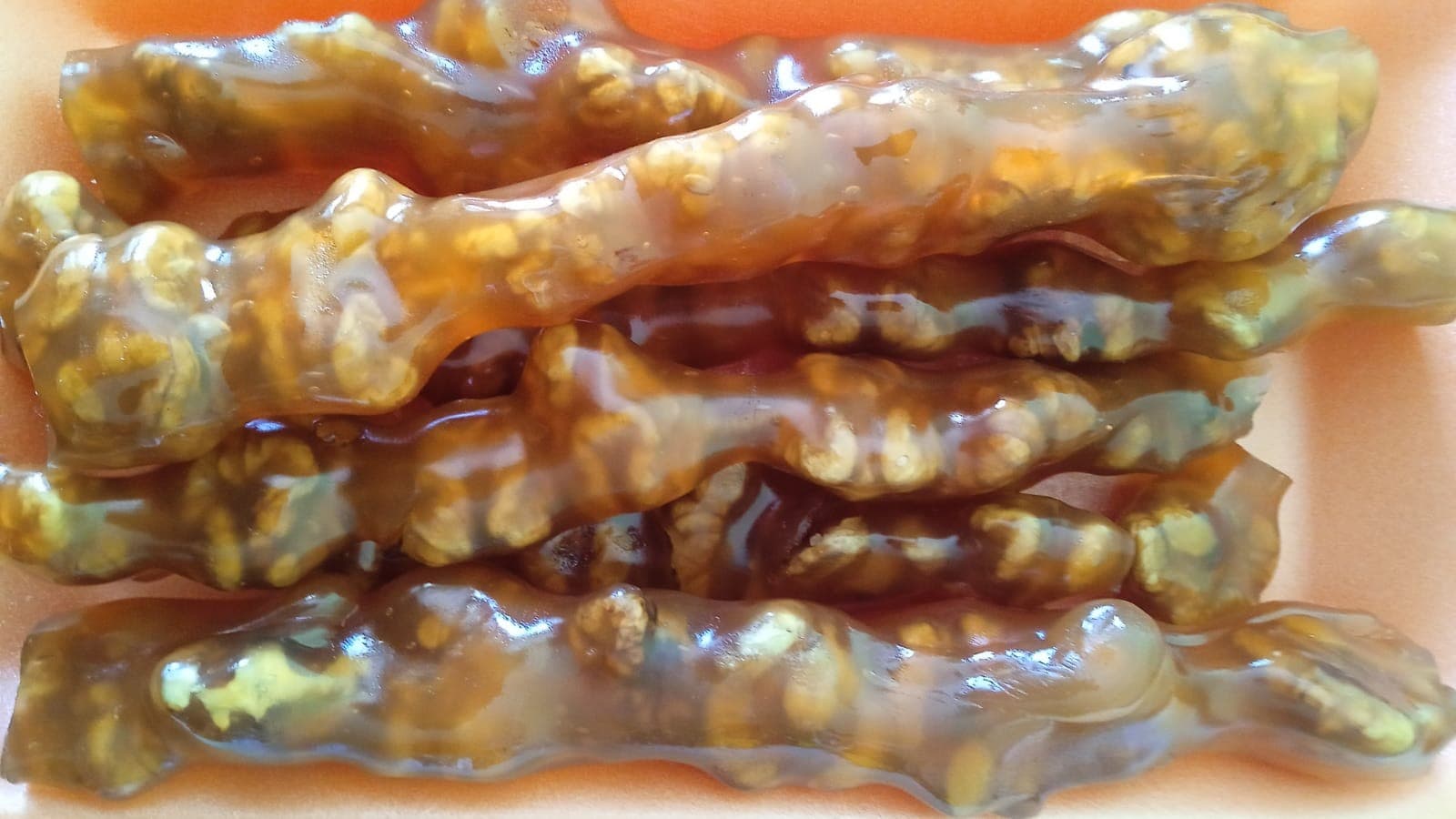
Walnuts threaded on a string are dipped again and again in thickened grape must, then hung for weeks to dry. In Aleppo it is the autumn sweet you carry.
- Where to eat it
- At dried-fruit and spice counters; sold fresh in autumn and dried through the winter.
- Price
- Variable — sold by weight; ask the price at the counter
- When it is eaten
- Autumn, the weeks of the grape harvest and the molasses boiling
Walnut sujuk is the second product of the grape harvest. Walnuts are threaded onto a string with a needle, grape must is boiled down until it thickens, and the string is dipped into the hot mixture over and over. Each dip leaves a layer, a thick rod builds up along the string, and the rod then hangs in an airy place for days and sometimes weeks until it dries. In Syria it is called jaq malban, and also aqoudeh.
How it is made
The must is boiled and thickened with flour or starch to the consistency of a pudding. The hot mixture goes into a shallow vessel and the strung walnuts are lowered in and lifted out; the coat is left to cool so that it sets, then dipped again. As many repeats as you want layers. When the drying is finished what is left is a rod, matt and slightly tacky outside, packed with walnut inside. It is rolled in starch so it does not stick.
Why it is the harvest’s second product
Because it is the same cauldron. The boiling of dibs described in the grape molasses record on this site happens in the same week and over the same fire: part of the must goes into jars as molasses, part is thickened further and becomes sujuk. The difference is portability. Molasses is a syrup, taken with a spoon at the table; walnut sujuk is solid, and travels in a pocket. Qamar al-din is a sheet made from apricot; this is a rod made from grape and walnut.
What it means in Aleppo
In Aleppo walnut sujuk is a gift. In the Armenian tradition malban is sent to a visitor arriving in the city and to relatives far from it, a custom carried from Cilicia that is still kept. The version imported from Antep is sold under the same name, so a counter can hold both local and imported. Its history runs older than Aleppo’s claim on it: Ibn Battuta describes malban made in Damascus in the 14th century — thickened grape syrup with ground almond and pistachio. The food historian Nawal Nasrallah writes that it was already being made in the sausage shape it has now.
Where to buy it
At dried-fruit and spice counters. In autumn you find it fresh: still soft outside, and the walnut glossy where you cut it. Towards winter it dries and hardens, becomes harder to slice, and tastes more concentrated. They are the same thing; it is a question of which texture you prefer. It keeps for months unwrapped, which makes it a practical gift for someone about to travel.
Tips
- Cut a fresh one and the walnut is glossy; a dried one is harder and more concentrated
- Eat it in slices; biting the whole rod is difficult and it sticks to the teeth
- An Aleppo counter carries both local and imported; ask which one you have
- It makes a practical gift if you are travelling on — it keeps for months unwrapped
Transparency
- How this was chosen
- Two kinds of record live here: the dish itself, and the place that serves it. Both are chosen and written by hand; ranking is not for sale and there are no sponsored entries. If a price range is not known for certain, it says so. Venues that serve alcohol are not listed on this site at all.
- Facts checked
- September 2026
- Last updated
- September 15, 2026