Breakfast in Syria: where, when and what
The ful shop is full by eight and the pot is empty by noon. Damascus starts on fatteh, Aleppo on a sweet, the coast on mate. Where to go and what to order.
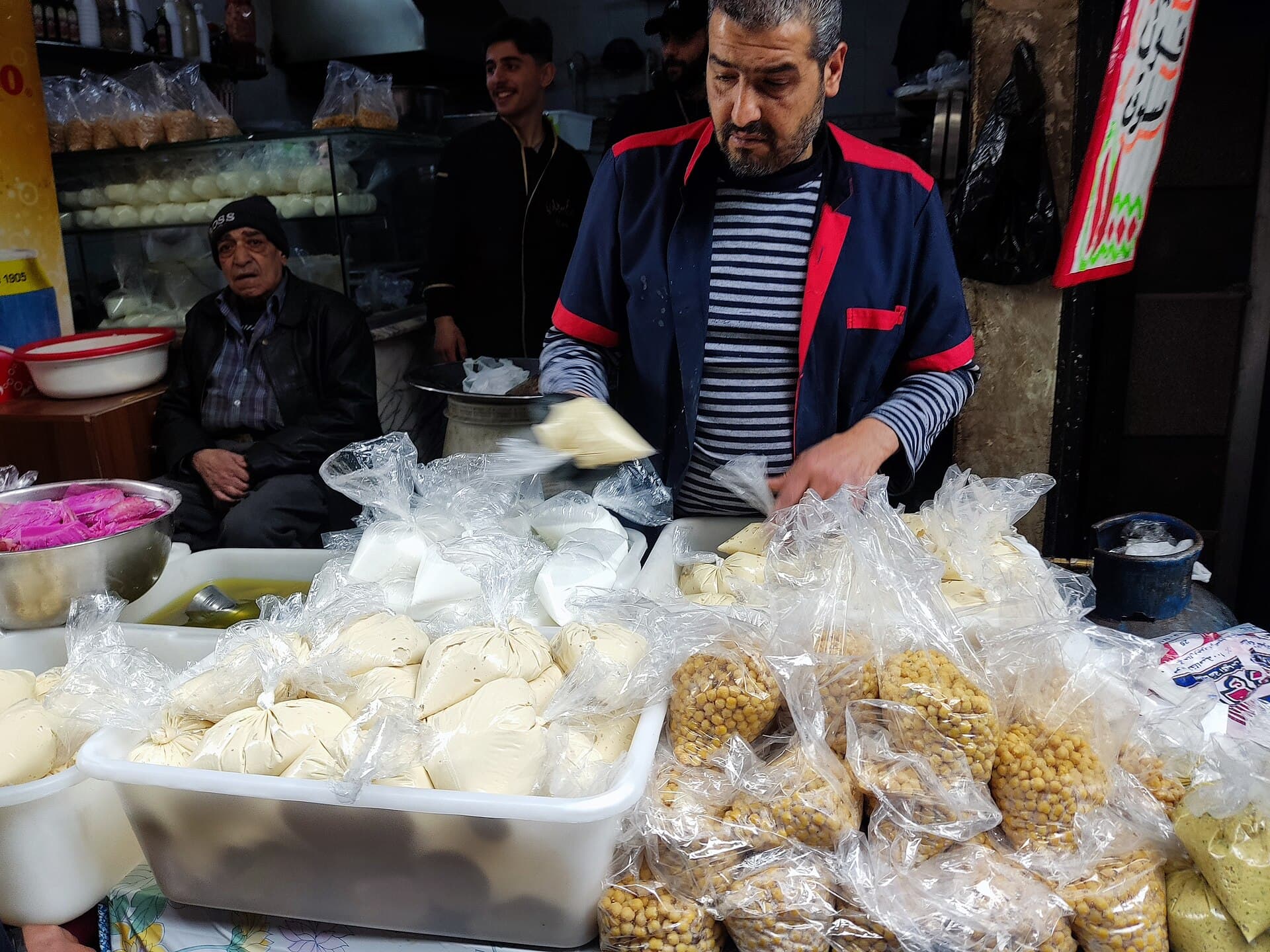
Breakfast in Syria is eaten in the street rather than at the hotel, and it is often the best meal of the day. Three kinds of shop divide the morning between them: the ful and hummus shop, the bakery and the sweet shop. Which one you walk into depends less on what you want than on which city you are in.
Breakfast is bought ready cooked
Breakfast here is a table laid at home, but the whole of it can also be had outside; the difference is that the plates come from separate shops. Ful and hummus from one, manakish and sfiha from the oven, the sweet from a third door. In a neighbourhood the three sit side by side and the morning traffic runs between them.
The commonest mistake a traveller makes is waiting for the hotel. Hotel breakfast in most places stops at bread, cheese, olives and tea, and none of the plates from the street are on it.
What time
Early. Ful and hummus shops open in the first hour of the morning, are at their fullest around 08:00, and by midday the pot is finished. That is not a figure of speech. Fatteh and ful are not on an evening menu, and when the morning pot runs out the shop closes that side of its work.
The bakery runs longer, but manakish is at its best straight out of the first firing. Friday shifts the pattern: opening comes later and breakfast at home stretches out, so ask before you set off on a Friday morning. In Ramadan the morning meal disappears altogether and moves to the second half of the night.
The ful and hummus shop
This is the spine of the morning. Ful medames is broad beans boiled and crushed in the bowl, with olive oil, lemon, garlic, cumin and parsley on top. Beside it comes hot hummus — in Syria hummus is not a cold dip but a warm bowl in the morning, and it can carry pine nuts fried in butter or a spoonful of minced meat.
The third is fatteh: torn bread at the bottom, chickpeas over it, garlic yoghurt, and hot fat poured at the last moment. The Damascus morning is largely built from those three bowls. Bread does not count as a plate; it stands in for a fork. Dishes go to the middle and everyone eats from the same bowl.
The bakery: manakish, sfiha and kaak
The oven is the second address of the morning. Manakish is a flatbread spread with za’atar and olive oil or with cheese and pushed into the oven; it is folded in half while hot and eaten in the hand. In Aleppo the same oven turns out sfiha, small rounds opened out under minced meat, tomato and pepper.
Sesame kaak is a morning bread as well, sold from carts in the street and filled with cheese or za’atar. Bakeries run on a queue, so you join it and say what you want, or simply point at what is already on the counter.
The laid table and eggs
A home breakfast, or a good hotel one, arrives as a row of small plates: several cheeses, labneh, green and black olives, cucumber, tomato, mint, jam and of course olive oil. Braided mshallaleh and salty akkawi are the two cheeses you meet most. Makdous belongs on this table too — small aubergines cured in oil with walnuts.
Eggs change with the region. On the coast jaz maz is the standard: tomatoes cooked in fat with eggs broken over them, eaten with bread. Inland the same job goes to mfarakeh, made with potato and egg.
Damascus, Aleppo and the coast
The Damascus morning rests on ful and fatteh; the hummus shops of the old city are the centre of that trade and tea comes with the plates. The Aleppo morning leans sweet: mamounieh, semolina toasted in clarified butter under cinnamon and pistachio, with salty cheese beside it. Sugar and salt meeting in one spoon is the Aleppo idea of breakfast.
On the coast the morning opens with mate. Walk into a house in Latakia and you are offered mate before tea, the gourd and metal straw passing from hand to hand while breakfast spreads out around it. Around Homs and Hama the table is plainer, and in winter kishk soup joins the morning: a dried mixture of bulgur and yoghurt, drunk hot.
Ordering and paying
If you are alone, order one plate. Portions come sized for two and the shop will put out a second in a minute. If you want the bread to stay crisp in a fatteh, you can ask for it on the side. Tea comes with almost every plate and in most places is charged separately.
Ask the price as you order; no page on this site prints a figure, and the reason is the exchange rate. Payment is cash in local currency. One last note: eating standing up is normal at a ful shop or a bakery, so do not read it as being rushed — the whole morning takes twenty minutes.
Tips
- Get to a ful and hummus shop around 08:00; by midday the pot is finished
- Do not wait for the hotel; none of the street plates appear there
- Ask for the bread on the side in a fatteh and it arrives before it softens
- In Aleppo ask for salty cheese with mamounieh; the contrast is the point
- Friday and Ramadan change the pattern, so ask before you set off
Transparency
- How this was chosen
- This page carries the fastest-ageing information on the site: visa rules, exchange rates, border crossings and SIM prices change several times a year. The verification date above says when the facts were last put through their sources; for anything later, check your own foreign ministry travel advice and a Syrian consulate. No figure that is not known for certain is written here.
- Facts checked
- September 2026
- Last updated
- September 15, 2026