How to plan three days in Damascus
Mornings inside the walls, afternoons on the Ottoman side, the last evening on Qasyoun. Which walk fits which day, which quarter to sleep in, where meals land.
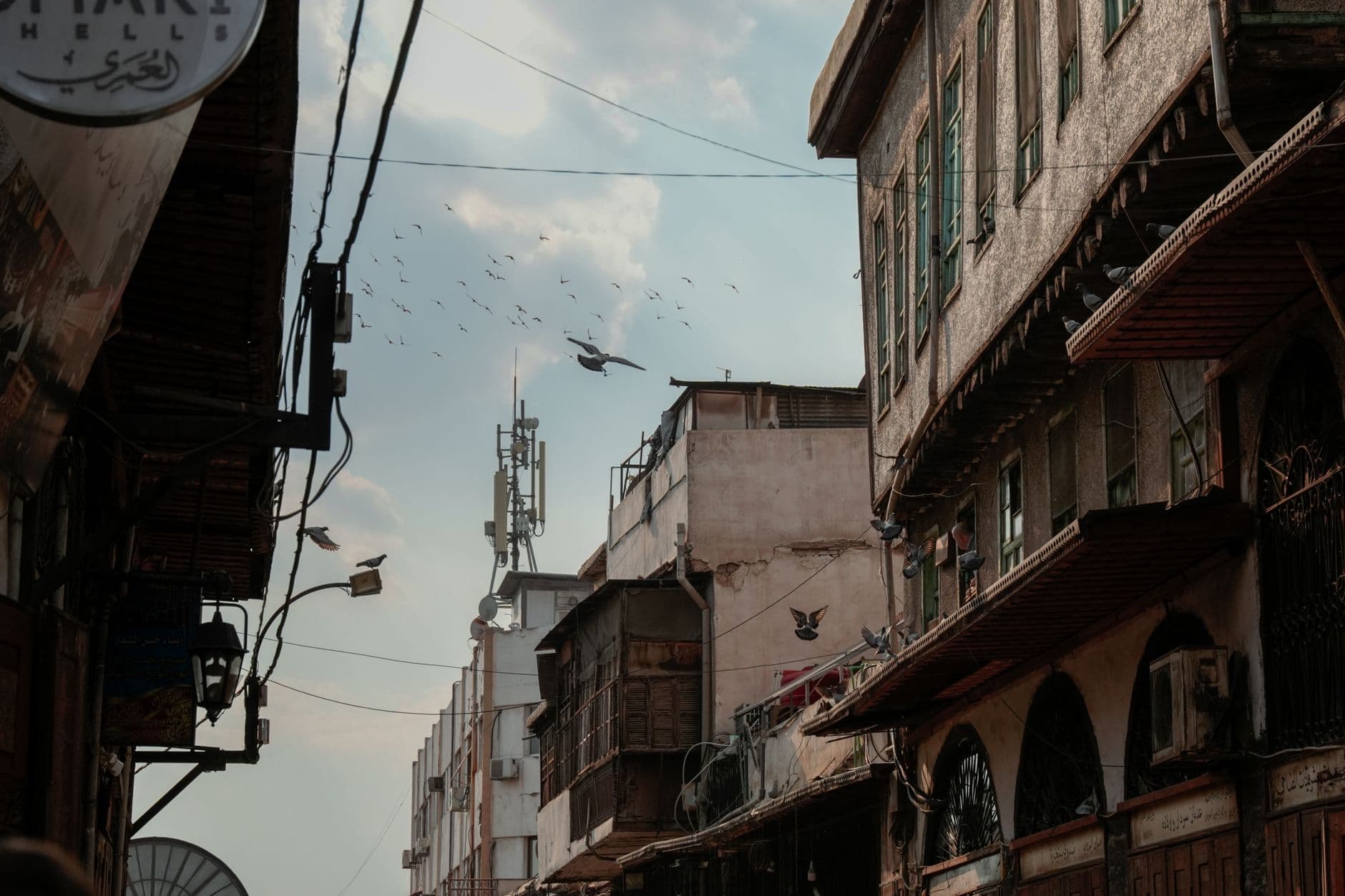
The Damascus page tells you what the city is. This page answers a different question: how to divide three days in it. The order is not arbitrary. The lanes of the old city are cool in the morning, Qasyoun opens up late in the day, and a bath house makes sense at the end of one. The three days below are built on the Damascus routes on this site; every half day is a walk that is actually walked.
What this plan assumes
You are sleeping in the old city or within walking distance of it, because two of the three days are entirely on foot. A car is needed only for the last leg of the third day. Being out on the street at 08:30 changes the whole day: the stone is still cool, the market is opening, the mosque courtyard is empty. Friday midday is the exception — the courtyard of the Umayyad Mosque belongs to prayer at that hour.
Day one: inside the walls
Morning. Enter at Bab Sharqi and walk west along Straight Street. The first 900 metres run through the Christian quarter: the Roman east gate, the Chapel of Ananias below street level, and Bab Kisan, which was rebuilt as a church front. Three stops, two hours.
Midday. Take the covered half of Straight Street. The smell of spice begins in the Bzouriyeh market, and the lunch stop falls here.
Late afternoon. From under the bullet-pierced roof of the Hamidiyeh souq out between the Roman columns, and on into the courtyard of the Umayyad Mosque. The whole day is 4 kilometres: six hours without stopping, a full day with. Wait for the hour before the evening call to prayer before you sit in the courtyard. At that hour the stone gives back the heat it took in all day.
Day two: the Ottoman face and the bath
Morning. The Azm Palace and Khan As’ad Pasha: two markets, a merchant house, a palace and a caravanserai, 1560 metres in all. The walking is short. The going inside is long. The palace courtyard is in shade in the morning, and that is what sets the order.
Afternoon. The madrasas and the bimaristan: a tomb chamber lined with gold mosaic, Nur al-Din’s medieval hospital, and a facade banded in black and white. Four stops, 1400 metres.
Evening. The bath house. After a day spent on your feet this is exactly where it belongs, and one is still working in the old city. Hours for women and men are separate; ask on the day which hour is which.
Day three: outside the walls and Qasyoun
Morning. Three stops over 800 metres west of the walls: the desert facade carried into the National Museum, Sinan’s courtyard at the Takiyya, and the Hejaz station. Ask whether the museum is open before you set out; its doors stayed shut for a long stretch. If it is closed the Takiyya courtyard is free and the craft market beside it opens in the morning, so the day still fills.
Afternoon. Salihiyya, the quarter on the lower slope of Qasyoun, with steep lanes and Ayyubid buildings. It is 3 kilometres from the museum.
Late afternoon. The viewpoint on Qasyoun. Half an hour from the centre, and getting up there needs a car. Sunset and night are two different views from the same spot: one turns the city red, the other into a sea of light. The crowd comes at sunset, the quiet comes later.
Swapping out day three
There are two alternatives for the third day and both exist as separate routes on this site. The first is a day of shrines: the maqams inside the Umayyad Mosque, the mirrored tomb of Sayyida Ruqayya, the Bab al-Saghir cemetery and Sayyida Zaynab south of the city. Four stops and 11 kilometres, by car. The second leaves town altogether — the monasteries to the north, or Bosra to the south. Both take a full day, so move Qasyoun to the evening of day two.
Where to stay: the quarter sets the day
How accommodation works has its own page. What matters here is which quarter suits this plan. Bab Touma and Qaymariyya start days one and two the moment you step out of the door, and no car enters the lanes, so the nights are quiet too. Shaalan and Abu Rummaneh sit closer to the museum leg of day three and make the evening return easy. Marjeh and the Hejaz area are next to the coach garage: sensible if you move on to another city at the end of the plan, but noisy.
Where the meal stops fall
The breaks settle into the plan on their own. Midday on day one lands where Bzouriyeh meets Hamidiyeh: the sharbat sellers pour liquorice root and tamarind from the brass urns on their backs, and the ice cream shop at the end of the souq is at the same corner. The coffee house below the east gate of the Umayyad Mosque is for the evening break, and the storyteller sits there. Midday on day two falls around Marjeh. The morning of day three passes through Salhiyeh on the way to the museum, where the fruit cocktail counters and shawarma spits are.
Tips
- Be on the street by 08:30; the stone is cool and the souq is opening
- Do not plan the mosque courtyard for Friday midday
- Put the bath house on the evening of day two, after a day on foot
- Ask whether the National Museum is open before you set out
- Qasyoun needs a car; sunset is crowded, later is quiet
Transparency
- How this was chosen
- This page carries the fastest-ageing information on the site: visa rules, exchange rates, border crossings and SIM prices change several times a year. The verification date above says when the facts were last put through their sources; for anything later, check your own foreign ministry travel advice and a Syrian consulate. No figure that is not known for certain is written here.
- Facts checked
- September 2026
- Last updated
- September 15, 2026