Independent travel or a guided trip in Syria?
Going alone, hiring a driver, hiring a local guide and joining a group tour sell four different things. Who each suits, how the cost works, who answers.
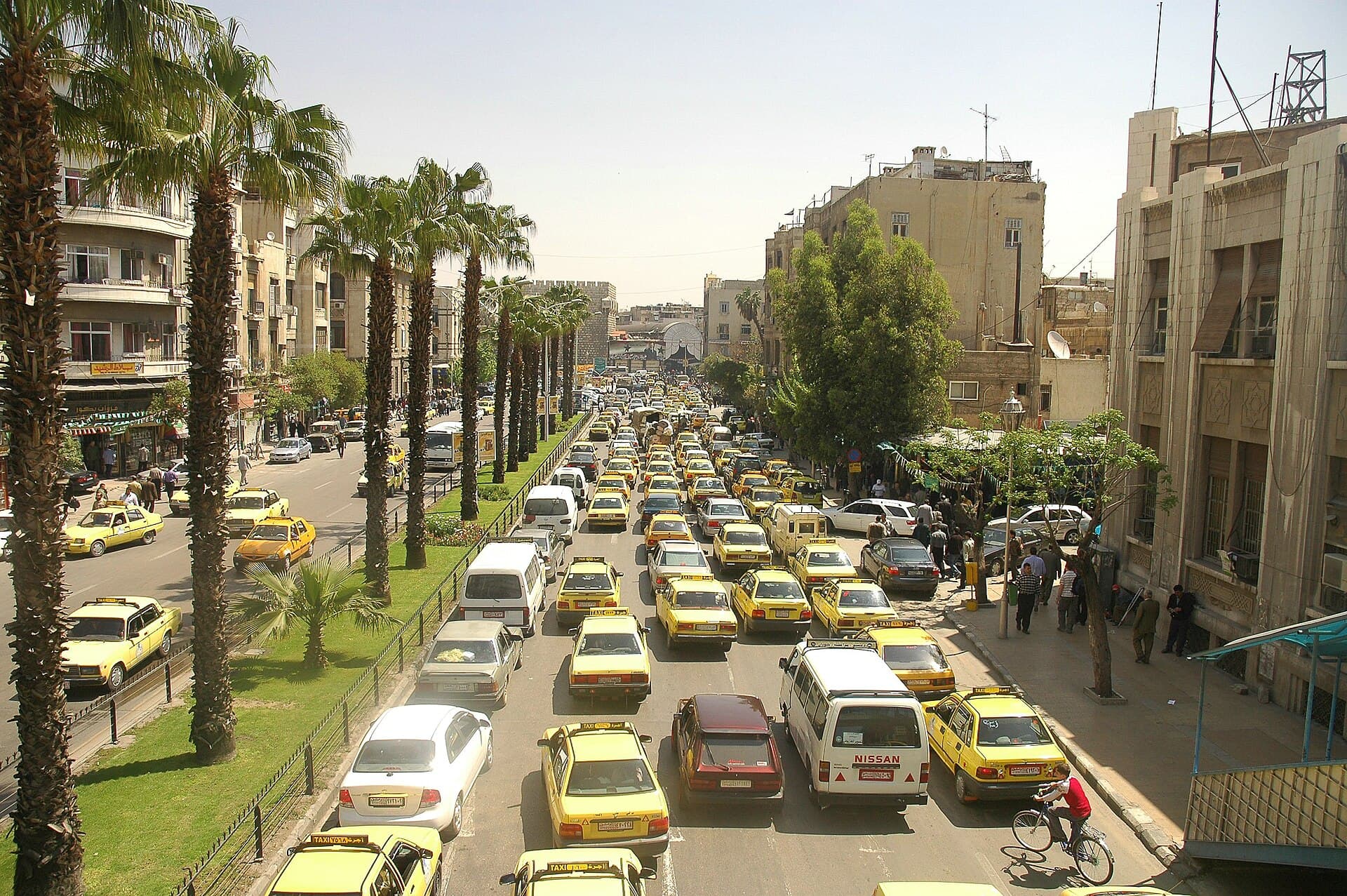
People usually treat this as a question about nerve. It is not. Each of the four options sells you something different, and the right one depends on how much you can handle yourself. The day-to-day practice of travelling alone has its own page here; this question comes earlier — what are you buying.
Four options, four different things
Travelling independently, you build the transport, the lodging and the order yourself. Hiring a driver, you rent a vehicle and its driver by the day. Hiring a local guide, you are buying knowledge and language. Joining a group tour, you hand the whole package to an operator and give up flexibility in exchange.
The confusion comes from one place: the driver and the guide are often assumed to be the same person. They can be. What they sell is not the same, and neither is the price.
Independent: what you get and what you don’t
Going independently is possible and plenty of people do it. Transport inside cities works, intercity buses give a foreigner no trouble, and rooms are held with a phone call.
What you do not get is information. The state of the road that day, which hall is open, which gate is under repair — none of it is published, and the independent traveller learns it from a hotel or by accident. The second thing you do not get is somebody to call: there is no institutional number when a plan comes apart.
Who it suits: someone who has travelled alone in a comparable country, keeps the itinerary short and leans on one city.
A driver: the middle path most people take
City centres are walked. What lies outside them is not. Krak des Chevaliers, Saladin’s Castle, Qasr ibn Wardan and Palmyra all need a vehicle, and self-drive hire is not a common option for a foreigner.
What the driver sells is more than transport. He knows which checkpoint backs up at which hour, which road is open today, and where you stop and where you do not. He is also the one who speaks at the gate.
Who it suits: almost anyone who wants to walk the city themselves but is going beyond it. This is how most itineraries are actually built.
A local guide: knowledge, access and language
A guide adds three things on top of a driver. First the building itself: which century a courtyard belongs to, what an inscription says, which stone is restoration. Second, access — a word with the custodian of a hall that looks shut often opens it. Third, language, and that matters as much as the other two.
Guides are hired by the day, and a good one does not only explain. They also set the order: which building you visit at which hour changes with the light.
Who it suits: anyone coming for architecture, archaeology or photography, and anyone who wants to understand a lot in a short time.
A group tour: the package and its limits
A group tour handles the visa correspondence, the transport, the lodging and the daily programme from one desk. An institutional security assessment and a written itinerary come with it, and when something goes wrong the point of contact is clear.
Two things go in exchange. The first is flexibility: the programme is written in advance, and an extra half hour in a courtyard is the whole group’s decision. The second is pace — the number of sites in a day runs higher than on an independent plan, because that is what the package is sold on.
Why the cost does not divide
Budgets go wrong when this logic is missed. Vehicles and rooms are priced per unit, not per person: a day’s car costs the same for one traveller as for three. A guide works by the day, again not per person. A group tour is the opposite — sold per person, with a supplement for a single room.
The practical result: for one traveller a private car is disproportionately expensive and a group tour is proportionate. With two or three people the arithmetic flips. No page on this site carries a nightly or daily figure, because the rate moves; get the number locally before you commit.
Where responsibility sits
The choice sets the chain of responsibility, not only the comfort. Travelling independently the chain has one link: you. Finding a driver through a hotel is different from finding one on the street, because a problem then has an address. A guide or a tour booked through an agency rests on a written agreement.
Insurance sits outside that chain and none of the four options changes it. An operator’s policy does not cover you; whether your own policy covers a country under a warning is a question to ask before you buy it.
Five questions before you decide
- Who is following the state of the roads that week for this itinerary?
- If something goes wrong, who is my contact and how do I reach them?
- What does the price include and exclude — do I have it in writing?
- Does the guide or agency hold a licence, and can they show references?
- If the plan changes, who decides — me, or the group?
Tips
- A driver and a guide may be the same person; what they sell is not the same
- Cars and rooms are priced per unit, guides per day, tours per person
- Walk the city yourself, take a driver beyond it — most itineraries work this way
- Settle who your contact is before you go; a street-hired driver leaves no chain
- An operator's policy does not cover you; ask about your own separately
Transparency
- How this was chosen
- This page carries the fastest-ageing information on the site: visa rules, exchange rates, border crossings and SIM prices change several times a year. The verification date above says when the facts were last put through their sources; for anything later, check your own foreign ministry travel advice and a Syrian consulate. No figure that is not known for certain is written here.
- Facts checked
- September 2026
- Last updated
- September 15, 2026