Souqs in Syria: which one sells what
Damascus has seven separate souqs and each does a different job; in Aleppo they are gathered into one network. What is sold where, and which is for whom.
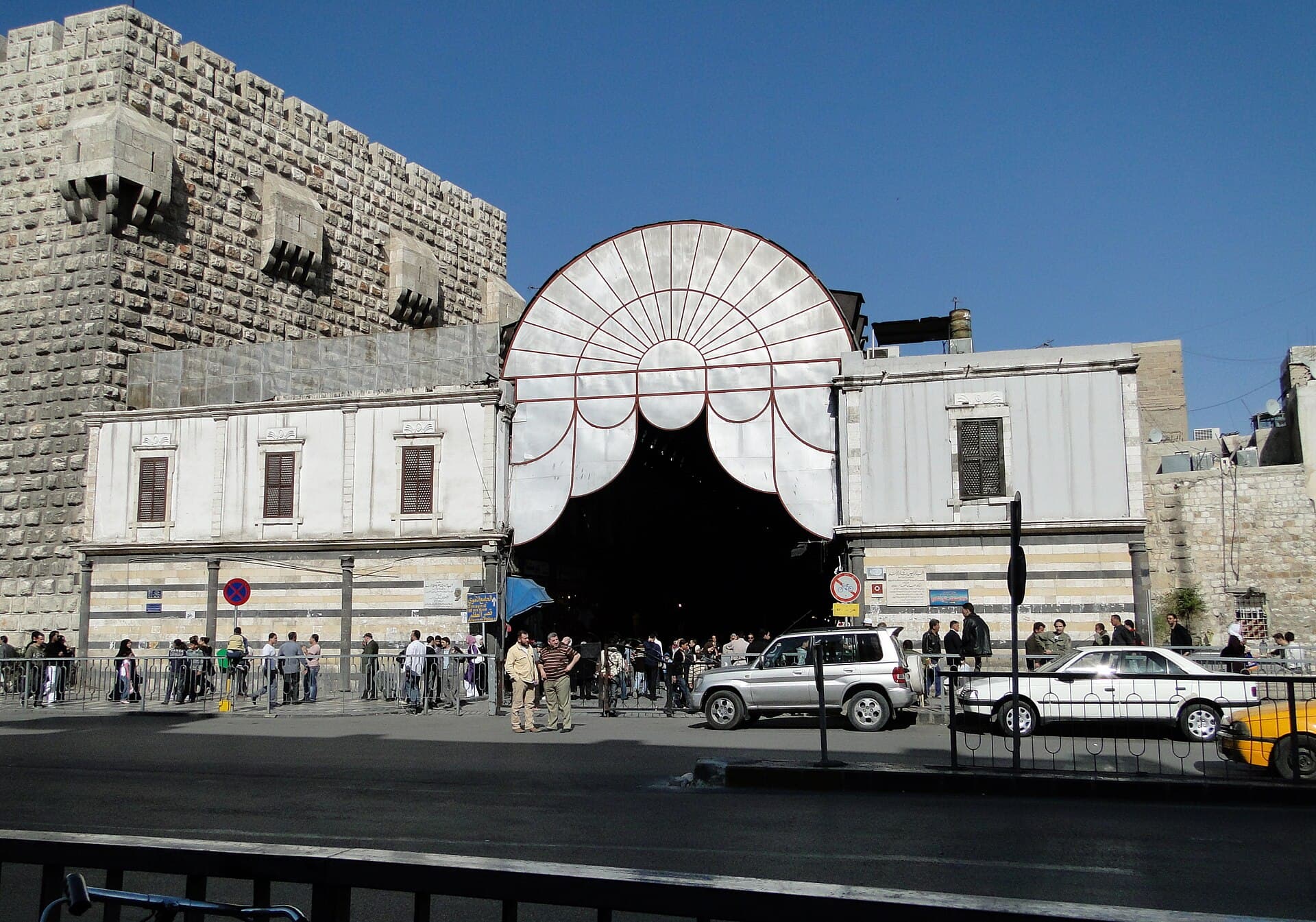
The souqs of Damascus carry separate names, and the names are not incidental: each comes from a trade and most still carry a trace of it. Aleppo is different — there the souq is a single network with its arms joined together. This page says what each souq sells; how to walk one and how to bargain is on another page.
Damascus: the visitor’s souq and the city’s souq
Al-Hamidiyah is the best known. About half a kilometre of covered main artery, with cloth, spices, soap and sweets down both sides. Its arched tin roof came out of the French bombardment of 1925 riddled with holes, and those holes now become points of light on the floor in daytime. At the eastern end the roof stops and the courtyard wall of the Umayyad Mosque appears between Roman columns left from the temple of Jupiter. Midhat Pasha is a more local market: the covered western stretch of Straight Street, named after the governor who reorganised it in 1878, with cloth sellers, abayas and keffiyehs, thread and buttons.
Damascus: smell, hardware, food
Bzuriye is the spice souq. It starts south of the Umayyad Mosque and runs down to Most of the shops are herbalists — spices, dried herbs, nuts, candles, olive oil and laurel soap. Mulabbas, the sugared sweet handed out at Damascene weddings, is sold here too. Manahiliyeh is not a visitor’s souq but a working one: named after the sieve makers, it now sells hardware, hand tools and industrial kit. Sinaniyeh is held to be the first covered souq in Damascus; governor Sinan Pasha founded it in 1590, it runs 105 metres, and today it is the street of broom, sieve and censer makers. Jazmatiyeh is the food street of the Midan quarter: the name is left from the bootmakers of the Mamluk period, and the row today is sweet shops and popular food stalls.
Aleppo: one network
The Medina souq is one of the longest covered markets in the world: kilometres of street under stone vaults, khans scattered among them, and a separate craft in each lane — soap makers, coppersmiths, silk merchants. Walking it end to end without stopping takes half an hour. Nobody crosses it in half an hour. It was badly damaged in the war; repair continues and shops reopen section by section, so which arm is open changes. For crafts there is a separate address: Khan al-Shuna has worked as a crafts market since 1989, with 49 separate trades under a single stone vault.
Which is for whom
Al-Hamidiyah and the Medina souq have seen visitors, and prices and manner follow from that. Midhat Pasha, Manahiliyeh, Sinaniyeh and Jazmatiyeh work for the city, and that is exactly their appeal: with few visitors, both the bargaining and the price behave differently. You can do both in one day — spend the morning in a working souq and go into the main artery in the afternoon.
What to buy
Spices, dried herbs and laurel soap in Bzuriye; cloth and keffiyehs in Midhat Pasha; soap, copper and weaving in Aleppo; handloom work in Khan al-Shuna. On quality there is one rule: the good stuff is judged by hand at the counter, not in the window. Do not start a purchase without asking the price, and there is no single tariff.
Tips
- Give the morning to a working souq and the afternoon to the main artery
- Bzuriye and Midhat Pasha meet end to end; join them in one walk
- Which arm is open in Aleppo changes; ask before you go in
- Khan al-Shuna holds 49 crafts under one vault; that is the address for handwork
- Do not buy without asking the price; there is no single tariff
Transparency
- How this was chosen
- This page carries the fastest-ageing information on the site: visa rules, exchange rates, border crossings and SIM prices change several times a year. The verification date above says when the facts were last put through their sources; for anything later, check your own foreign ministry travel advice and a Syrian consulate. No figure that is not known for certain is written here.
- Facts checked
- September 2026
- Last updated
- September 15, 2026