How to plan two days in Aleppo
Day one runs from the citadel through the souq to Jdeideh; day two takes the museum, the gates and the courtyards. Which walk fits which half day, and where to stay.
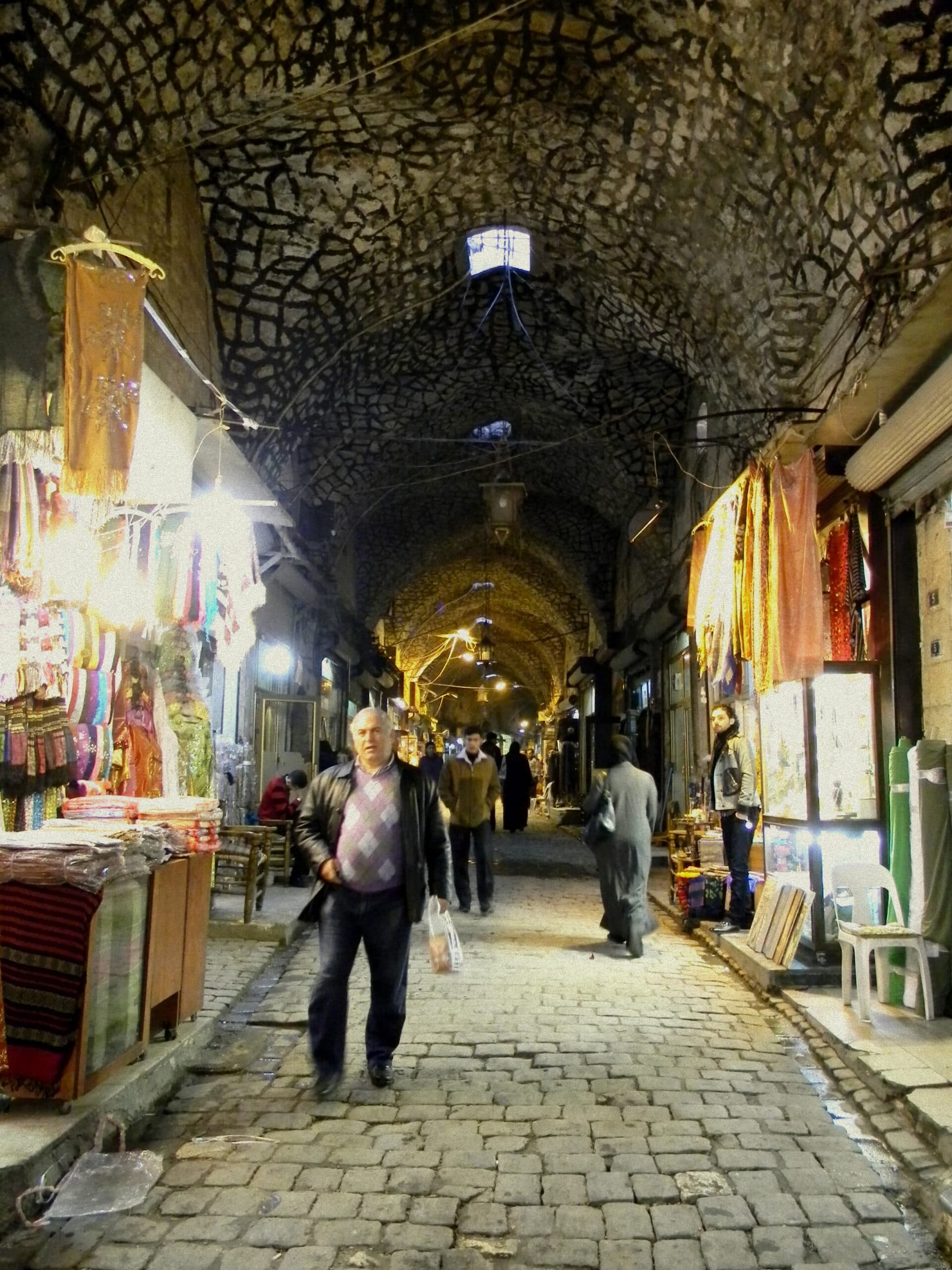
Aleppo reads along a single line: citadel, souq, mosque, gates. This page cuts that line into two days. The city’s own page says what the place is; the question here is narrower — which walk belongs to which half day, and why the order runs this way.
What this plan assumes
Both days are on foot. The old city is not flat: the citadel is not on a hill, it is the hill, and the climb belongs at the start of a day. Which arm of the souq is open changes month by month; repair moves quarter by quarter and a closed arm can stretch the walk. The main line is walked safely, but building work cuts across side lanes. Asking your hotel about the state of that week is where the walk begins.
Day one: from the citadel to Jdeideh
Morning. Start at the citadel. The bridge and the gate tower are in shade in the morning, the stone is still cool, and the climb happens at the freshest hour of the day. From the top of the mound the whole old city is laid out, so you read the rest of the day from above before you walk it.
Midday. Come down westward and enter the covered souq. This stretch is vaulted throughout and shaded: the market stays cool while the street outside does not. The soap khan sits on this line, with the blocks curing in the courtyard. The lunch stop falls inside the market.
Late afternoon. Leave the souq to the north, cross the clock tower square and go on into Jdeideh. The paved square and the lanes with wooden oriels take the late light from the side. From the citadel to here the whole day is 2700 metres, six stops and eight hours.
Day two: the museum, the gates and the courtyards
Morning. Begin at the Aleppo National Museum. The basalt gateway from Tell Halaf stands at the entrance, and the museum turns what you guessed at the citadel into evidence: the layers under the city. The walk from the museum towards the citadel square is 1800 metres.
Midday. Move to the wall line. Bab Antakya and Bab Qinnasrin are the western and southern gates; with the stretch between them and the clock tower square they make a loop of 2500 metres. The gates are seen from outside and there is no entry charge.
Late afternoon. The courtyards. The pool in the Mamluk hospital, the courtyard at Shibani, the reused Byzantine capitals in the Halawiyya madrasa and the facade of the Yalbugha bath house come to 1200 metres together. Aleppo’s courtyards are invisible from the street: a narrow door, a wide interior. This half day is what shows you that.
If you only have one day
Cut the citadel, not the souq. Morning: only the gate tower and the upper terrace of the citadel. Midday: the covered souq and the Great Mosque. Late afternoon: Jdeideh. That is day one compressed, and it still gives the city’s order of trade, worship and defence intact. The museum and the gates drop out; both belong to the load of day two.
If you have a third day
The third day goes northwest of Aleppo: four basilicas built around a single pillar, the pilgrim town below them, and an Iron Age temple looking over the Afrin valley. That is 111 kilometres, nine hours and a car with a driver. All three stops are open ground — no shade, nobody selling water. The detail of that day has its own page.
Where to stay
Location matters more in Aleppo than in other cities, because repair changes street by street: one quarter can be open while the next is still a building site. Jdeideh falls inside both days — the citadel and the souq are walkable, and the hotels converted from courtyard houses are there. Aziziyah and Sulaymaniyah are on the newer side: wide streets, more shops and restaurants, a short taxi to the old city. Find the address on a map before you hold a room, and ask the hotel about the state of the surrounding streets today.
Eating: what to look for in Aleppo
The food records for Aleppo on this site are dishes rather than addresses, because we are not in a position to verify individual venues here. What to look for is clear enough: kebab over charcoal, the cherry kebab in its sour sauce, the open-topped sfiha, muhammara with walnut and pomegranate molasses, kibbeh cooked with quince, and freekeh. On the sweet side there are karabij, maamouniyeh and knafeh, and knafeh is eaten at breakfast too. Take the midday break inside the souq and the evening one over in Jdeideh. No venue serving alcohol is recommended on this site, and the same measure holds in Aleppo.
Tips
- Take the climb at the start of the day; the citadel is shaded in the morning
- Ask the hotel which arm of the souq is open; it changes month by month
- Time the midday heat for the covered souq, where the vaults stay cool
- With one day only, cut the citadel and keep the souq
- A third day outside the city needs a car with a driver
Transparency
- How this was chosen
- This page carries the fastest-ageing information on the site: visa rules, exchange rates, border crossings and SIM prices change several times a year. The verification date above says when the facts were last put through their sources; for anything later, check your own foreign ministry travel advice and a Syrian consulate. No figure that is not known for certain is written here.
- Facts checked
- September 2026
- Last updated
- September 15, 2026