Abu Qubays Castle
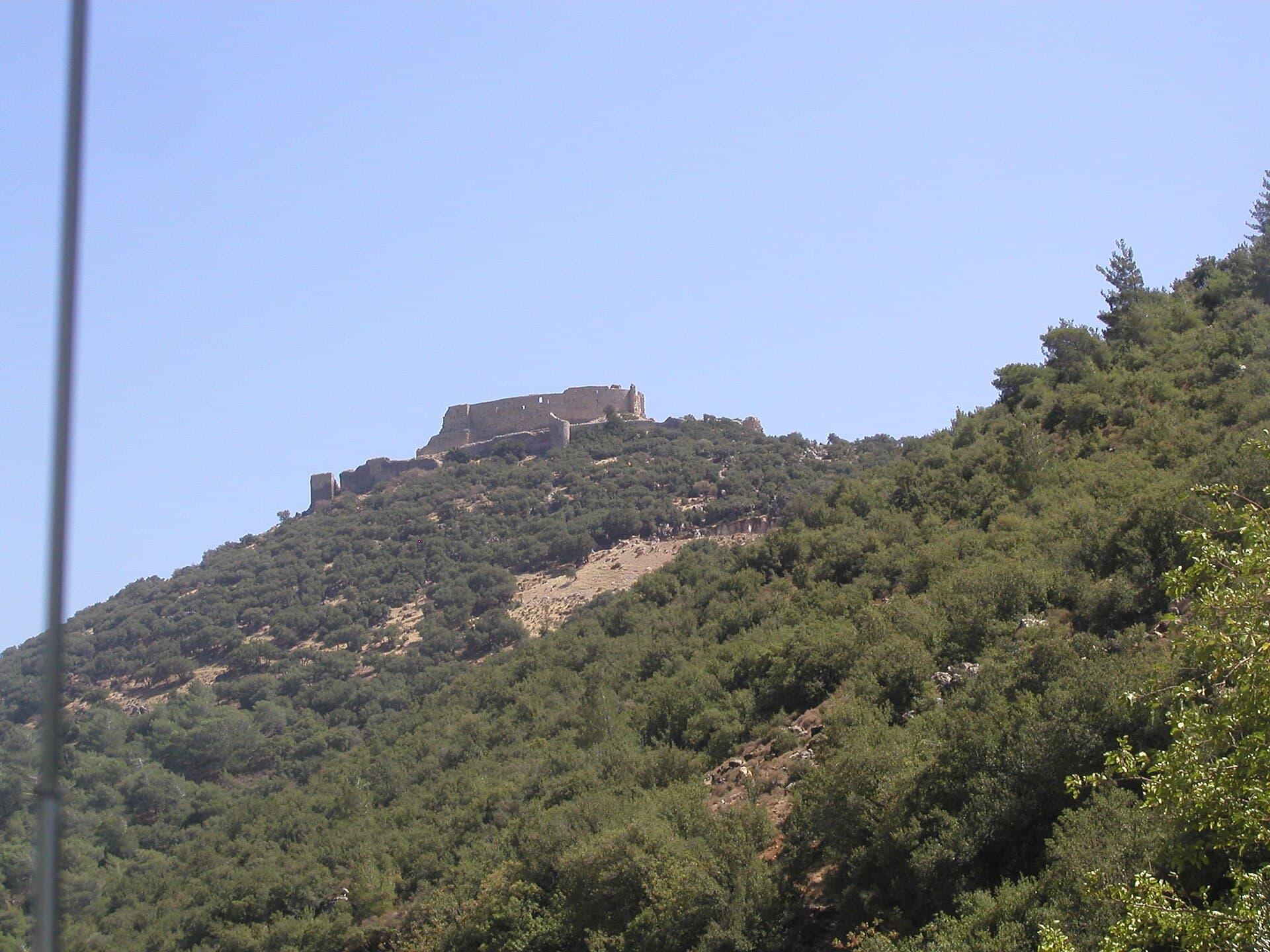
An Assassin castle on the eastern slope of the coastal range, above the Ghab plain. The Crusaders called it Bokabeis; today it is a ruin among the trees.
- Opening hours
- Sunrise to sunset, unstaffed site
- Entry
- Variable — check on arrival
- Duration
- 60 minutes
- Best time
- Morning; the plain hazes over in the afternoon and the view closes
- Period
- Byzantine — Ayyubid
- Address
- Above Abu Qubays village, Tell Salhab subdistrict, Hama governorate
The castle stands on a hilltop on the eastern slope of the Jabal Ansariya, looking out over the Ghab plain. A village of the same name lies below it; the 2004 census counted 758 people there. From the top you see the plain and the Orontes whole — and that view is why the castle changed hands for eight centuries.
Getting there
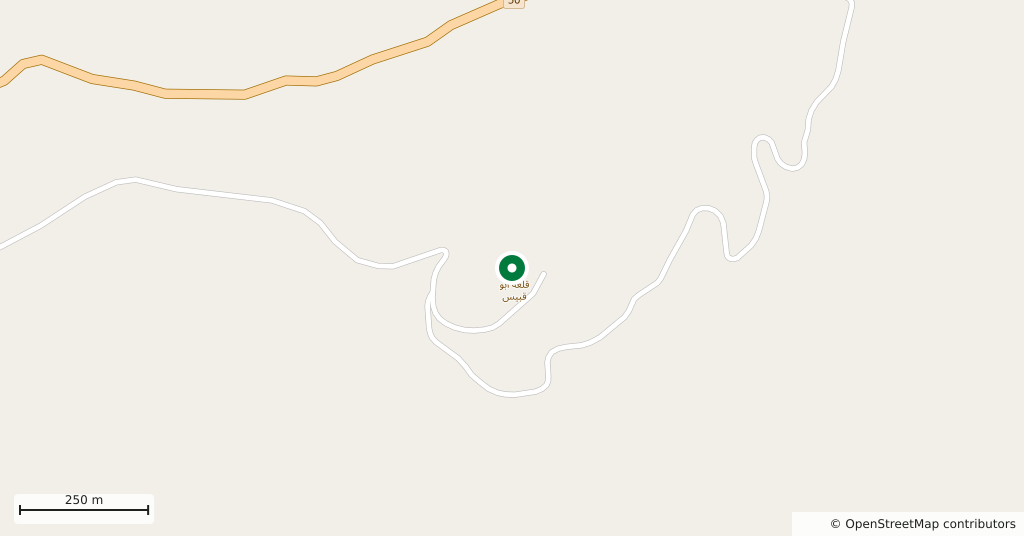
North-west of Hama, off the road between Tell Salhab and Deir Shamil. You can drive up to the village and walk the last stretch; the path is stony and steep, running between olive trees and oak scrub.
How long it takes
An hour, climb included. The interior is not large, but following the line of the wall takes time.
What to see
The castle is ruinous, and what stands carries the marks of Ismaili fortresses: small, irregular masonry. There is an outer defensive wall with towers, a small keep in the middle for provisions and quarters, and a number of subterranean storage chambers below. Inside are rooms, a vaulted chamber and the remains of a tower. Forest surrounds it; to find the castle from below, look for the line of stone above the treeline rather than for the hill itself.
Its history
The Arabs first fortified the site in the Abbasid era, the Byzantines strengthened it in the late 10th century, and it was burned during Basil’s campaign in the same century. After 1099 the Fatimid commander Iftikhar ad-Daula, who had withdrawn from Jerusalem, held it along with the castles of al-Qadmus and al-Kahf. In the 1130s or 1140s the Ismailis bought it; the Crusaders called it Bokabeis. The Ismailis paid the Hospitaller knights of Margat 800 gold pieces a year plus fixed measures of barley and wheat. In 1175 the lord of Abu Qubays, Nasih al-Din Khumartekin, warned Saladin of an assassination attempt outside Aleppo and was killed by the attackers; by 1182 his son Mankarus held the castle and commanded Saladin’s troops in Hama. In 1233 the castle passed to Ayyubid rule.
What most visitors miss
The underground stores. The real work of the castle was feeding a garrison for months, and the part that shows it is not the wall but these rock-cut chambers. Al-Kahf, al-Qadmus and Masyaf, along the same ridge, belonged to the same network.
Tips
- The last stretch is on foot; you need shoes that grip
- Do not leave without going down into the storage chambers
- The site is unstaffed and unfenced — keep back from the edges
- Masyaf castle lies south along the same ridge; the two fit one day
Transparency
- How this was chosen
- Written by hand; opening hours, entry fee and coordinates are kept as data. A field that is not known for certain is marked as variable rather than guessed.
- Facts checked
- September 2026
- Last updated
- September 15, 2026