The Al-Hasanayn Mosque, Hama
A small two-domed mosque below the citadel of Hama, rebuilt by Nur al-Din after the earthquake of 1157. A six-line inscription at the entrance records the work.
- Opening hours
- Around prayer times; the door may be shut in between
- Entry
- Free
- Duration
- 20 minutes
- Best time
- Just after a prayer, when the door is open and the congregation has left
- Period
- Zangid rebuilding, 12th century
- Address
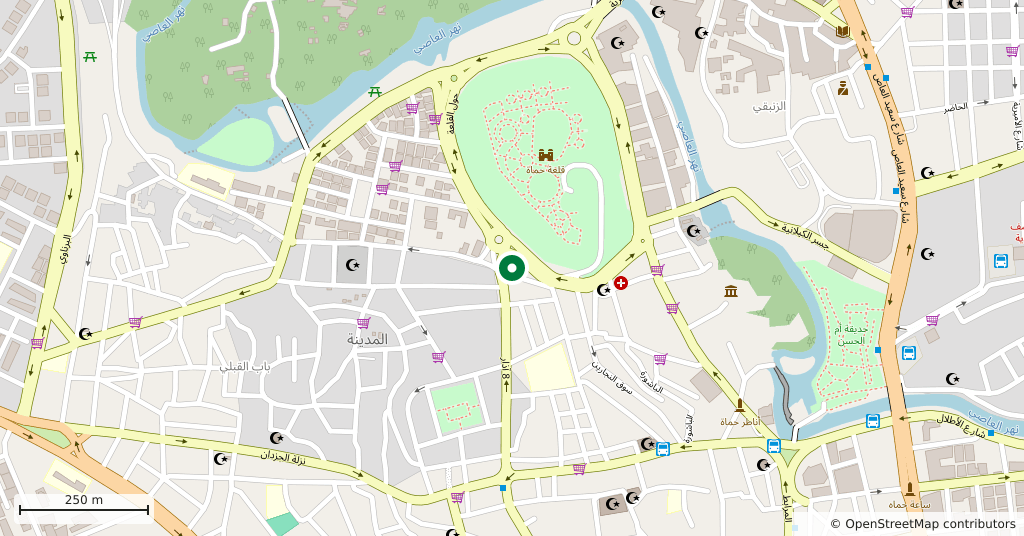
- South of the citadel mound, between al-Madina and al-Bashoura, Hama
The Al-Hasanayn Mosque is small. It has two domes and stands just south of the citadel mound in Hama, between the al-Madina and al-Bashoura quarters. Sources date it to the 4th or 5th century of the Hijri calendar, that is the 10th or 11th century. Much of what stands today comes from the rebuilding ordered by Nur al-Din Zangi after the earthquake of 1157.
Where the name comes from
It was first known as the Hasan Mosque. In everyday speech it became the mosque of Hasan and Husayn, and today it is al-Hasanayn, “the two Hasans”.
Getting there
Follow the road that rings the citadel mound down to its southern foot; the mosque stands beside the road. The Cathedral of Saint George is in the same area, a few minutes away on foot, and Khan Rustem Pasha is also within walking distance.
What to see
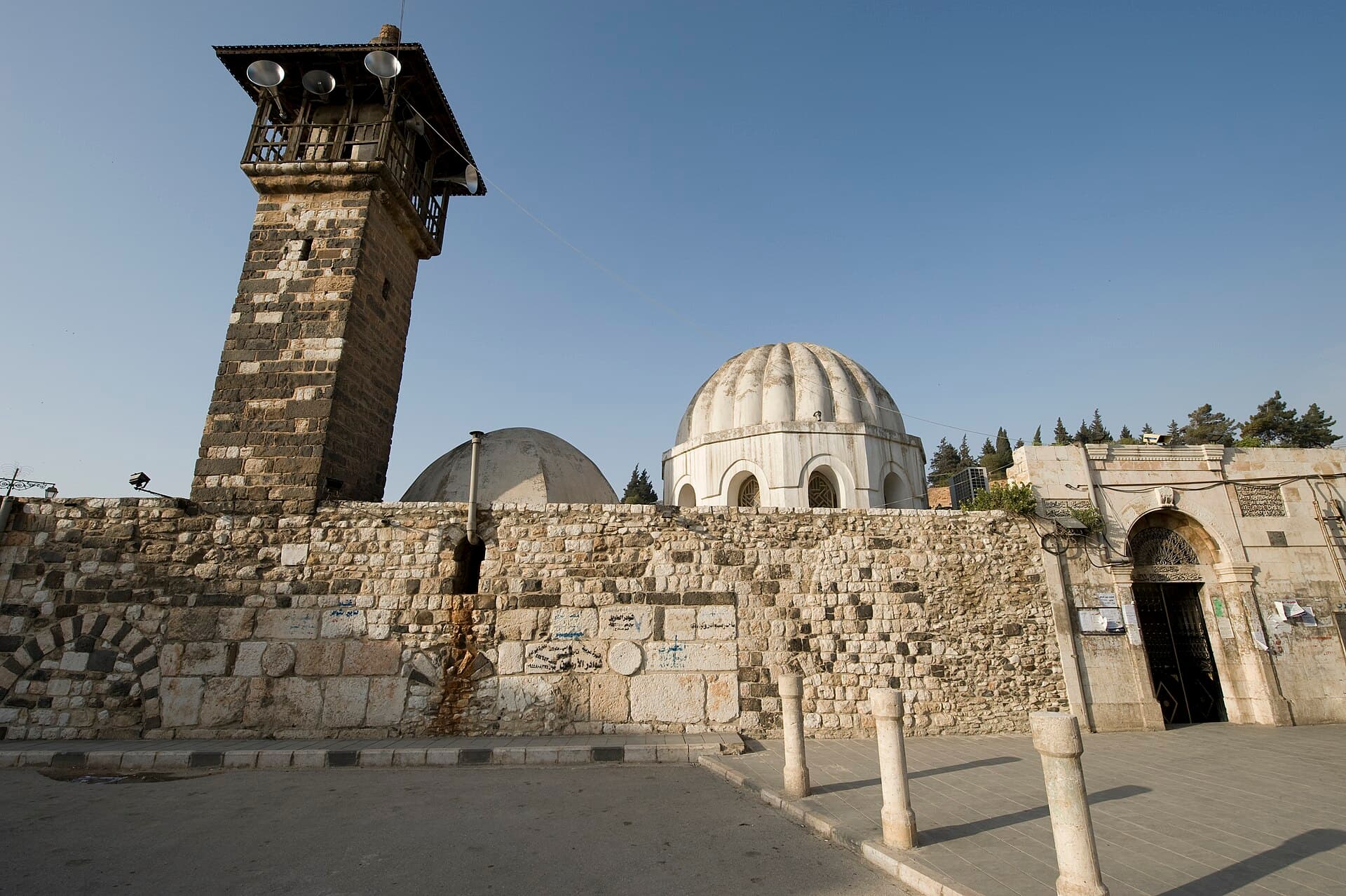
The prayer hall is rectangular. Two domes sit on it. The western dome, on a single drum, is the older one. Nur al-Din rebuilt the eastern dome, which sits on two drums, together with other parts of the building. The minaret is built in courses of black and white stone and faces the road.
On the east side of the prayer hall is a tomb attributed to the Prophet Jonah. To the north are rooms left from the al-Furaijiyya Madrasa, attributed to Zayn al-Din Faraj, vizier to the Ayyubid ruler al-Mansur I. Water once reached the mosque from the Orontes by way of the al-Mamouriyya noria, one of the city’s great water wheels.
The earthquake and the inscription
The earthquake of the Hijri year 552, or 1157, struck Hama, Shayzar, Apamea and Maarat al-Numan together and badly damaged the mosque. The six-line inscription at the entrance says that the mosque was rebuilt after its destruction in the earthquake of the year 552, on the order of Nur al-Din Mahmud ibn Zangi. A newer line of text just above the door records that the door was renewed in the Hijri year 1349.
Do not miss
Look up. The inscription stone is to the upper right of the door. It sits above eye level, to the right of the arch, and gives the age of the building in its own words.
Tips
- The six-line inscription to the upper right of the door records the repair after the earthquake of 1157
- Compare the two domes from outside: the difference in drums shows two phases of building
- Cover shoulders and knees; do not go in during prayers
- Stop on the way up to the citadel mound or on the way down; the mosque is just south of it
Transparency
- How this was chosen
- Written by hand; opening hours, entry fee and coordinates are kept as data. A field that is not known for certain is marked as variable rather than guessed.
- Facts checked
- September 2026
- Last updated
- September 15, 2026