The Al-Omari Mosque in Bosra
Its foundation is dated by Umayyad inscriptions, making it one of the rare mosques left from the first century of Islam. What to see, and what the stones say.
- Opening hours
- Daylight hours, outside prayer times
- Entry
- Free
- Duration
- 30 minutes
- Best time
- Morning, when the courtyard is empty and the stone pattern is unshaded
- Period
- Umayyad — Ayyubid
- Address
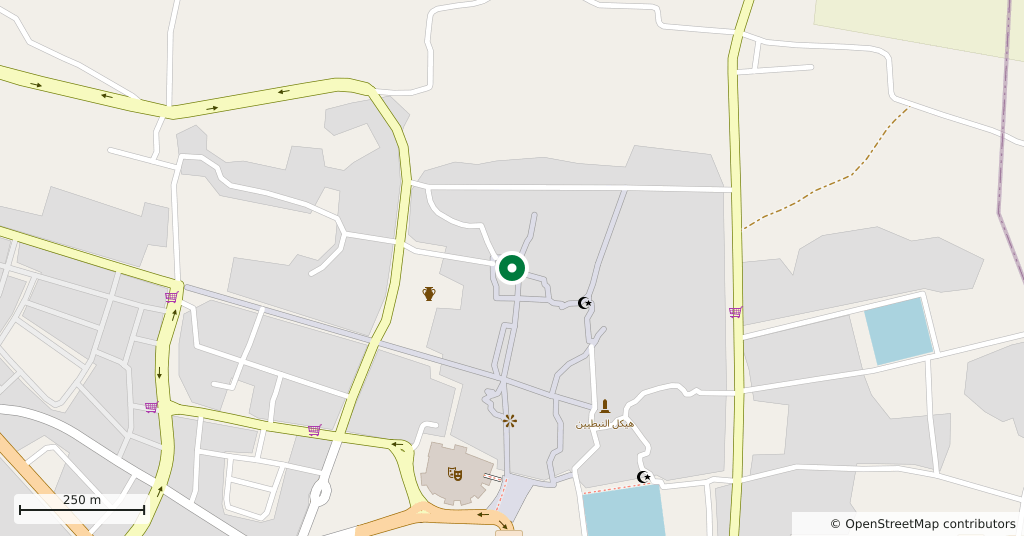
- North end of the colonnaded street, east of the Roman market, Bosra
The great mosque of Bosra. Its name comes from an attribution to Umar ibn al-Khattab, the caliph at the time of the Muslim conquest of Syria; the attribution comes from tradition, the date from inscriptions. Two Umayyad texts put the founding of the mosque and its minaret between 720 and 745, which makes the building one of the rare things left standing in Syria from the first century of Islam. But most of the stone you are looking at belongs to medieval repairs, and knowing that does not diminish the place — it explains it.
Getting there
At the northern end of the colonnaded street, just east of the Roman market. Seven or eight minutes on foot north from the theatre. It shares its corner with the Manjak bath house next door, so you see the two together.
What to see
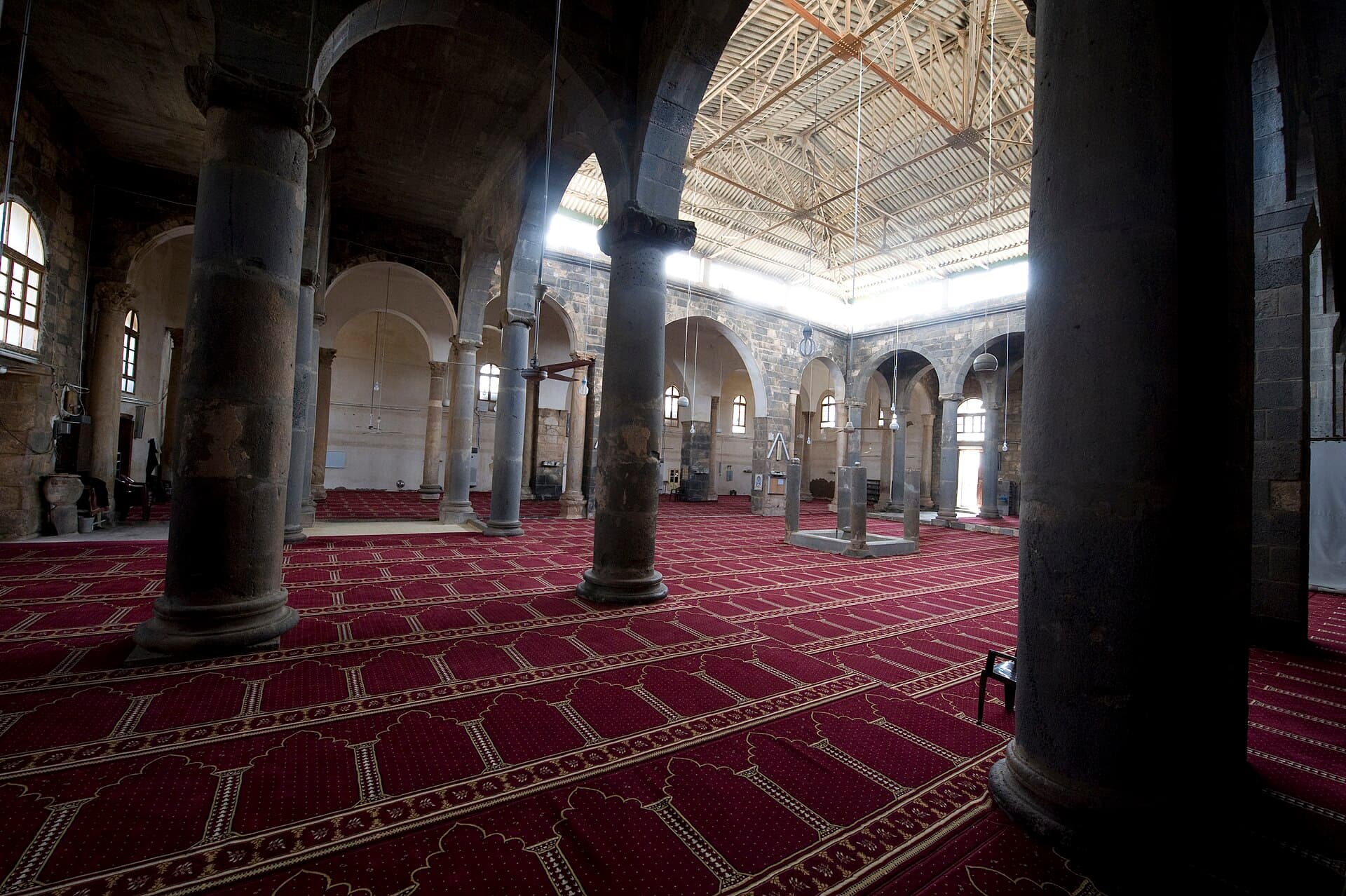
The courtyard is 16 metres by 13, with a square ablution basin at its centre. The floor is laid in geometric patterns of black basalt and white limestone. Four arcades run round the courtyard; the southern one is the prayer hall. Inside stand 44 columns, and no two of them match — their capitals were salvaged from buildings of different centuries. The face of the prayer hall carries bands of vegetal ornament carved in stucco, with panels of floriated Kufic script between them.
How solid is the minaret claim
The square minaret was for a long time held to be the oldest surviving minaret in the Islamic world. Research has withdrawn that claim: the inscription is Umayyad, but most of the masonry belongs to Seljuk and Ayyubid repairs. Kumushtakin, the Burid ruler, worked on the building in 1122, and the Ayyubids overhauled it and the courtyard in 1221. The square form itself is a subject of its own — it is thought to derive from the bell towers of Syrian churches, and there are contemporaries in Damascus and Aleppo.
What not to miss
Look down at the courtyard floor. While the mosque stood on the pilgrimage road, this courtyard served the caravans as both market and dormitory; the stone is polished from centuries of being walked on. The second thing is the capitals: acanthus leaves on one, an entirely different hand on the next, a third that does not fit the column at all. The mosque gathered up the stone inventory of Bosra and put it under one roof.
Where it stands now
The mosque is open for prayer and open to visitors. It was damaged during the war and the sources disagree about how badly: some report that the minaret came down, others describe light damage and repair. The building had already been extensively restored in 1950, and again between 1967 and 1981.
Tips
- Look at the black-and-white geometric paving in the courtyard before you walk inside
- Compare the capitals one by one; no two of them are alike
- Go outside prayer times; women need a head covering
- The Manjak bath house next door shares the same corner, so you need no further directions
Transparency
- How this was chosen
- Written by hand; opening hours, entry fee and coordinates are kept as data. A field that is not known for certain is marked as variable rather than guessed.
- Facts checked
- August 2026
- Last updated
- September 15, 2026