The Cathedral of Bosra
A centrally planned Byzantine church consecrated in 512, a circle set inside a square. Where it is, what survives, and how it differs from the basilica beside it.
- Opening hours
- Sunrise to sunset; the ruin is in the open
- Entry
- Variable — confirm on the spot
- Duration
- 30 minutes
- Best time
- Morning or late afternoon; midday light flattens the basalt
- Period
- Byzantine
- Address
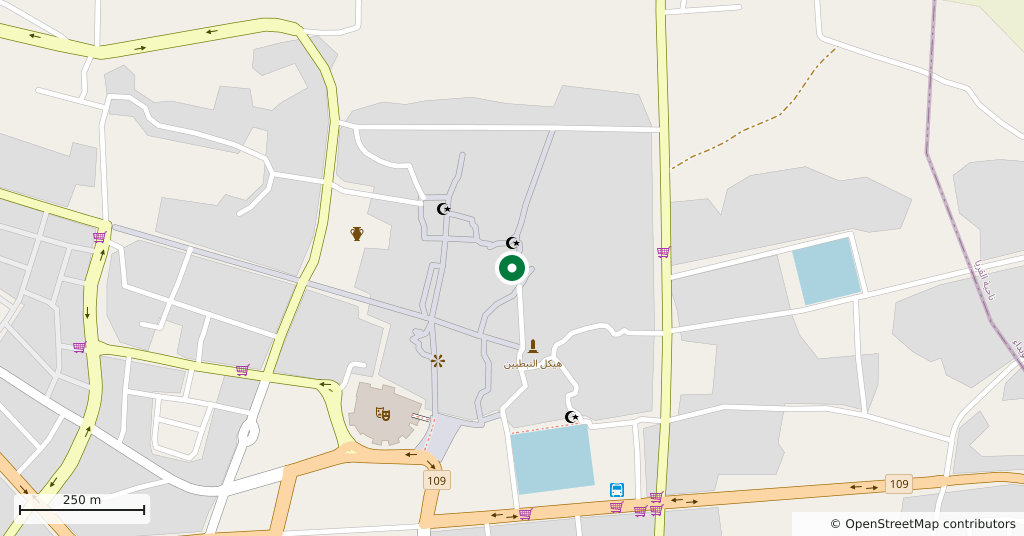
- Eastern end of the ancient city, south-east of the Mosque of Omar, Bosra
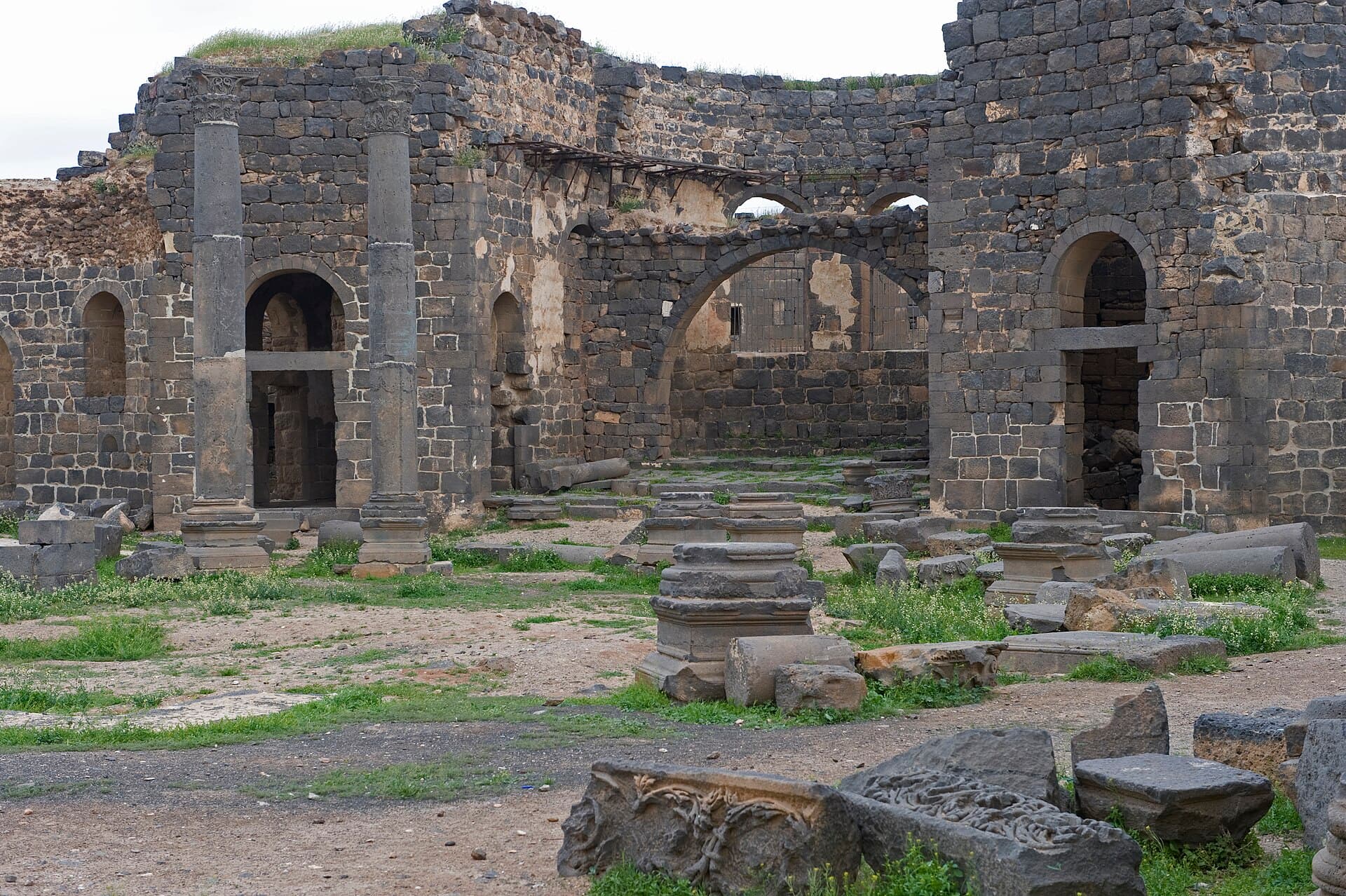
At the eastern end of the town, among basalt walls and toppled column bases, stand the remains of a church. An inscription now lost recorded that the building was consecrated in 512 by Julianos, Archbishop of Bosra; that is where the name cathedral comes from. It was dedicated to three Roman soldiers martyred for their faith — Sergius, Bacchus and Leontius.
Why it matters
Because of the plan. A square outer shell, a four-lobed central space carried on columns inside it, a wide apse to the east, a dome above. In an age when the basilica plan dominated, this was an early and ambitious attempt at a centrally planned church. UNESCO calls it an extremely important example in the evolution of early church architectural forms, and it is accepted as having shaped later Christian architecture and, to a degree, Islamic architecture as well.
What survives
The dome is gone and most of the building is ruin. What stands is the plan itself: the square walls, the apse, and the circle the column bases draw on the ground. Some of the visible stone is spolia — taken from Nabataean and Roman buildings and carried here, so that two different hands sit side by side in the same wall. Traces of fresco survive in patches of plaster.
The building next door
The ruin immediately north of the cathedral is known as the Basilica of Bahira. The name comes from the Christian monk who, in Islamic tradition, recognised the young Muhammad when a caravan passed through. Modern historians do not accept the story as historical, and some medieval Muslim scholars rejected it too; but the building is real and you can walk up to it. The two are separate structures and they are constantly confused — even photo archives carry frames filed under the wrong name.
How long it takes
Half an hour. The ruin is not large, but you need to stand in the middle and turn all the way round to read the plan; from outside you see only a wall. You reach it through the houses around it, and there is no separate gate.
Tips
- Stand in the middle and turn a full circle; the plan only reads from inside
- The ruin to the north is the Basilica of Bahira, a separate building — the two are often confused
- The surviving fresco traces are low down and in shadow; you will not see them unless you look
- Compare the column bases: some were salvaged from Nabataean and Roman buildings
Transparency
- How this was chosen
- Written by hand; opening hours, entry fee and coordinates are kept as data. A field that is not known for certain is marked as variable rather than guessed.
- Facts checked
- August 2026
- Last updated
- September 15, 2026