Hammam Manjak
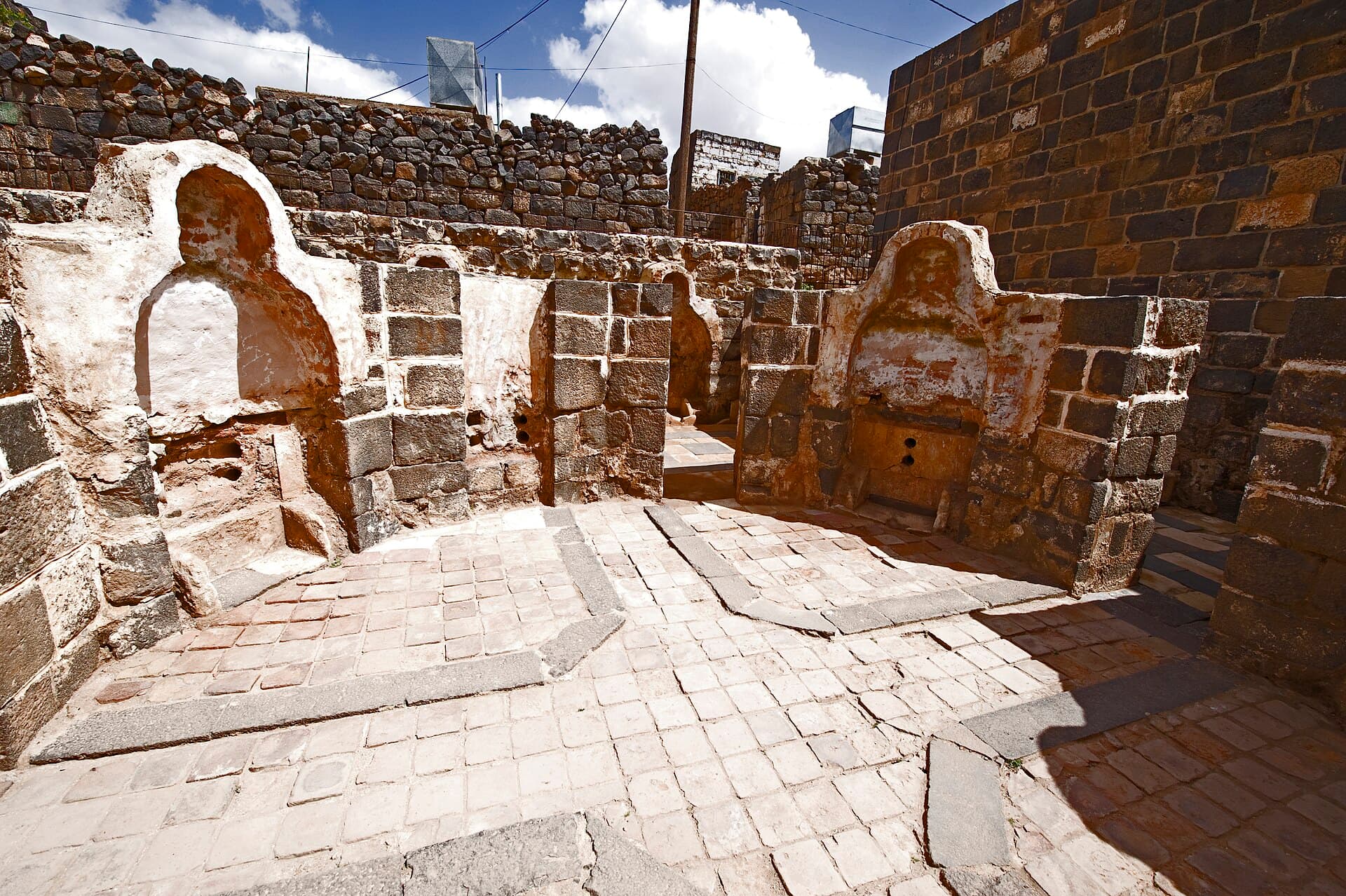
A Mamluk bathhouse in Bosra, across the street from the Umari Mosque. Built in 1372 by the governor of Damascus; roofless now, so the plan reads clearly.
- Opening hours
- Open ruin, all day
- Entry
- Free
- Duration
- 20 minutes
- Best time
- Morning or late afternoon; the site is open to the sky and midday is harsh
- Period
- Mamluk
- Address
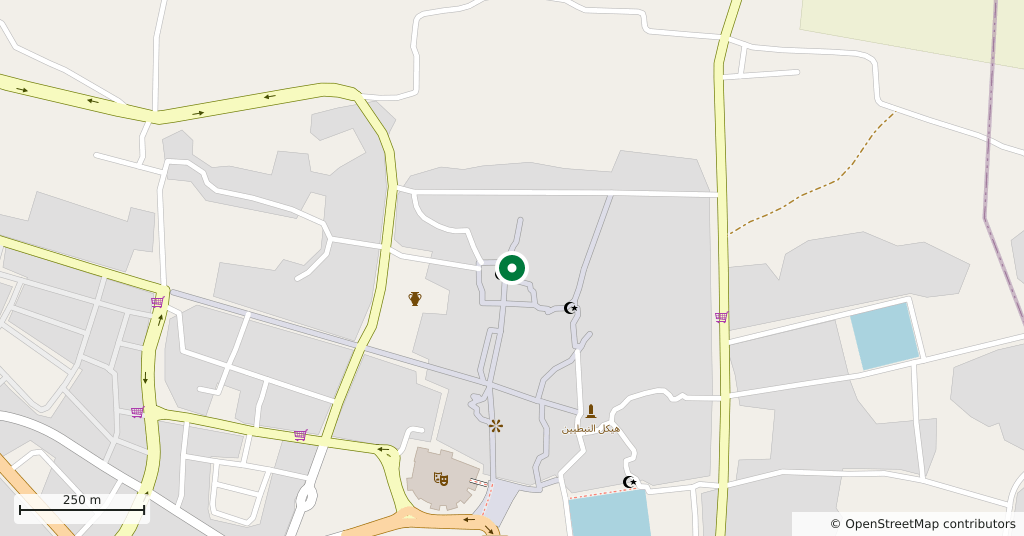
- North end of the colonnaded street, opposite the Umari Mosque, Bosra
At the north end of Bosra’s colonnaded street, directly opposite the Umari Mosque, stand the remains of a bathhouse. Its inscription ties the building to 1372 and to Amir Manjak, governor of Damascus. The roof came down long ago, which is why the plan of the hammam now reads from above like a page.
Getting there
Walk north from the Roman theatre for seven or eight minutes. Once the Umari Mosque is in front of you the bath is already on the opposite corner; the two share the same junction and no further directions are needed.
What to see
Excavation has opened the building down to its rooms. The walls are black basalt, cut into half-domed niches lined with white plaster, and the reddish mortar under that plaster shows through in places. The floor is laid in dressed stone with the lines of water channels running between the slabs. You can follow the rooms as they shrink and drop from the cold hall towards the hot one — that sequence is how a hammam works, and here the whole of it is in the open.
Why a Mamluk bath is here
In the 14th century Bosra was the first major stage on the pilgrim caravan road from Damascus to Mecca. Caravans halted here to take on water and to wash. Manjak did not put this bath up as a pious ornament but as a working station on that road, and that is how the fine stonework of the Damascus style reached a provincial town.
What most visitors miss
Look closely at the white plaster inside the niches. The little domes are not carved from single blocks; they are built up in brick and mortar and then rendered, which is the Damascene method and a stranger to Bosra’s basalt tradition. That plaster is the detail that says most plainly where the building came from.
Tips
- Look closely at the white plaster in the niches; the Damascene method is there
- Follow the rooms as they shrink, and the cold-to-hot sequence lies open in front of you
- The Umari Mosque is on the opposite corner; there is no need to look for it separately
Transparency
- How this was chosen
- Written by hand; opening hours, entry fee and coordinates are kept as data. A field that is not known for certain is marked as variable rather than guessed.
- Facts checked
- August 2026
- Last updated
- September 15, 2026