The Al-Sibaiyah Madrasa
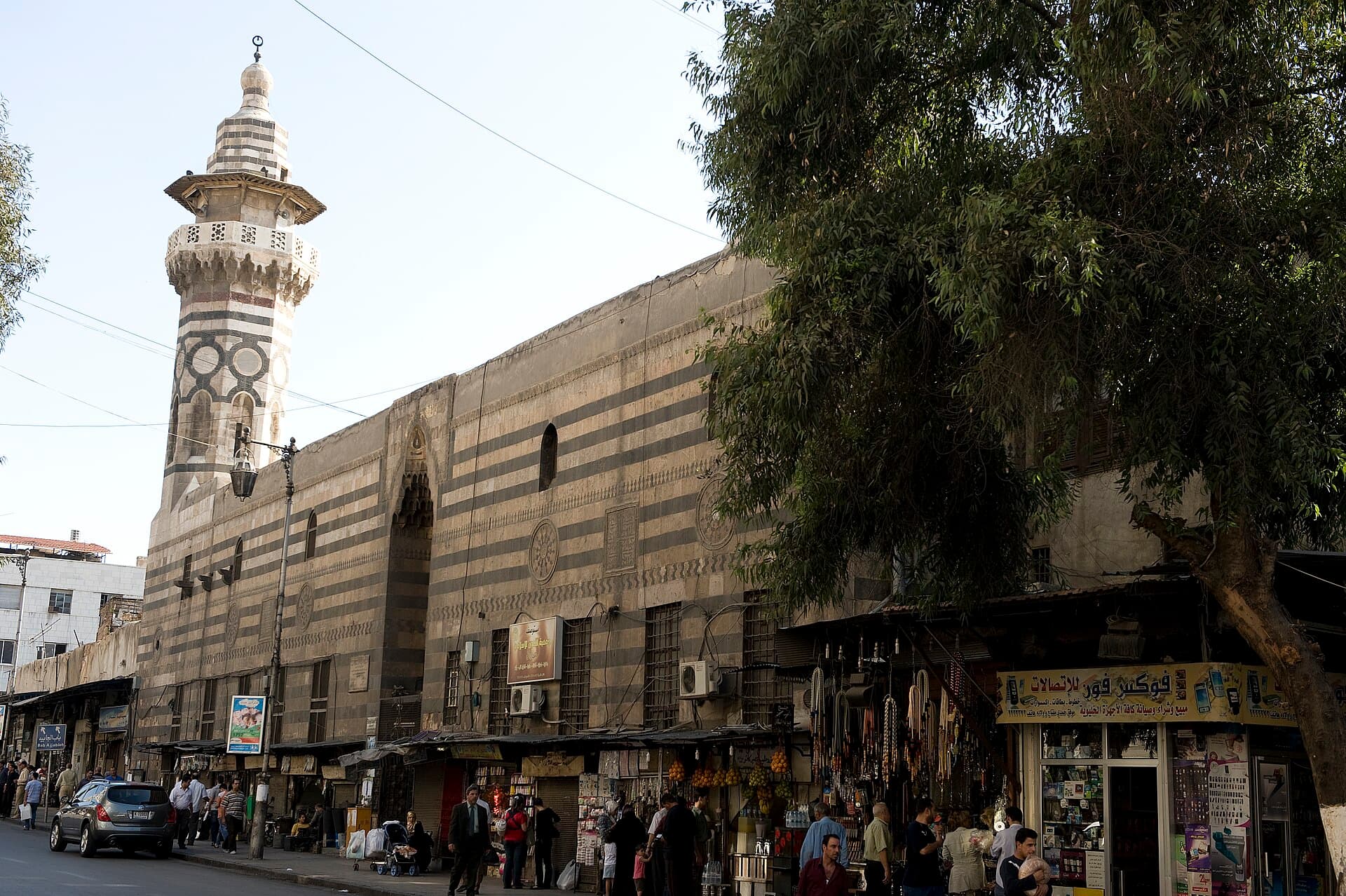
The madrasa and mosque beside Bab al-Jabiya, dated 1515. A facade banded in pale and dark stone, and a ringed minaret, from the last years of Mamluk Damascus.
- Opening hours
- A working mosque; enter outside prayer times
- Entry
- Free
- Duration
- 25 minutes
- Best time
- Morning, when the facade is unshaded
- Period
- Mamluk
- Address
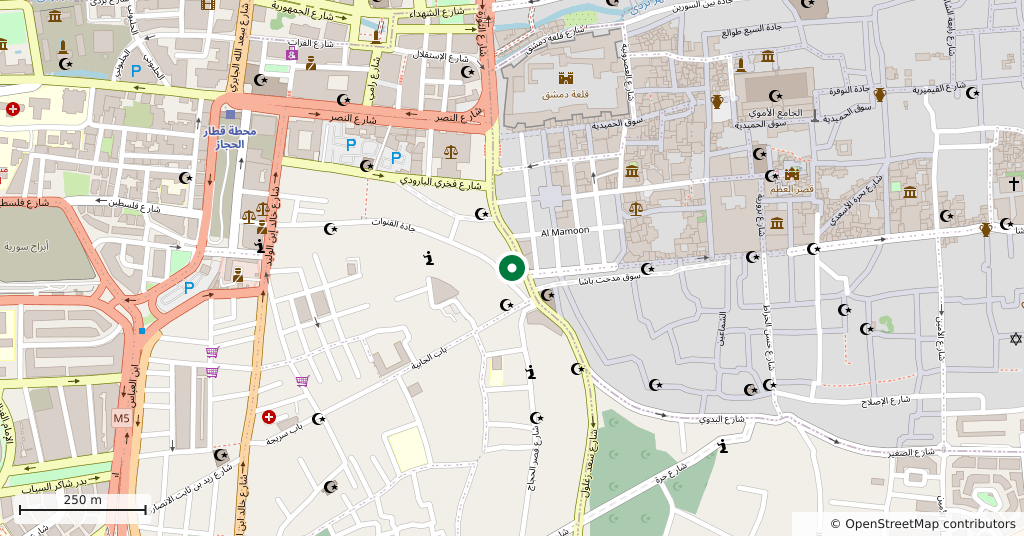
- West end of the Midhat Pasha Souq, beside Bab al-Jabiya, Damascus
A madrasa and mosque at the western edge of the Old City, standing along the souq street. Locally it is called Jami al-Jawami. Most people walk past without noticing it, because the building is not set back behind a courtyard: its facade meets the street directly, with shops lined along its foot. That facade is the point.
Getting there
A few steps east of Bab al-Jabiya, at the western end of the Midhat Pasha Souq. If you have found the gate you have found the madrasa; they share a corner.
What to see
The whole facade is laid in alternating bands of pale and dark stone — the signature of Mamluk masonry. Carved rosettes and inscription panels are set into the wall, and the portal carries a hood of muqarnas, the stalactite vaulting of the period. The minaret rises at the western end of the facade: interlaced rings in black stone across the shaft, a balcony above, and a white cap.
When it was built
The building dates to the early 16th century; the sources give 1515. It carries the name of Sibay, who founded it. That date matters: Damascus passed to the Ottomans the following year, in 1516. The madrasa is therefore one of the last buildings of Mamluk Damascus, standing on the seam between two eras.
What most people miss
The rings on the shaft of the minaret. Seen from the foot of the facade, perspective flattens them; cross to the far pavement, or step back a few paces, and only then does the pattern come out whole.
Tips
- If the door is shut, ask the attendant; it opens between prayers
- Cross to the far pavement to see the minaret pattern
- It shares a corner with Bab al-Jabiya — see both in one stop
- It is in use as a mosque: shoulders and knees covered, a headscarf for women
Transparency
- How this was chosen
- Written by hand; opening hours, entry fee and coordinates are kept as data. A field that is not known for certain is marked as variable rather than guessed.
- Facts checked
- August 2026
- Last updated
- September 15, 2026