Mausoleum of Kujkun al-Mansuri, Damascus
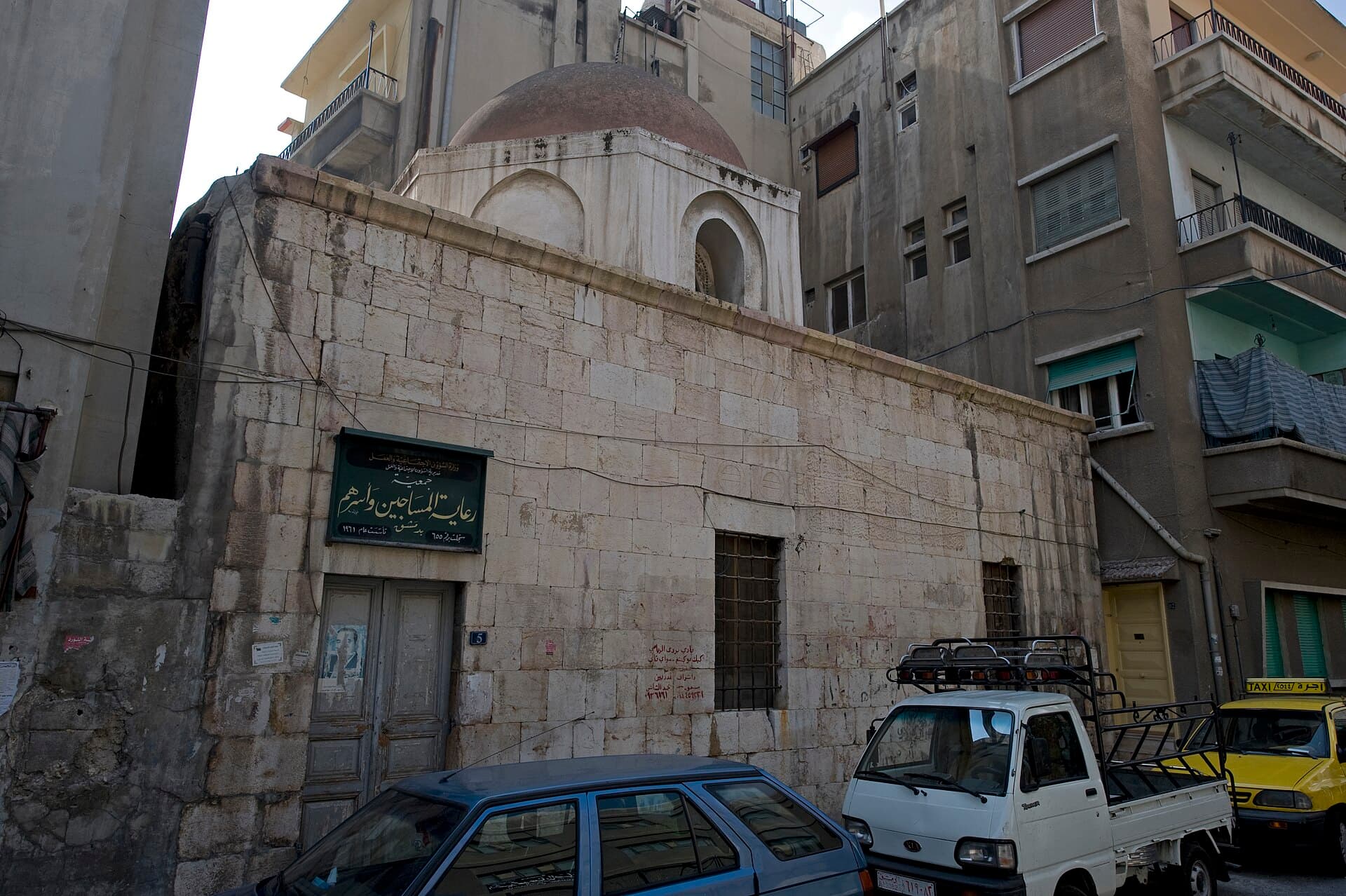
A Mamluk tomb of 1312 in Salihiyya, Damascus, where the emir Kujkun lies. Its endowment inscription runs across three stone courses on the north wall.
- Opening hours
- Variable — current state and visiting hours not verified; the inscription and dome are visible from the street
- Entry
- Variable — confirm on site
- Duration
- 15 minutes
- Best time
- Any time in daylight; the inscription is on the north wall and never in direct sun
- Period
- Mamluk
- Address
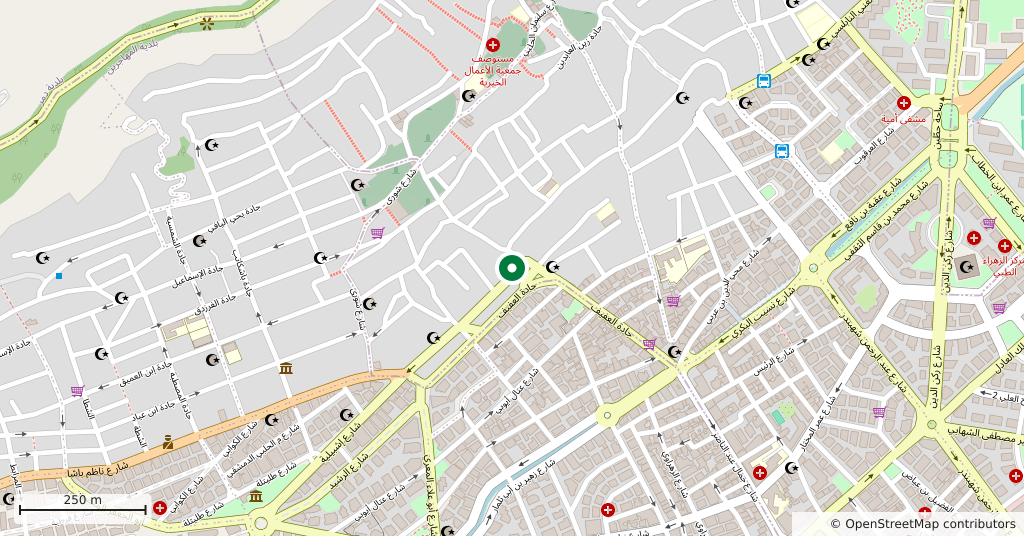
- Afif, opposite the Muhammad Adnan al-Sabbagh school, Salihiyya, Damascus
A dressed-stone Mamluk tomb hemmed in by apartment blocks in the Afif part of Salihiyya, the quarter on the lower slopes of Mount Qasioun. The Mamluks were the Cairo-based sultans who ruled Syria in the later Middle Ages. It was built for the emir Sayfi Kujkun ibn Abdallah, who died in 722 of the Islamic calendar, that is 1322, and was buried here. The most valuable part of the building is its north wall: a dated endowment inscription spread across three courses of stone, running over two windows and a door. What survives today is a single domed room and the founder’s grave.
Who built it, and when
Ibn Tulun, the historian of Salihiyya, writes in al-Qala’id al-Jawhariyya that the tomb stood south of Khan al-Sabil, was built in 712, that is 1312, and had a large dome. The inscription on the north wall carries the date 722, the year of the emir’s death. His name appears in two forms. The Damascus Directorate of Awqaf, the office that manages religious endowments, records him as al-Maliki al-Nasiri. The Wikimedia Commons caption, based on Ross Burns’s guide Monuments of Syria, calls him al-Mansuri and dates the building to 1322.
What the inscription says
The inscription lists the income meant to keep the tomb running. A vineyard at Junaynat al-Miski, a qaysariyya in Damascus — a covered market building — an adjoining upper floor and a share of seven qirats, seven parts in twenty-four, in Khan Qasr al-Hajjaj were all endowed to it. The text also names the neighbouring Rihaniyya Madrasa. So it is more than a deed of gift: it records which buildings stood around the tomb in the 14th century.
What you see
The plan follows the usual layout of Ayyubid and Mamluk tombs. What still stands is a rectangular room with a single-shell dome in the middle of its ceiling. It was used as a small prayer room, and the founder’s grave is inside. The floor area is 83 square metres, and the walls are stone. The Awqaf page says the building once looked out over the Yazid canal and the city below; today apartment blocks close off the view.
In the 2008 photographs on Commons, the street front is large dressed stone, with a barred window and a double wooden door. The dome rises behind the wall on a white drum with arched niches. Another frame from the same set shows the inscription in three lines above the barred window.
Getting there and how long it takes
The tomb is in the Afif part of Salihiyya, opposite the Muhammad Adnan al-Sabbagh school. The Afif Mosque is about 75 metres east on the same street. Burns’s directions from 2009 follow the road that climbs past the French Embassy. The Mausoleum of Amat al-Latif and the Qubbat Rayhan are within 40 metres; this is the southern end of the street of madrasas. Fifteen minutes is enough for the tomb itself. The most recent dated records we have are the 2008 photographs and the Awqaf page from 2012. Its current state and visiting hours are not verified.
Don’t miss
The inscription as a whole. The three courses run along the wall over two windows and the door. Up close it reads in fragments; from the opposite pavement it reads as one text. The document that says this tomb lived off a vineyard, a market building and a share in a khan is the wall itself.
Tips
- Cross to the opposite pavement to see the inscription in one piece
- The Mausoleum of Amat al-Latif and the Qubbat Rayhan are within 40 metres; see all three in one stop
- Ask for the Adnan al-Sabbagh school when looking for it; the tomb is directly opposite
Transparency
- How this was chosen
- Written by hand; opening hours, entry fee and coordinates are kept as data. A field that is not known for certain is marked as variable rather than guessed.
- Facts checked
- September 2026
- Last updated
- September 15, 2026