Al-Shadhbakiyya Mosque, Damascus
A Mamluk mosque of 1453 in Qanawat, Damascus: black-and-white banded stone, a muqarnas portal, a courtyard pool and the founder’s grave, a block south of Tankiz.
- Opening hours
- Variable — current state and visiting hours not verified; the fronts are visible from the street
- Entry
- Variable — confirm on site
- Duration
- 20 minutes
- Best time
- Morning, when the east portal catches the sun
- Period
- Mamluk — Ottoman and 1986 repairs
- Address
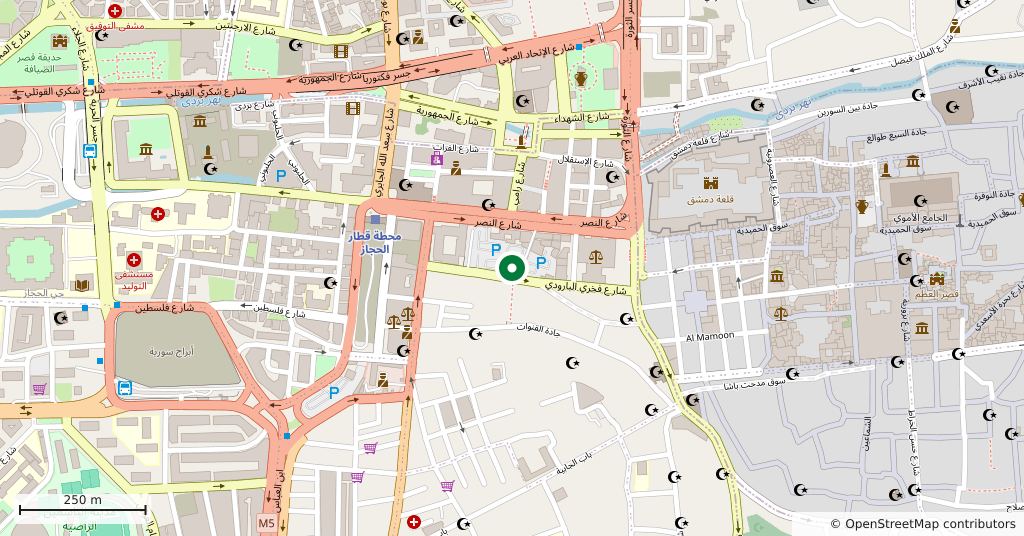
- Corner of Fakhri al-Baroudi Street, south of the Tankiz Mosque, Qanawat, Damascus
A small Mamluk complex on a corner of Fakhri al-Baroudi Street in Qanawat, the district just west of the Old City of Damascus. Sayf al-Din Shadhi Bek built it in 1453, and the building carries his name. The Mamluks were the Cairo-based sultans who ruled Syria in the later Middle Ages. The complex served as both mosque and madrasa, and the founder and his son are buried inside. What you see today is the result of repeated repairs: one in 1816 under the Ottomans, another in 1986. The caption on photographs taken in 2008 describes it as heavily and recently restored.
Where it is and how to find it
The mosque stands a little south of Al-Nasr Street, one block south of the Tankiz Mosque. The two are about 125 metres apart. The side street takes its name from the mosque, Shadhbakiyya, and locals also call it Shabkaliyya, so try both names when asking the way. It sits on the way for anyone walking between the Hejaz Railway Station and the Tankiz Mosque.
What to look at on the outside
The entrance is on the east side. The portal is tall and filled with muqarnas, the tiers of small carved niches that look like stone honeycomb, and it is framed by bands of black and white stone. Syria Photo Guide notes that the arrangement recalls the doorway of the Al-Sabuniyya Madrasa in the same part of town. A small minaret rises above the door.
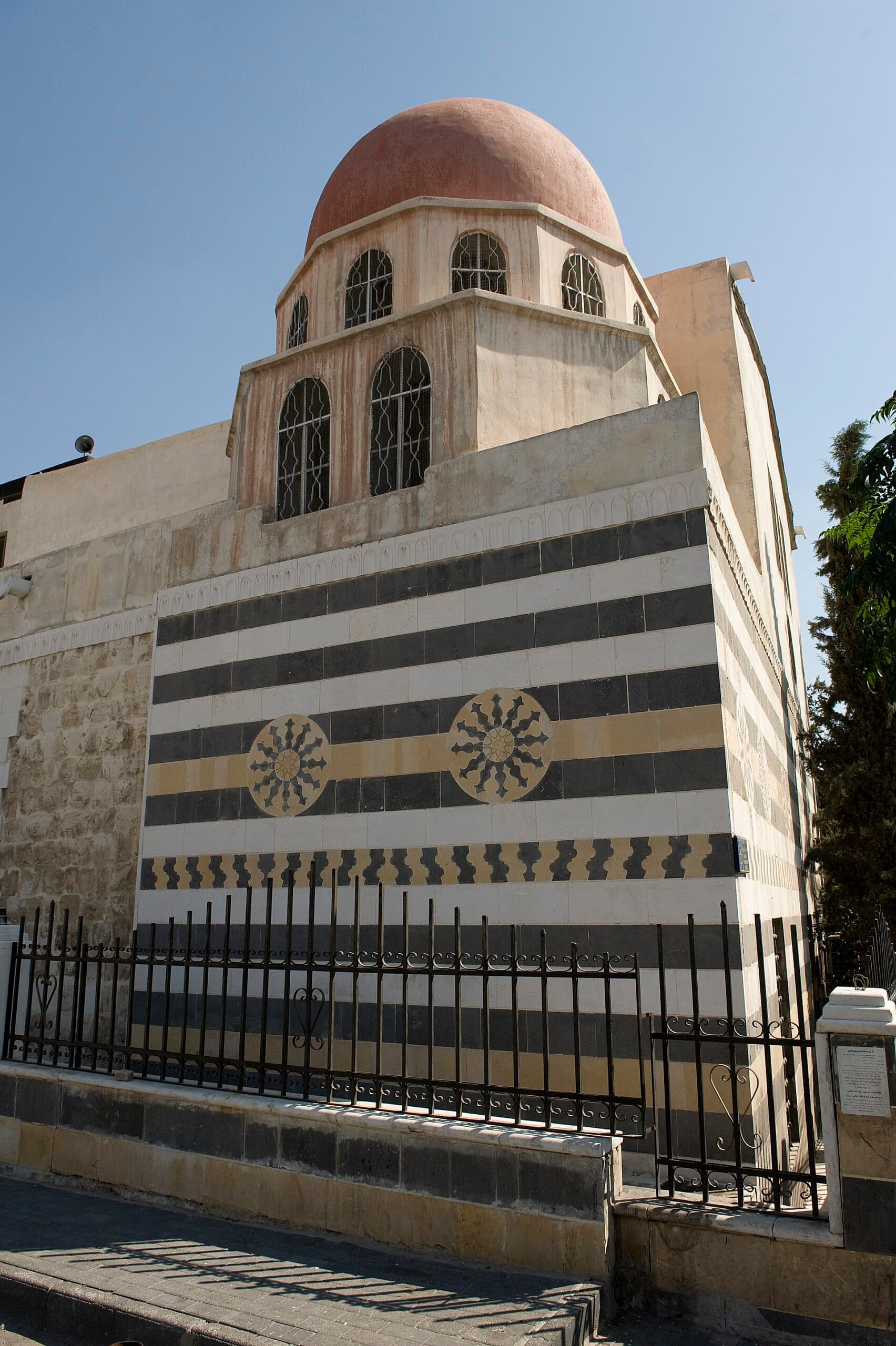
On the upper floors to the right of the entrance are projecting wooden windows of the kind found on old Damascus houses. They are not recent: an anonymous French engraving dated 1850 already shows the building with them. In the 2008 photographs on Wikimedia Commons the corner front is covered in the same bands, with two stone rosettes in the middle and, above, a red dome on a drum pierced by windows.
What is inside
The door opens onto a courtyard with a small pool. On the left, the south side, is the prayer hall, raised slightly above the courtyard. On the right, to the north, is the teaching hall. The graves are in the north-west corner, Shadhi Bek and his son among them. A domed room occupies the south-west. The plan is small but easy to read: prayer, teaching and burial side by side around a single courtyard.
Is it open, and how long to allow
The most recent dated records we have are the 2008 photographs and a Syria Photo Guide page published in 2014 and updated in 2024. We found no source from the past year that shows the interior, so its current state and visiting hours are not verified. The fronts can be seen from the street. To get inside, arrive at prayer time or ask people nearby. Twenty minutes covers the front and the courtyard.
Don’t miss
The other side of the street. Jamal al-Din al-Qasimi, the Damascene scholar, went as a boy to the kuttab, a neighbourhood Quran school, directly opposite the mosque. No source shows whether that school still stands. Even so, the corner shows a 15th-century endowment still at the centre of a neighbourhood’s learning centuries after it was founded.
Tips
- When asking the way, use the street's local name too: Shabkaliyya
- After the portal, look up at the floor to the right of the entrance; the projecting windows already appear in the 1850 engraving
- The Tankiz Mosque is one block north; put both on the same walk
Transparency
- How this was chosen
- Written by hand; opening hours, entry fee and coordinates are kept as data. A field that is not known for certain is marked as variable rather than guessed.
- Facts checked
- September 2026
- Last updated
- September 15, 2026