Through Souq Saruja: from Jawdat al-Hashimi School to the Tomb of Ibn al-Muqaddam
A 2700-metre walk across Souq Saruja, north of the Damascus walls: the city’s first state secondary school, a Mamluk bath, a leather souq, a cemetery, a 1201 tomb.
- Duration
- 4 hours
- Distance
- 2.7 km
- Difficulty
- Easy
- Best season
- Year round; mornings except Friday
- stops
- 6
- City
- Damascus
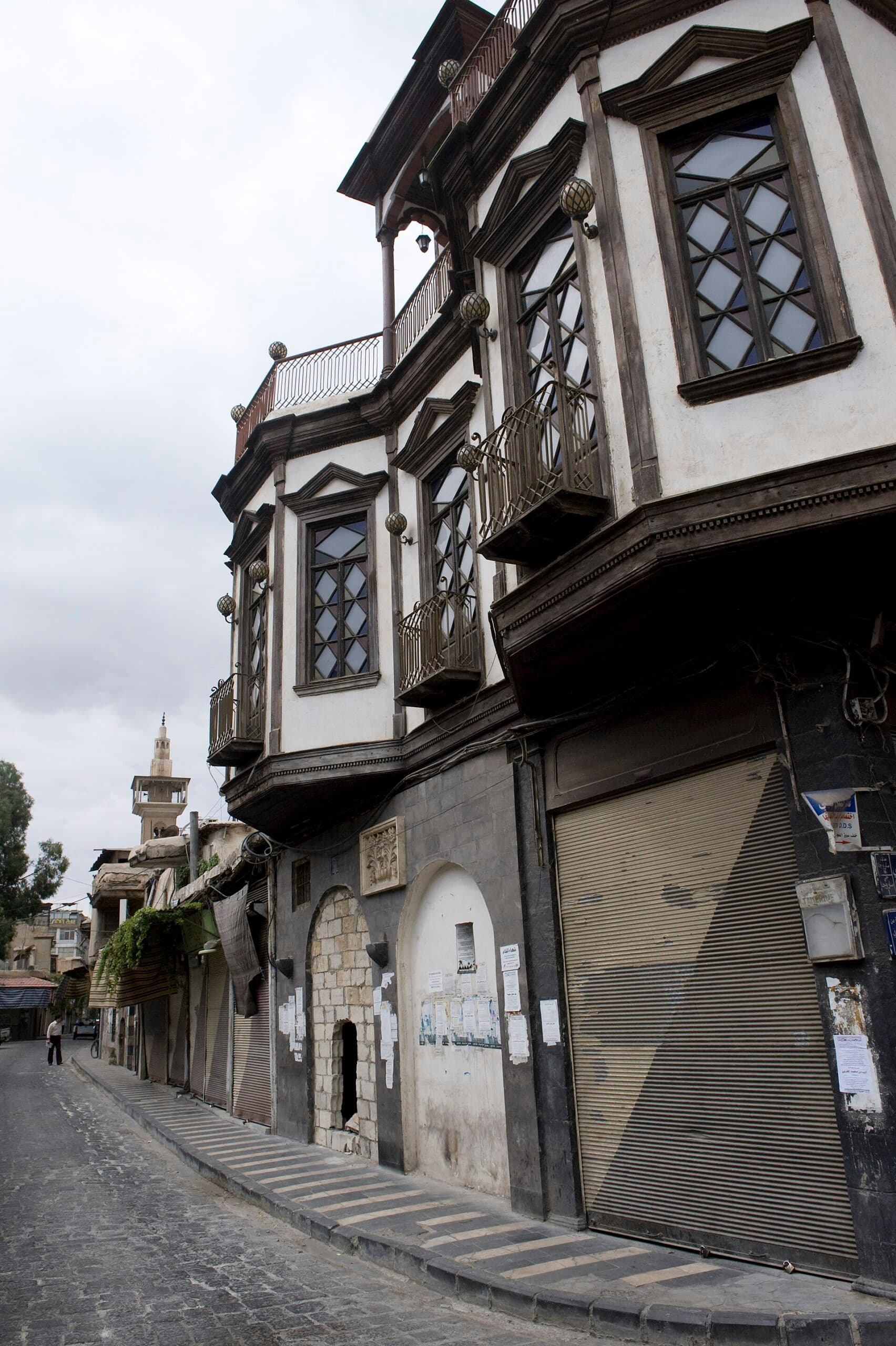
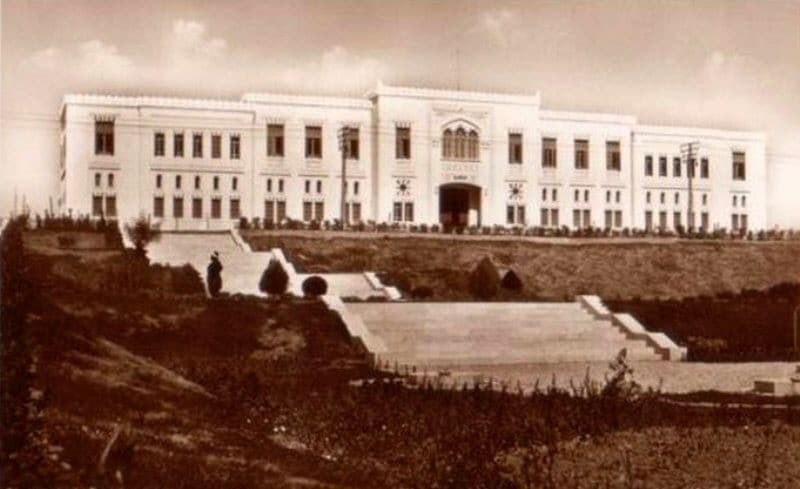
North-west of the walls of Damascus, a walk of 2700 metres crosses Saruja from west to east with six stops. In the Ottoman centuries this was the quarter of officials and the big families. The route goes through the quarter rather than along its edge, and its buildings are far apart in age. The oldest is the tomb of an Ayyubid emir who died in 1201. A bath is linked to Emir Saruja, who died in 1342 and gave the quarter its name. The leather market was first set up in 1895 and rebuilt in 1985, and the school at the start was the first state secondary school in Damascus. In between are lanes of houses with projecting wooden upper floors, and the city’s best-known cemetery.
The route
Start at the Jawdat al-Hashimi School, set back from the road on a large plot with a garden between Saruja and the Hijaz district. It is a working school, so the building is seen from the garden gate and the street. From here walk east into Souq Saruja: after nearly 700 metres you enter the market street, with shops on both sides. Turn off into the side lanes, where the houses are. Hammam al-Ward is very close, about 80 metres on, behind the Barsbay Mosque. Ask for the mosque by name; it is also called the Ward Mosque. From the bath go east to Thawra Street: after 500 metres the leather shops of Souq al-Khoja begin. From the souq walk east into Uqaybiya; Dahdah Cemetery is nearly 950 metres away. The last leg is short. The Tomb of Ibn al-Muqaddam stands east of the cemetery, inside the Talha Mosque on the corner of Al-Umawi Street and Sulayman Niyazi Street. It is 80 metres as the crow flies and nearly 450 metres on foot.
Timing
Be in front of Jawdat al-Hashimi at 08:30. On a school day you may meet the students arriving; keep clear of the gate and look at the front from the opposite pavement. Ten minutes is enough. At 08:50 set off for Souq Saruja. The quarter is quiet in the morning and the market street fills up in the afternoon; give the side lanes an hour. At 10:00 you are at Hammam al-Ward. Its present state cannot be checked from a distance; ask in the quarter whether it is working. Twenty minutes. Souq al-Khoja at 10:30: the shops are open by then, and half an hour covers its single line of two rows of shops. Reach Dahdah at 11:15; family visits pick up after the mid-afternoon prayer, and the morning is quieter. Around 12:00 you are at the Talha Mosque. If you arrive with the midday prayer, wait outside until the congregation leaves and look at the east face of the tomb meanwhile. The walk ends around 12:30. On Friday morning most shops in Saruja are shut; put this walk on another day.
Take care
Jawdat al-Hashimi is a working state school: do not go in, and do not photograph the students. Souq Saruja had a large fire in July 2023 that damaged part of the quarter. Visiting hours at Hammam al-Ward and the Talha Mosque have not been verified; ask on the spot. Dahdah is a working cemetery: keep quiet, walk between the graves and do not step on the stones. Women visitors cover their heads; if there is a funeral, step back and take no photographs. At the Talha Mosque do not go in during prayers, and keep shoulders and knees covered. Thawra Street and Al-Umawi Street carry traffic; wait for a crossing.
The route on a map
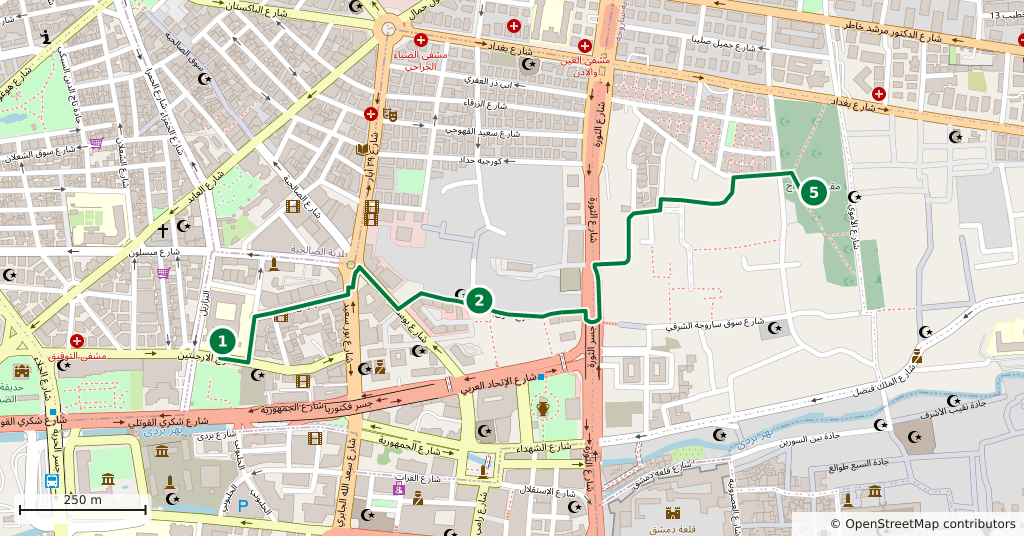
Stops along the route
- 01
- 02
- 03
- 04
- 05
- 06
Transparency
- How this was chosen
- The stops and their order were set by hand. The line on the map is real road geometry, not a straight hop between pins; distance and duration belong to that itinerary.
- Facts checked
- September 2026
- Last updated
- September 15, 2026