Abu al-Darda Mosque, Damascus
A small prayer hall set into the north wall of the Citadel of Damascus, with a shrine to the Companion Abu al-Darda. The tomb is Ottoman; it opens at prayer times.
- Opening hours
- At prayer times (as of 2015) — check on site
- Entry
- Varies — check on site
- Duration
- 15 minutes
- Best time
- Around the midday or afternoon prayer, when the door is open
- Period
- Ottoman (shrine 1733)
- Address
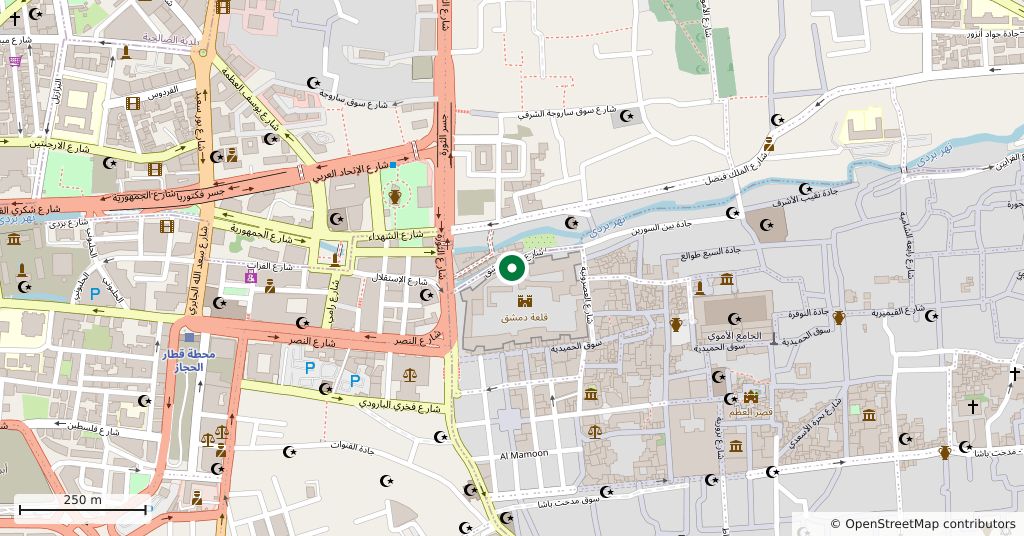
- North wall of the Citadel, by Bab al-Hadid, Old City, Damascus
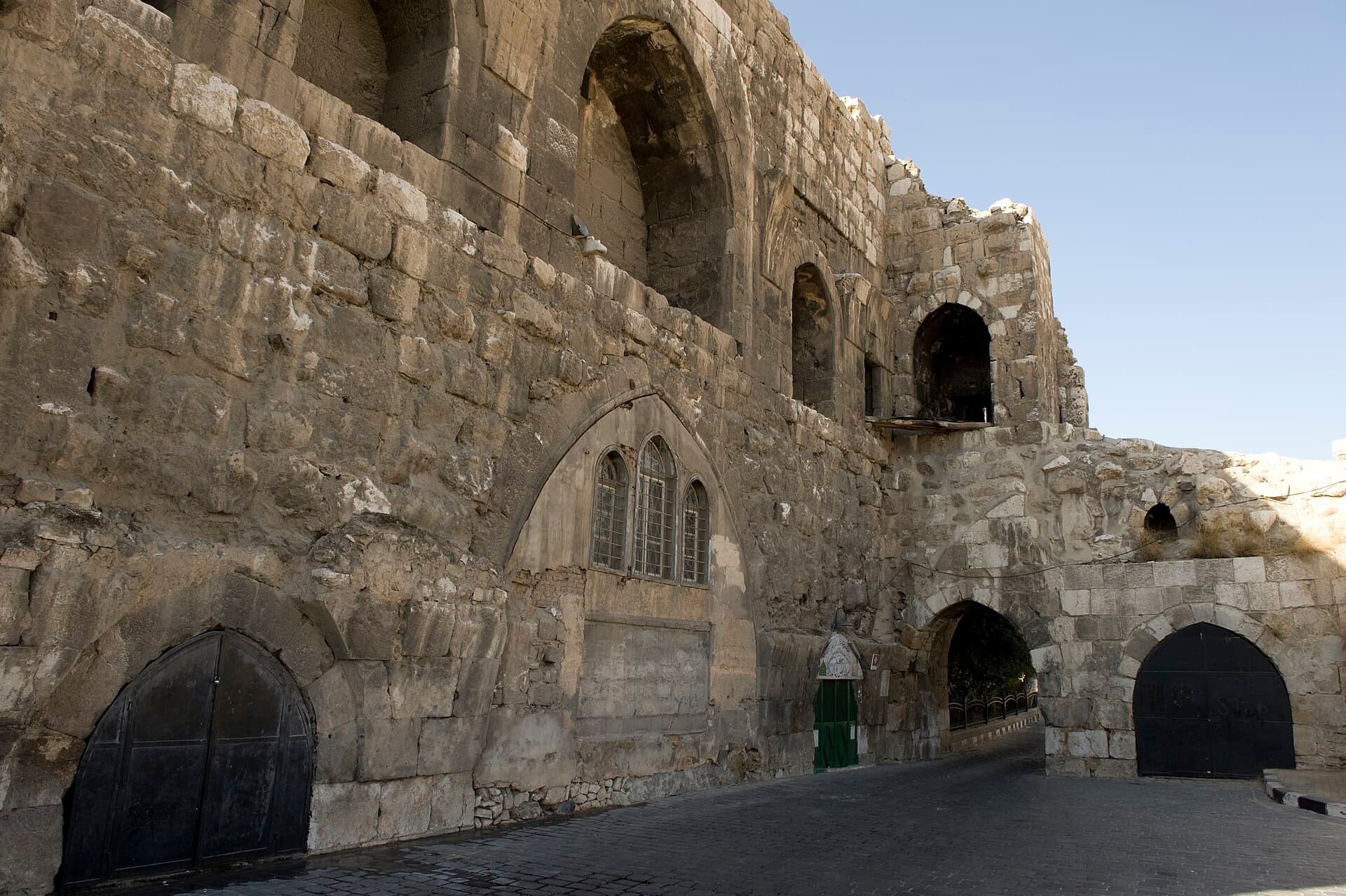
The Abu al-Darda Mosque is a small prayer hall built into the outer north wall of the Citadel of Damascus. Inside is a tomb attributed to Abu al-Darda, one of the Companions of the Prophet Muhammad. From the street it does not look like a mosque. You see a few windows in the citadel wall, and the entrance is set into the wall on the north side.
Finding it
Follow the street that runs along the north wall of the citadel towards the Bab al-Hadid gate. To the left of the gate, three tall windows set inside a pointed arch belong to the mosque. It fits easily into a walk round the citadel starting from the west end of the Al-Hamidiyah Souq.
Who was Abu al-Darda
He was a merchant from Medina. After becoming a Muslim, he was counted among the scribes who wrote down the revelation. After the conquest of Damascus he became the city’s first qadi, or judge, and under the Umayyads the office stayed in the hands of his students for a long time. Sources give the year of his death as 652.
Is he really buried here
Not for certain. Tradition puts his grave in more than one place: his name also comes up at the Bab al-Saghir Cemetery in Damascus, and there are shrines to him in Alexandria and in Jordan. The archaeologist Carl Watzinger dated this tomb in the citadel wall to 1733, in the Ottoman period, and saw it as a memorial cenotaph rather than an actual grave. What you see is not a 7th-century burial. It is an 18th-century place of visitation, built to honour a Companion.
What to see
Inside, arches divide a prayer hall; the tomb is on its east side. A photograph from 2010 shows the floor carpeted, some of the arches whitewashed and the hall in use.
When it is open
According to a source from 2015, the mosque opens only at prayer times. No recent source confirms its current state. Ask on the spot.
Tips
- Look for the three arched windows left of Bab al-Hadid; the mosque is inside the wall
- Outside prayer times the door may be shut; aim for midday or afternoon prayer
- It is a prayer hall: shoes come off, and women cover their hair
- Do not confuse it with the Abu al-Darda tradition at Bab al-Saghir Cemetery; it is a separate site
Transparency
- How this was chosen
- Written by hand; opening hours, entry fee and coordinates are kept as data. A field that is not known for certain is marked as variable rather than guessed.
- Facts checked
- September 2026
- Last updated
- September 15, 2026