The Roman Temple at As-Sanamayn
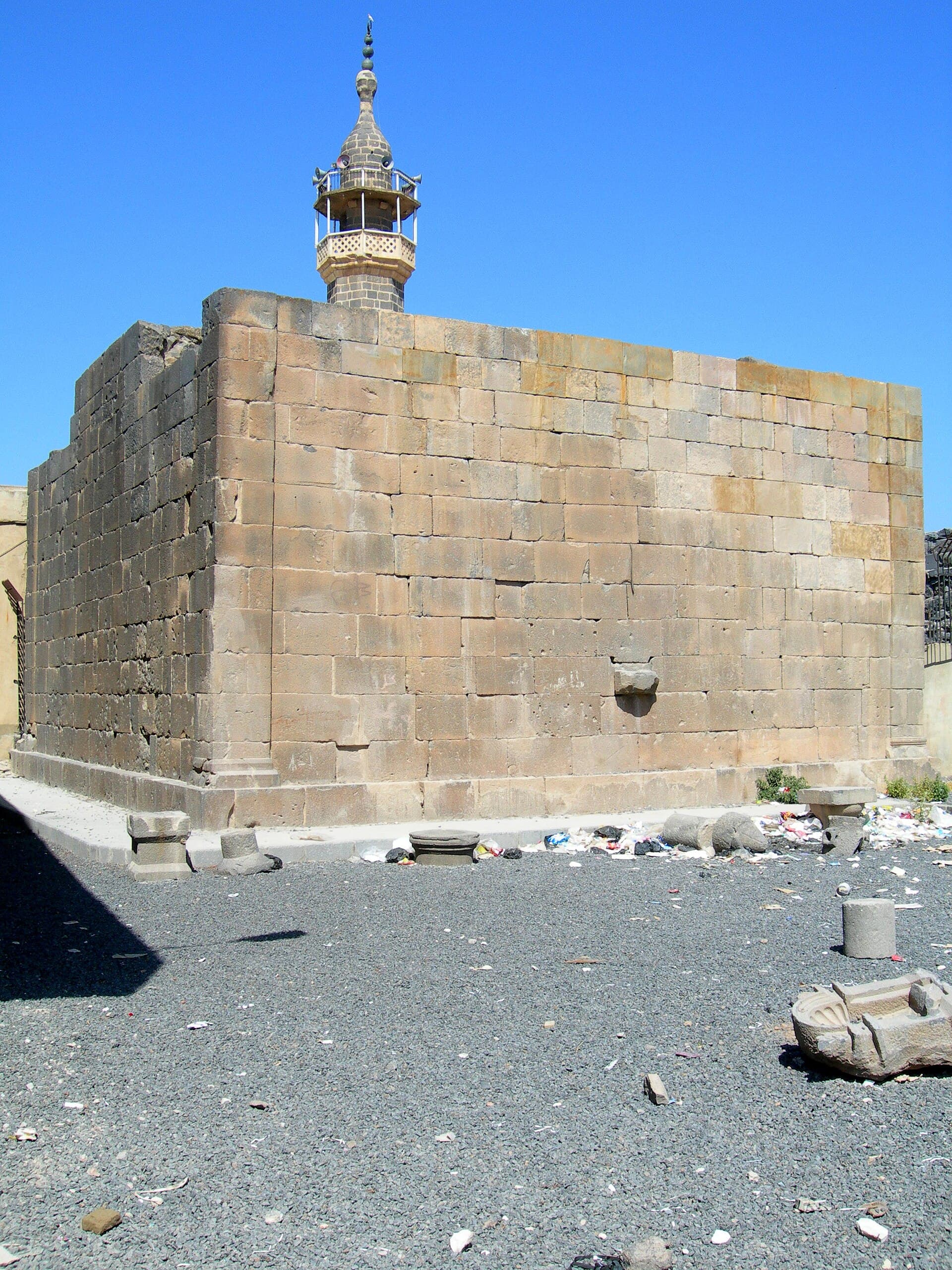
Halfway down the Damascus–Daraa road stands a temple built for Tyche in 191. It is among the most complete Roman buildings left in Syria, and it is a mosque.
- Opening hours
- Daylight hours, outside prayer times
- Entry
- Free
- Duration
- 30 minutes
- Best time
- Morning; the basalt heats up after noon and the yard has little shade
- Period
- Roman, with Ottoman additions
- Address
- Centre of As-Sanamayn town, on the Damascus–Daraa highway
The road from Damascus down to Daraa runs through this town, and most vehicles pass without stopping. In the middle of As-Sanamayn, inside a walled yard, stands a temple built in 191 for Tyche, the goddess of fortune. Its walls are complete, its corner pilasters are in place, and its doorway is still in daily use. Very few Roman buildings in Syria have come through as whole as this one.
Getting there
55 kilometres north of Daraa and 50 kilometres south of Damascus, right beside the main road. Every minibus running between the two cities calls at the town, and it is a few minutes on foot from the stop. You will have to ask for the building, because there is no sign; locals give directions to “al-maabad” or simply by the name of the mosque.
How long it takes
Half an hour. The temple is a single volume and walking round the outside takes ten minutes; the rest goes on the reused stone in the yard and the carving of the doorway.
What to see
Black Hauran basalt and pale limestone sit side by side in the same wall. From outside the temple reads as a plain box; the real work is in the south doorway and in the capitals at the inner corners. The building has served as a mosque since the Middle Ages, and a minaret was added to it later — that minaret is not the same age as the stone body, and the difference shows at a glance. Along the edge of the yard lie stacked column drums and capitals, all of them from the town’s Roman centuries.
What not to miss
The town’s name means “the two idols”, and it comes from two statues that stood here at the time of the Muslim conquest. The statues are gone; the name stayed. A second detail: travellers who came through in the 19th century described a second temple here, Corinthian, ornamented, built of limestone, and recorded that it had been converted into a church. It is no longer standing. The dressed blocks and door jambs left between the houses may well come from it.
What remains
The building is in use and looked after, and the stonework has been repaired. You can walk round the outside freely outside prayer times, and ordinary mosque courtesy is enough to go in. As-Sanamayn was a stage on the pilgrimage road under the Ottomans: Sultan Selim I had a fort built here between 1516 and 1520. In 1672 the town had a Friday mosque with a minaret, two small prayer halls, a large khan and a bathhouse. Traces of the fort and the khan have to be asked after; the temple is the thing still standing.
Tips
- Ask for "al-maabad" when you look for it; there is no road sign
- Look at the jambs of the south doorway, the finest work on the building
- If you want to go inside, come between prayers rather than at one
- The capitals along the yard wall come from the town's other Roman buildings
Transparency
- How this was chosen
- Written by hand; opening hours, entry fee and coordinates are kept as data. A field that is not known for certain is marked as variable rather than guessed.
- Facts checked
- September 2026
- Last updated
- September 15, 2026