Bab al-Saghir Cemetery
The oldest burial ground in Damascus, just outside the gate of the same name. Companions of the Prophet are honoured here, and so are the visiting rules.
- Opening hours
- Daylight hours; some shrines close over midday
- Entry
- Free
- Duration
- 45 minutes
- Best time
- Early morning; pilgrim groups arrive in the afternoon
- Period
- Umayyad — Ottoman
- Address
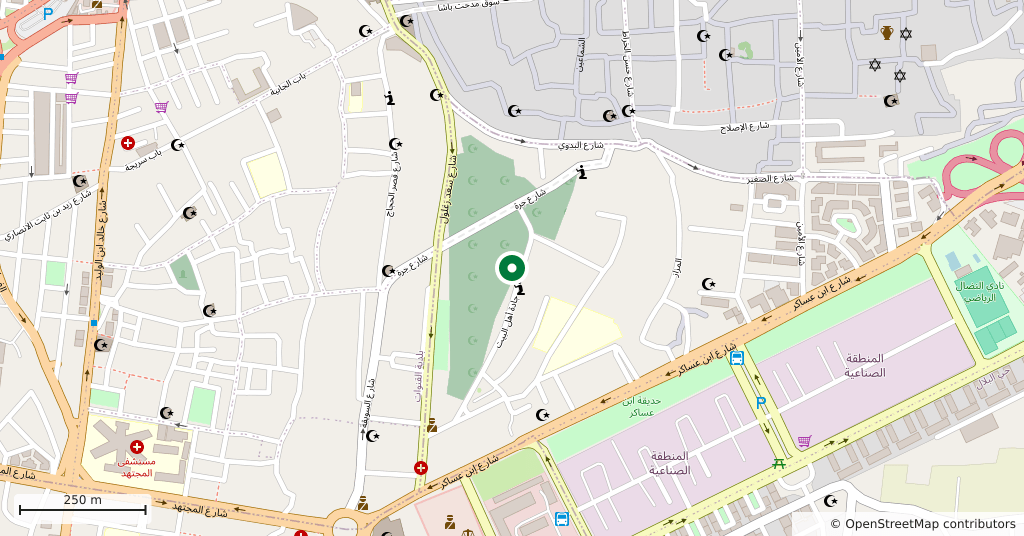
- Outside Bab al-Saghir, south of the Old City, Damascus
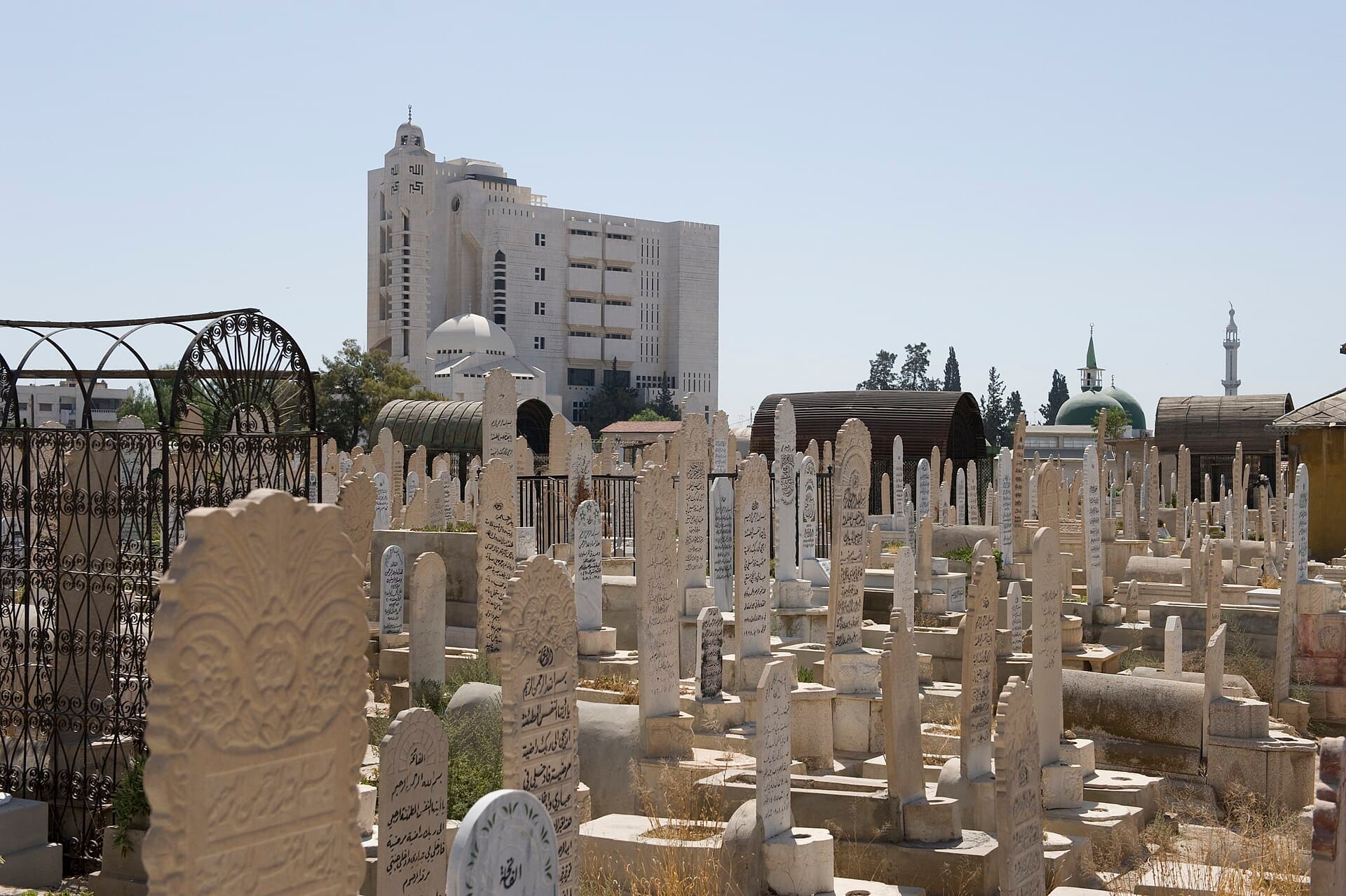
The cemetery runs along the wall just outside Bab al-Saghir, the southern gate of the Old City. It is one of the first Muslim burial grounds in Damascus and people are still buried here; families pass the plots down through generations. What brings visitors, though, are the shrines inside it — domed, most of them painted green, standing among ordinary headstones.
Getting there
Fifteen minutes on foot south-west of the Umayyad Mosque. Turn south out of the Souq Midhat Pasha and follow the lane down to the Bab al-Saghir gate; the cemetery lies outside it, on both sides of the road. The entrances are open and there is no gate to pass.
Who is buried here
The names most often given are Umm Salama and Umm Habiba, wives of the Prophet; Sukayna, daughter of Husayn; Bilal ibn Rabah; Abdullah ibn Umm Maktum; and Abu al-Darda. Several Umayyad rulers of Damascus are also said to lie here. Come knowing this: most of the attributions rest on tradition, and the sources disagree with one another. A name on a plaque is what has been handed down, not a settled fact.
How to behave
This is not a site to tour. It is a working cemetery and a place of pilgrimage at the same time, and groups from Iran and Iraq arrive throughout the day. Keep quiet, walk between the headstones and not over them. Women cover their hair, and some shrines have separate entrances for men and women. If a burial is taking place, step back and put the camera away.
What most people miss
Look at the thresholds of the shrines rather than their domes. Many carry small marble inscriptions giving the dates of repair, and from those you can read that one shrine was rebuilt twice, in two different centuries.
Tips
- Women should cover their hair; some shrines have separate entrances
- If a burial is under way, step back and take no photographs — people are still buried here
- Read the marble inscriptions on the shrine doorways: the repair dates are there
Transparency
- How this was chosen
- Written by hand; opening hours, entry fee and coordinates are kept as data. A field that is not known for certain is marked as variable rather than guessed.
- Facts checked
- August 2026
- Last updated
- September 15, 2026