The Cathedral of Saints Constantine and Helen
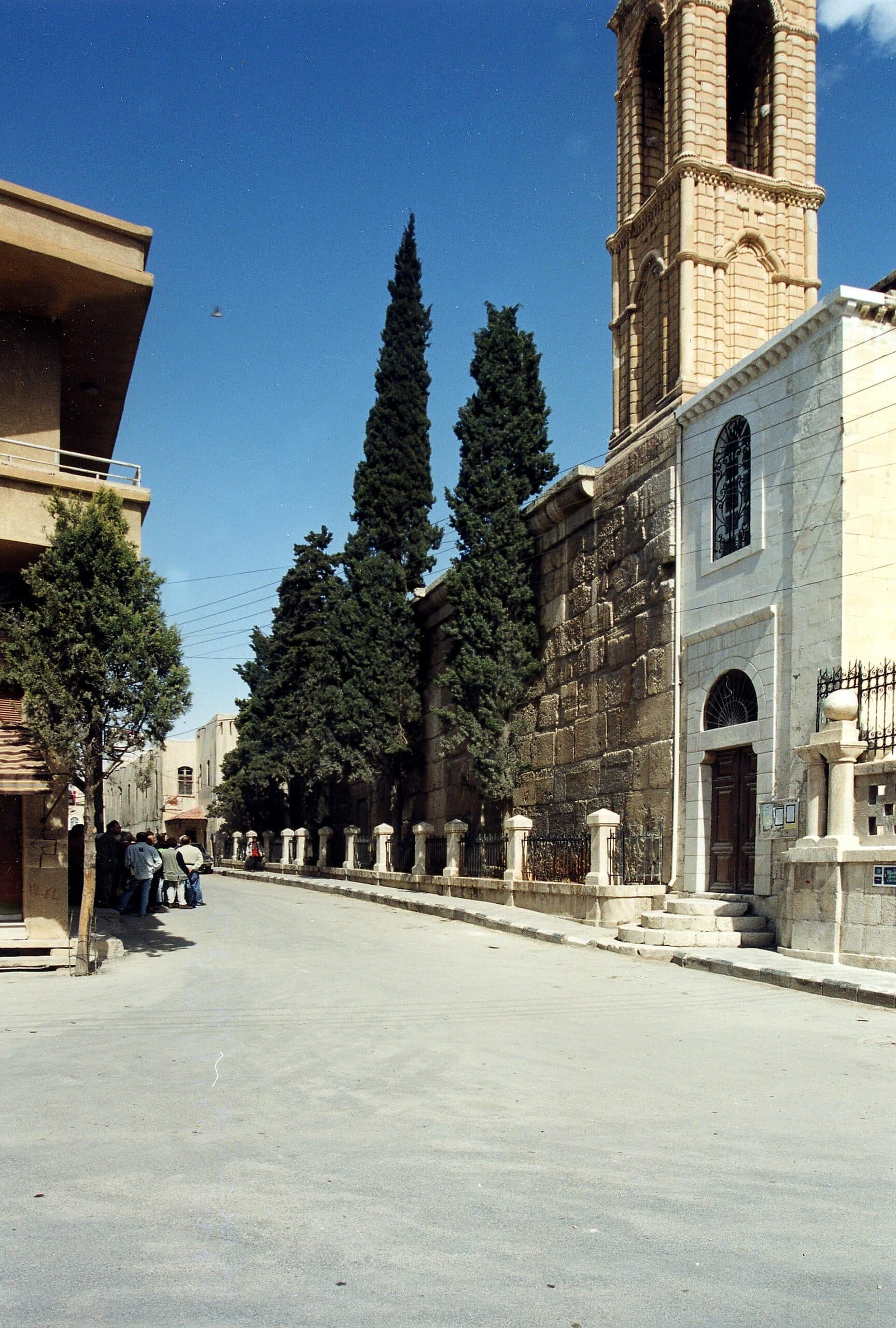
A temple turned church in the middle of Yabroud. The big blocks in its outer wall predate the conversion of 326, and 35 icons line the screen inside it.
- Opening hours
- Daylight hours, outside services; if the door is locked, ask in the courtyard beside it
- Entry
- Free
- Duration
- 40 minutes
- Best time
- Morning; the street is narrow and the front is against the light after noon
- Period
- Aramaean temple — a church from 326 by tradition
- Address
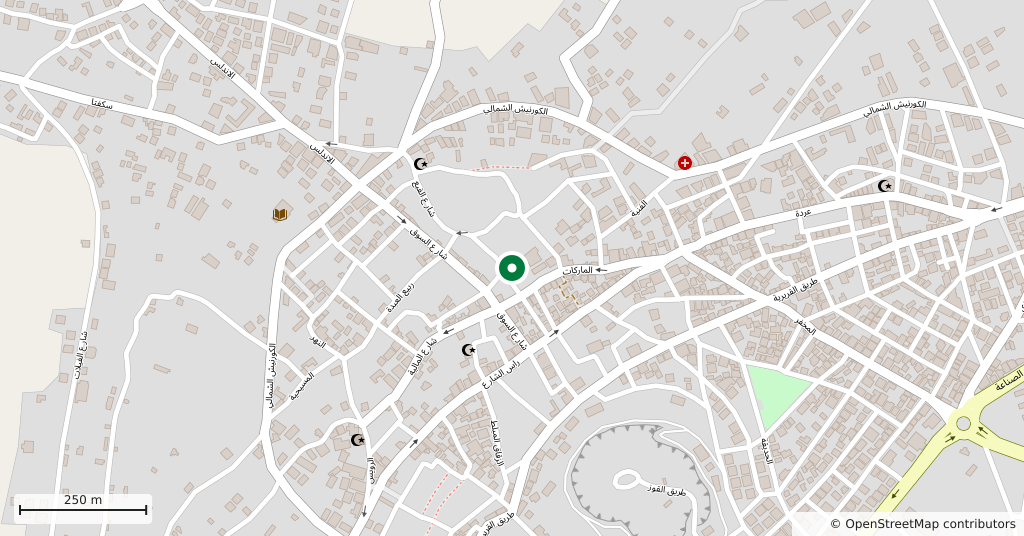
- Al-Qabaa Street, central Yabroud, 10 km south of Nebek, Rif Dimashq
It stands in the middle of Yabroud and carries two ages one on top of the other. The site was first an Aramaean temple, dedicated to the sun god Baal Shamin and going back to the 1st millennium BC. Under Rome the temple went on working under the name of Jupiter Yabrudis. Tradition puts the change at the year 326: the empress Helena, passing through Yabroud on her way back from Jerusalem to Rome, ordered the temple turned into a church. That is why this counts among the oldest churches in Syria.
Getting there
10 kilometres south of Nebek, twenty-five minutes. From Damascus it is 80 kilometres direct. The cathedral is in the centre of the town; the bell tower and the clock tower are visible from either end of the street, and cars are left below.
How long it takes
Forty minutes. You can go in outside service times.
What is there
Stop outside first and look at the north wall: the large, squared blocks in the lower courses are not from the church but from the temple. What was set on top of them follows a basilica plan. The main door is wood and has been repaired. Carved into it, on the upper right, is a chalice ringed with ears of wheat and bunches of grapes. On the left there is a cross, a crown of thorns, a ladder and three nails. The inscription under the door gives the year of its renewal: 1927.
Inside
The floor is marble, the ceiling high and flat, with the windows set just below it. A wooden pulpit is reached by a spiral stair, and 11 old icons run along its curved front. Three marble steps lead up to the sanctuary, and the marble screen in front of it has nine openings. In the lower tier nine large icons stand above the doors, one of them showing Constantine and Helen. In the upper tier there are 35 medium icons with Christ at the centre. Some of them date from the 18th and 19th centuries.
What most people miss
The town’s other claim is not in the church but in the rock. An excavation in 1930 at the Iskafta cave outside Yabroud brought out a Palaeolithic stone tool tradition of the Levant, and that tradition is now named after the town. Ask in Yabroud whether the track to the cave is open before you go.
How it stands now
Yabroud was a front line in the spring of 2014 and the town changed hands. The cathedral is standing and in use; the streets around it show the marks of repair. The 2004 census recorded about 25 thousand people here.
Tips
- Outside, look at the north wall: the big blocks in the bottom course are from the temple
- Covered shoulders and knees are expected
- Look closely at the carving on the main door; the chalice and wheat are on the upper right
- Do not photograph during a service; ask the congregation first
Transparency
- How this was chosen
- Written by hand; opening hours, entry fee and coordinates are kept as data. A field that is not known for certain is marked as variable rather than guessed.
- Facts checked
- September 2026
- Last updated
- September 15, 2026