The Monastery of Mar Yakub
A 6th-century monastery on bare ground outside Qara. Its four-storey tower watched the caravan road, and the crypt still holds the relic of its martyr.
- Opening hours
- Daylight hours; the house asks to be told in advance
- Entry
- Variable — confirm on arrival
- Duration
- 90 minutes
- Best time
- Spring and autumn; the ground is bare and there is no shade in summer
- Period
- Byzantine foundation — great church 10th century, Ayyubid arches
- Address
- 2 km north-west of Qara, 20 km north of Nebek, Rif Dimashq
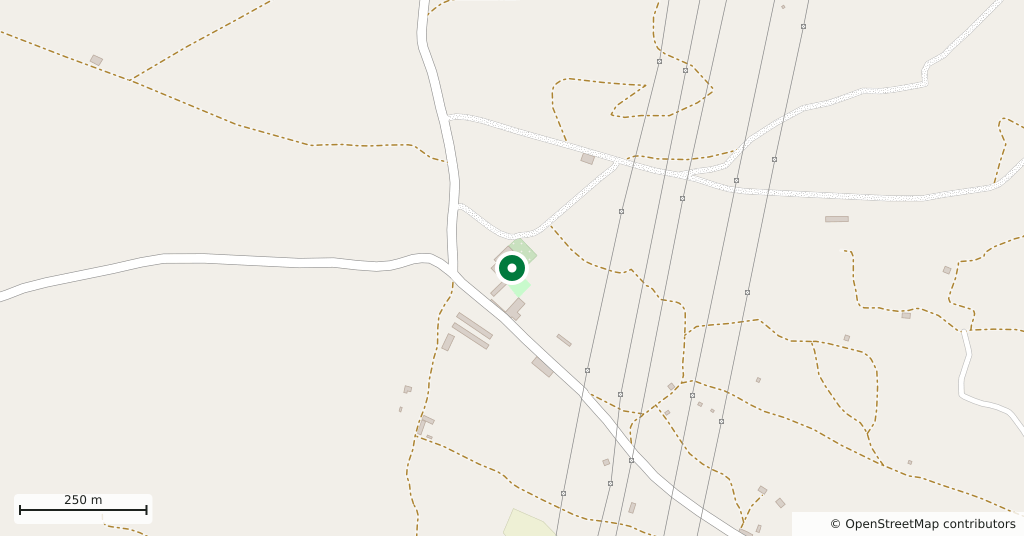
It stands 2 kilometres north-west of the town of Qara, in the middle of treeless ground. The founding of the monastery is placed in the 6th century, and the building is said to sit on an older Roman watchpost. Its name comes from James the Mutilated, a martyr who lived in Persia in the 5th century and was executed for returning to his faith. One of his fingers is held to be buried at Qara, and the monastery was raised over it.
Getting there
20 kilometres north of Nebek, half an hour. From inside Qara the road climbs to the north-west of the town, and the last stretch is narrow and dusty. Coming straight from Damascus it is 92 kilometres.
How long it takes
An hour and a half, taking in the church, the crypt, the tower and the courtyard. There is a guest wing for anyone staying on retreat.
What is there
The entrance is a tall gate under a pointed arch with two projections above it. The tower in the south-west corner of the courtyard has four storeys and its lower courses are Roman and Byzantine; caravans moving between Baalbek and Damascus were watched from here. The great church in its present form goes back to the 10th century and carries one odd detail: its axis swings 35 degrees towards the north, which is not what a Byzantine church does. Beside it is the crypt of the martyrs, its door low and narrow in the Syriac manner. The water mill and the large cave are at the far end of the courtyard.
What most people miss
Do not leave without going down into the crypt. A fragment of the fresco that once filled the apse of the monastery is now in the National Museum in Damascus: a winged angel with his right hand raised in blessing. Art historians place the panel in the Ayyubid period, and it looks to have come from the same hand as the third layer of painting at Deir Mar Musa. There are 40 kilometres between the two monasteries, and in the same century the same workshop was at work in both.
The history of the house
This was the leading monastery of the Qalamoun, and Moses the Abyssinian set out from here to found his own. It was plundered during the campaign of Baybars in 1266, raided by Turkmen in the 15th century, and stormed by Ottoman soldiers in 1600, when 120 monks were killed. From 1730 to 1850 it stood almost empty, and its last resident priest died in 1930. Restoration begun in 1992 was finished around 2000 and the monastery reopened.
Tips
- Call ahead; the monastery receives visitors but does not want to be surprised
- Covered shoulders and knees are expected
- The crypt door is low; you go in bent over
- If you are visiting the National Museum in Damascus, look for the angel fresco that came from here
Transparency
- How this was chosen
- Written by hand; opening hours, entry fee and coordinates are kept as data. A field that is not known for certain is marked as variable rather than guessed.
- Facts checked
- September 2026
- Last updated
- September 15, 2026