Deir Atiyah
A town at 1250 metres, 10 kilometres north of Nebek. Windmills that pump water from the deep wells, a full local museum, and the habit of drinking mate.
- Opening hours
- An open town, all day; museum hours vary
- Entry
- The town is free; check the museum on arrival
- Duration
- 120 minutes
- Best time
- April to June and September to October; snow in winter, hot at midday in summer
- Period
- —
- Address
- Deir Atiyah, 10 km north of Nebek, Rif Dimashq
A town between the Qalamoun mountains and the eastern Lebanon range, at the edge of the Damascus-Homs road. It sits at 1250 metres and the desert is close: rainfall does not pass 125 millimetres a year and the soil is thin. The whole story of Deir Atiyah is in those two facts. It is a place built around water because water is scarce, and a place that has been sending its people abroad for a century because the land cannot hold them.
Getting there
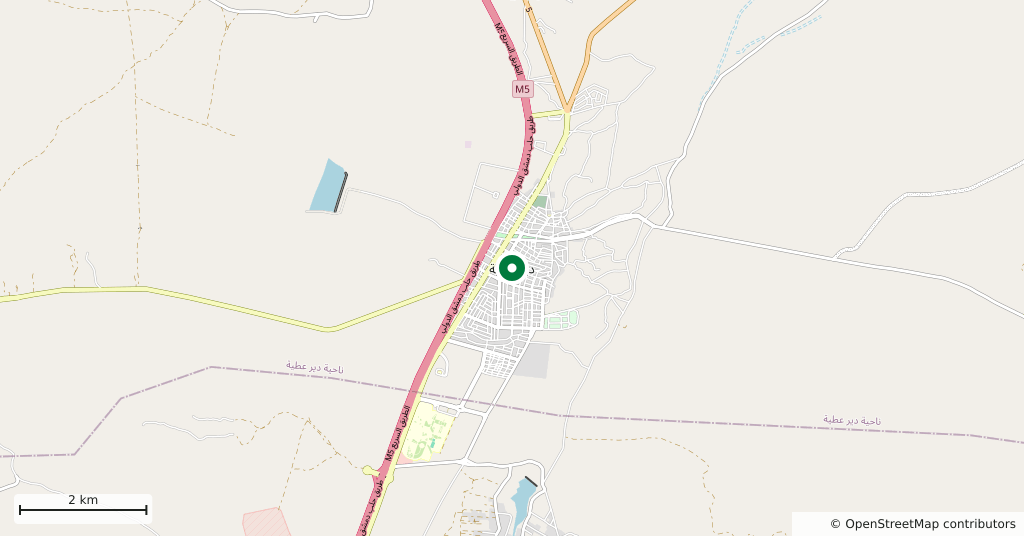
10 kilometres north of Nebek, a quarter of an hour. From Damascus it is 88 kilometres. The Damascus-Homs road runs along the edge of the town, and you turn off it and drop into the centre.
How long it takes
Two hours, taking in the centre, the museum and the gardens along the valley.
What is there
Groundwater under the valley keeps the town alive, and what lifts it out of the wells is not electricity but wind. Windmills stand scattered around the town, have turned for more than a hundred years, and still pump the water that the farming runs on. Who built them and when is not recorded; there is no paperwork, only the wheels. The gardens grow grapes, apricots, cherries and figs.
In the town
Deir Atiyah has its own museum, counted among the fullest local museums in Rif Dimashq: the everyday objects, dress and handwork of the region are gathered there. A separate church museum, a cultural centre and the old bath below the market are all in the centre too. North of the town stands the University of Kalamoon, opened in 2003 as the first private university in Syria.
What most people miss
Mate. The everyday drink here is not tea but mate, and that is not a curiosity but the trace of a migration: families who went to the Americas in the early 20th century brought the habit home. “Come and drink mate” means more than a cup here; it is an invitation to eat. If you are asked, sit down.
The name, and the town today
The name is said to come from a Roman or Byzantine official called Theodorus, “gift of God”, which in Arabic is Ataallah. In 1838 the town held mostly Sunni Muslims and Antiochian Greek Christians, and the 2004 census recorded 11 thousand people. In 2013 there was a bombing and a short spell of fighting; the town changed hands and was retaken within a week.
Tips
- The windmills are scattered around the town, not in the centre but along the garden lanes
- Ask whether the museum is open before you go; the hours are not fixed
- Do not turn down an offer of mate, it means an invitation to a meal
- You are at 1250 metres; bring a light layer for the evening even in summer
Transparency
- How this was chosen
- Written by hand; opening hours, entry fee and coordinates are kept as data. A field that is not known for certain is marked as variable rather than guessed.
- Facts checked
- September 2026
- Last updated
- September 15, 2026