Halboun
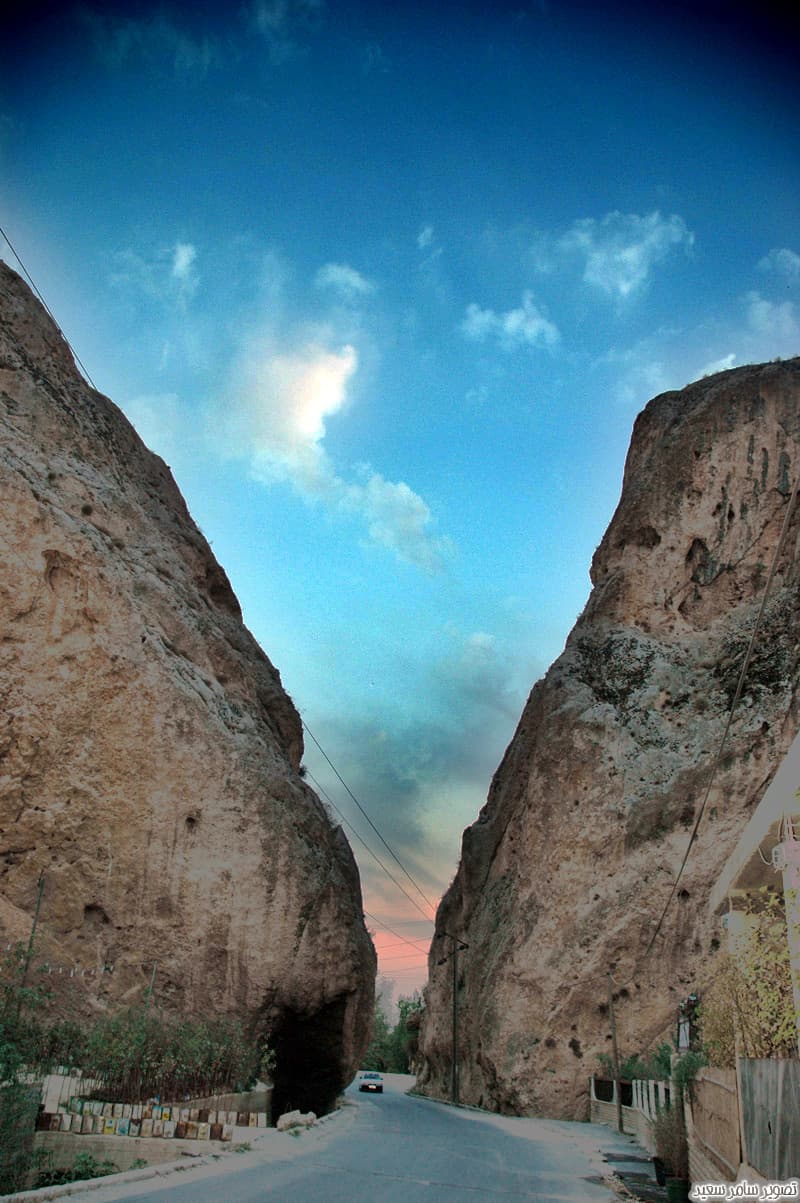
A mountain village at 1450 metres, 27 kilometres northwest of Damascus: ancient Chalybon, Roman inscriptions, and a road in between two walls of rock. Free.
- Opening hours
- An open village, all day; the remains are on open ground
- Entry
- Free
- Duration
- 120 minutes
- Best time
- April to June; the valley green, the snow gone, the springs running
- Period
- Roman
- Address
- Halboun, 27 km northwest of Damascus, Rif Dimashq
A mountain village at 1450 metres in the middle of the Qalamoun range, 27 kilometres northwest of Damascus. The 2004 census counted 6521 people. The valley carries the village’s own name — Wadi Halboun — and this is the closest high-valley walk to Damascus.
Getting there
27 kilometres northwest of Damascus. Administratively the village belongs to the al-Tall district; Rankous lies to the north, Talfita and Saidnaya to the northeast, Menin to the southeast, Bessima to the southwest. On the last stretch the road enters the valley and passes between two walls of rock. That gorge is the entrance to the village.
How long it takes
Two hours, taking in the village, the valley side and the ground where the remains stand. If you mean to walk in the valley, allow half a day.
What is there
There are several Roman remains in the village. The best known are two inscriptions dated to the reign of Herod Agrippa II, carrying the name of the village. Stretches of wall built of heavy blocks stand on the slope; it is not a prepared site but ground between the fields and the footpath. The sources say more of it lies under the soil around the village.
The history of the name
In ancient sources the village appears as Chalybon; it is in Strabo and in Ptolemy, and Ptolemy puts it on his map. The Hobah north of Damascus named in Genesis 14:15 is thought to be Halboun, and the relevant passage of the Dead Sea Scrolls writes Halboun outright. The British traveller Porter, in Five Years in Damascus published in 1855, describes the village at more length than anywhere else around it and writes that uncovering the ruins of Halboun could change something in history. The village’s ancient fame came from its wine, which went to Tyre and to the Persian court. That is a detail that stayed in the past.
What most people miss
The winter. Snow falls on Halboun all winter and in places reaches 5 metres; at 1450 metres the valley can close. For anyone who wants to go up in a snowy week there is only one correct sentence: ask before you set out. In spring the same valley is green and wet and the springs run.
Tips
- The valley road can close in the winter months; ask before you set out while there is snow
- The inscriptions are not on a prepared site; you have to ask in the village where they are
- If you walk in the valley you need shoes with a firm sole, the ground is stony
- The evening is cool; bring a light layer even in summer
Transparency
- How this was chosen
- Written by hand; opening hours, entry fee and coordinates are kept as data. A field that is not known for certain is marked as variable rather than guessed.
- Facts checked
- September 2026
- Last updated
- September 15, 2026