Khan Rustem Pasha, Hama
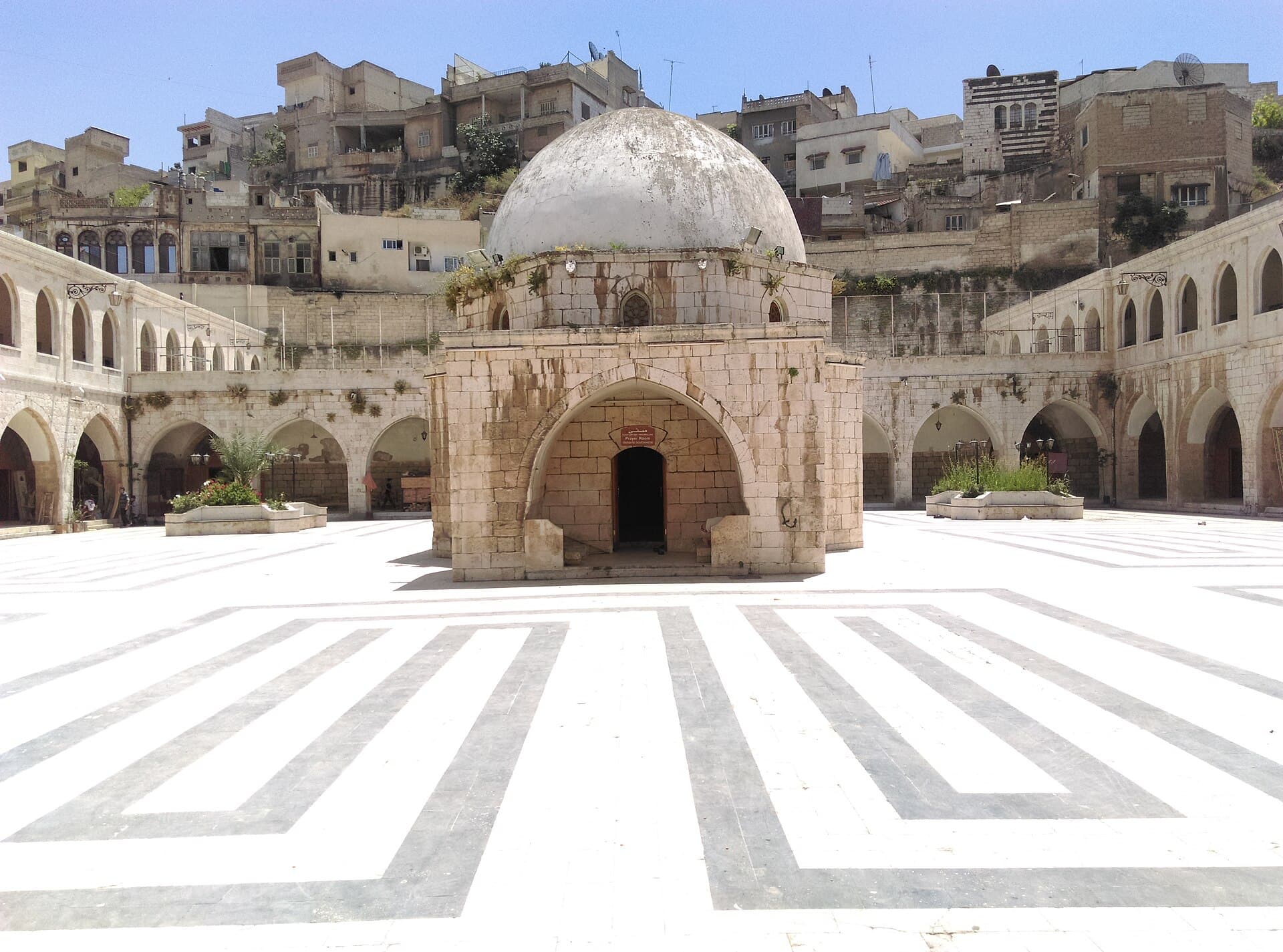
An Ottoman caravanserai on al-Murabit Street in Hama, built in 1556 by Rustem Pasha, grand vizier to Suleiman. A domed prayer room stands mid-courtyard.
- Opening hours
- Varies — check at the gate
- Entry
- Varies — check at the gate
- Duration
- 30 minutes
- Best time
- Morning, before the open courtyard heats up
- Period
- Ottoman — reign of Suleiman the Magnificent
- Address
- East side of al-Murabit Street, Hama
Khan Rustem Pasha is one of the two best-known caravanserais still standing in Hama. A khan is a merchants’ inn built around a courtyard. Rustem Pasha, grand vizier to the Ottoman sultan Suleiman the Magnificent, had this one built in the Hijri year 964, which is 1556. Hama once had more than thirty khans.
Where it is
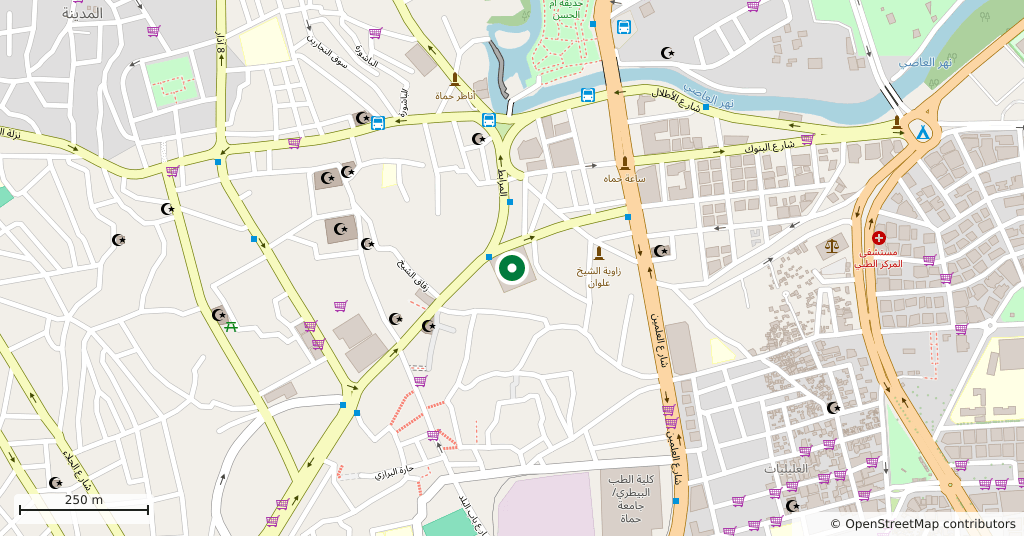
The khan stands on the east side of al-Murabit Street, south of the citadel mound. The Al-Hasanayn Mosque and the citadel are within walking distance. The same street reaches one end of Souq al-Tawil, so the two fit into a single walk.
What to see
The wide gate opens onto a passage with rooms on both sides. The rooms above the gate belonged to the watchmen, and the gate was locked at night. A stone staircase on the left of the passage climbs to the upper floor. The passage leads into an open courtyard with a small domed prayer room at its centre, and arcaded rooms run round all four sides. In photographs taken in 2015 the courtyard floor is paved in bands of light and dark stone.
Why it is also called the soldiers’ khan
Under the Ottomans and during the French Mandate the khan served as a cavalry barracks, which is why people in Hama also call it Khan al-Askar. Later additions turned one part into an orphanage and school and another into the offices of the Teachers’ Union. In recent years the ground floor held a crafts market and the upper floor an orphanage.
Do not miss
Stop at the end of the entrance passage. From there its arch frames the dome of the prayer room in the middle of the courtyard, and most photographs of the khan are taken from this spot.
Tips
- Stop at the end of the passage; the arch frames the prayer room in the middle of the courtyard
- The stone staircase on the left goes to the upper floor; if it is open, look at the courtyard from above
- The building may be in use; ask the people at the gate before walking in
- Souq al-Tawil is on the same al-Murabit line; join the two in one walk
Transparency
- How this was chosen
- Written by hand; opening hours, entry fee and coordinates are kept as data. A field that is not known for certain is marked as variable rather than guessed.
- Facts checked
- September 2026
- Last updated
- September 15, 2026