Marjeh Square
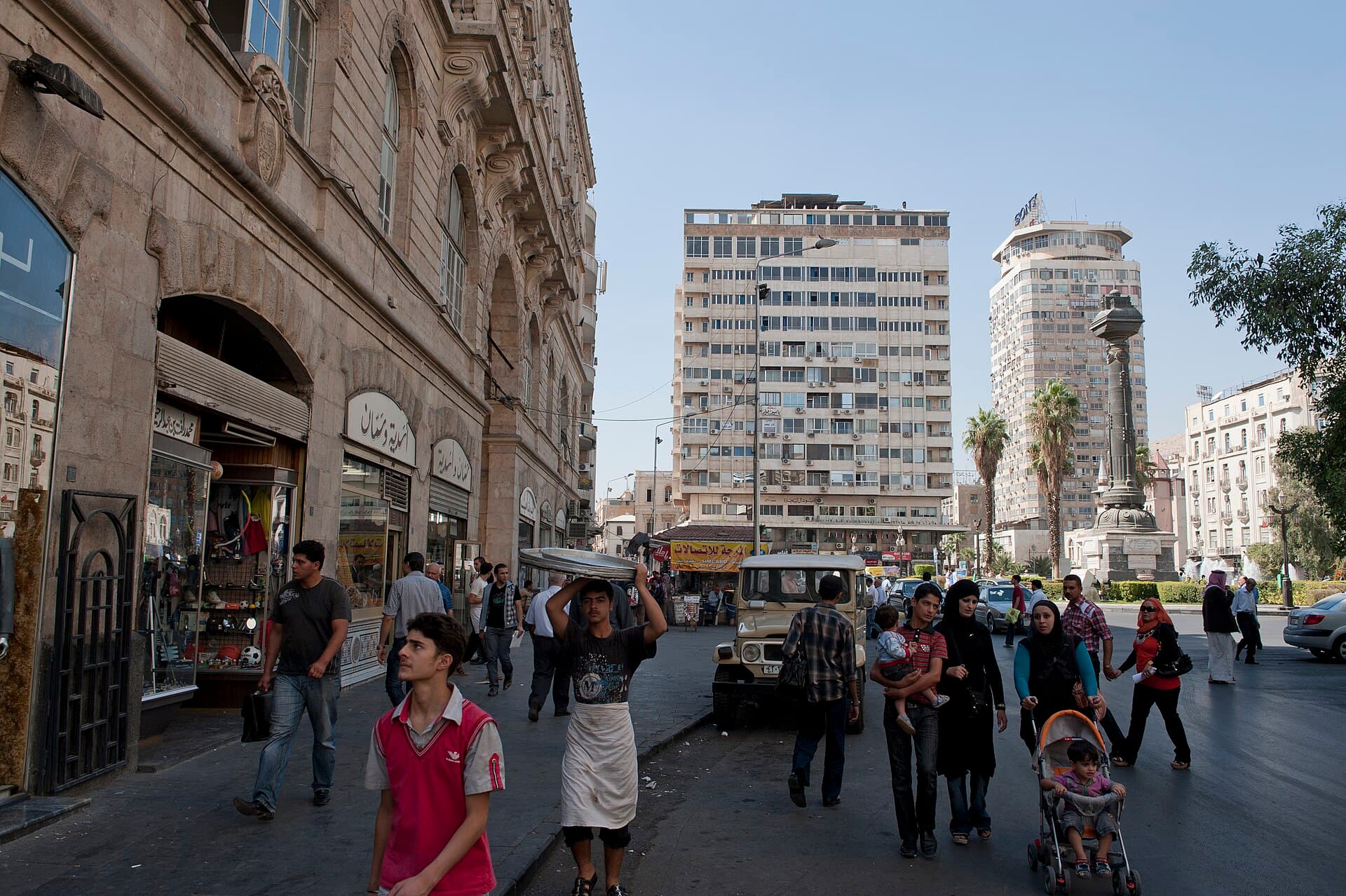
The modern centre of Damascus, just west of the walls. At its heart the cast-iron Telegraph Column of 1907, carrying a model mosque instead of a statue.
- Opening hours
- Open square, any hour
- Entry
- Free
- Duration
- 30 minutes
- Best time
- Late afternoon; the square wakes up towards sunset
- Period
- Ottoman
- Address
- Marjeh Square, west of the old city walls, Damascus
This is where you step out of the old city. Marjeh is the modern centre of Damascus: a square ringed by hotels, shops and government buildings, with a single monumental column at its middle. The Ottomans laid it out as a square in the late 19th century and built a new post office and municipality along its edge, both in steel and cement — materials new to Damascus at the time.
Getting there
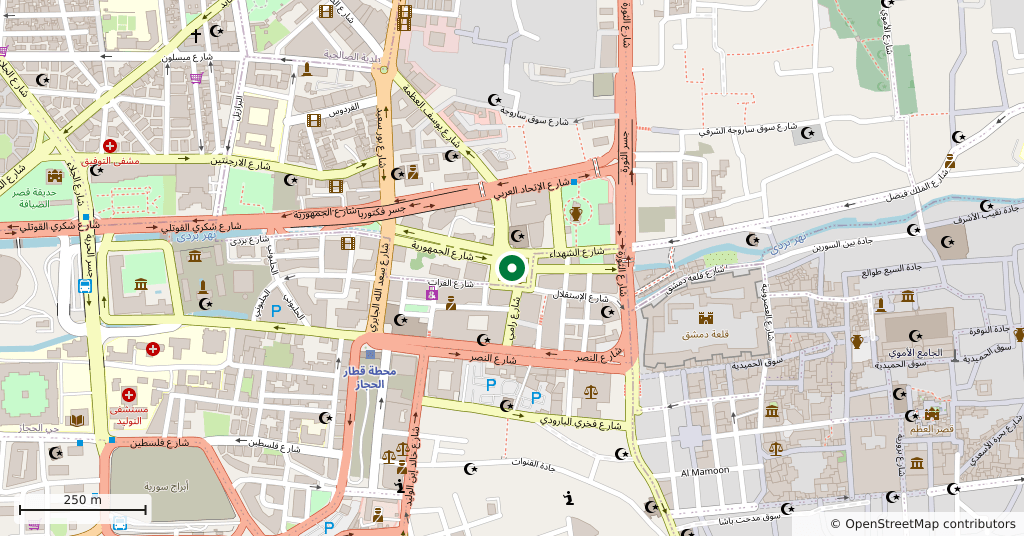
650 metres west of the Damascus Citadel, eight minutes on foot. Coming from the Umayyad Mosque, walk the length of the Al-Hamidiyah Souq, leave by its western mouth and keep going: one kilometre, thirteen minutes.
What to see
The Telegraph Column at the centre of the square was raised in 1907. A cast-iron shaft on a black basalt base, with telegraph wires and insulators modelled in relief along it. It was designed by the Italian architect Raimondo D’Aronco. The monument marks the telegraph line laid from Damascus to the Hijaz, and the four faces of its base carry an inscription in Ottoman Turkish; the governor of the city when it went up was Hussein Nazim Pasha.
The square’s other name
Marjeh is also called Martyrs’ Square. On 6 May 1916, under Ottoman rule, seven Syrian political figures were publicly executed here; that is where the name comes from, and 6 May is marked as Martyrs’ Day in Syria and Lebanon. The square was used for the same purpose during the French Mandate years. You do not need to look for a plaque explaining this — the name does it.
What most people miss
Look at the top of the column. On most monuments of the period you would find a human figure; here there is a building instead — a scale model of the Yildiz Hamidiye Mosque in Istanbul. Then come back down and walk around all four faces of the base.
Tips
- Look at the model mosque on top of the column — not a statue
- Walk around all four faces of the base; the inscription is Ottoman Turkish
- Eight minutes to the citadel, and the souq lies the same way
- The square carries traffic; photograph from the pavement, not the island
Transparency
- How this was chosen
- Written by hand; opening hours, entry fee and coordinates are kept as data. A field that is not known for certain is marked as variable rather than guessed.
- Facts checked
- August 2026
- Last updated
- September 15, 2026