Marmarita, Valley of the Christians
A village at 850 metres between Homs and Tartus, with the old stone-arched market of al-Sahle, three churches of its founding families and a 14 August carnival.
- Opening hours
- Open village, all day
- Entry
- Free
- Duration
- 120 minutes
- Best time
- July–August; 14 August for the carnival
- Period
- Early 17th century — present
- Address
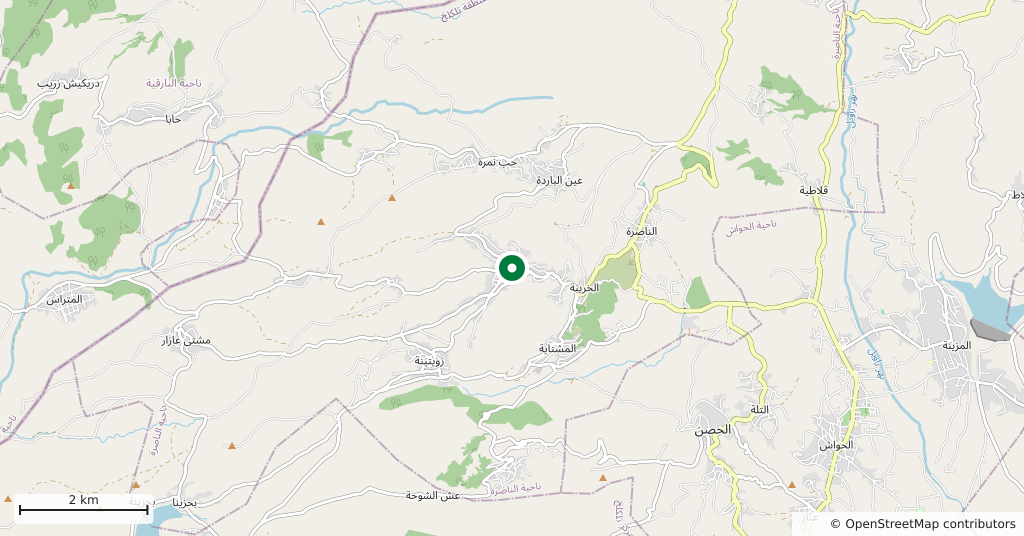
- Marmarita, Wadi al-Nasara, Tal Kalakh, western Homs governorate
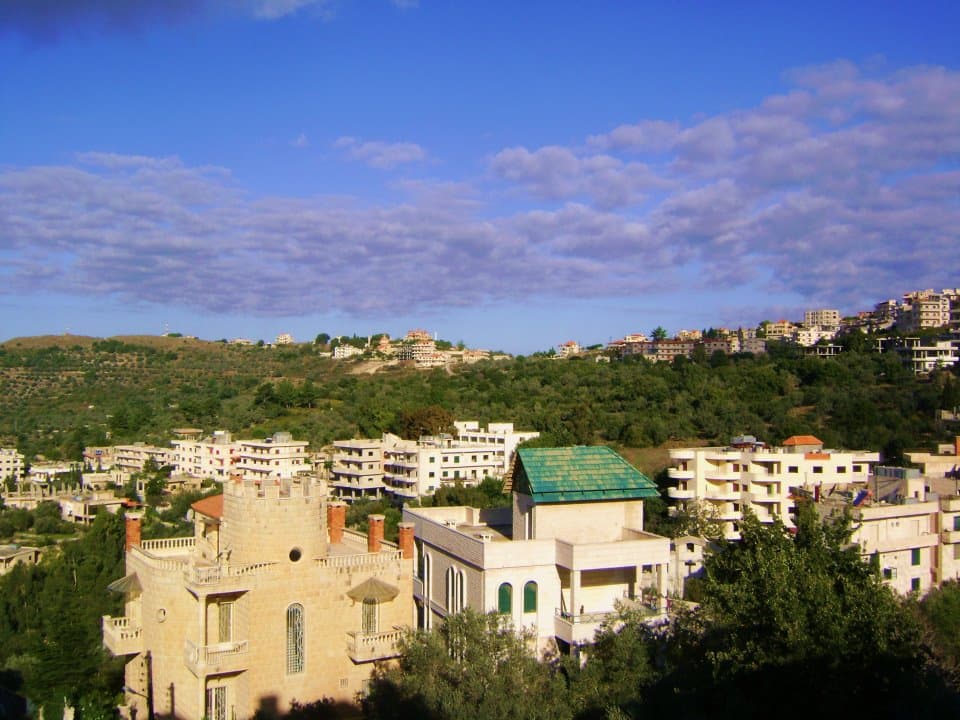
Marmarita is a village in Wadi al-Nasara, the Valley of the Christians, on the slope of Jabal al-Sayih, about 850 metres above sea level. Homs and Tartus are each roughly 55-60 km away, and from the village you look out over the Akkar plain towards the sea. A few thousand people live here in winter; in summer, when emigrant families return, the population multiplies. The busiest day of the year is the carnival on 14 August.
Getting there
The village is about 13 km north of the Homs–Tartus motorway (M1), and the road into the valley passes close to Krak des Chevaliers. The Lebanese border is 12 km away as the crow flies. Mashta Azar, another valley village, is its western neighbour.
The name and the founding
There are two readings of the name. One is Syriac Marmanitha, ‘the place that looks down’. The other holds that a church of Mar Marta, Saint Martha, once stood here and that its name wore down over time into the present form. The founding families came from the Hauran in the south. English-language sources date the founding to the early 17th century, while some in the village say it is older. Marmarita belonged to Latakia until 1953 and then passed to Homs governorate.
What to see
- Al-Sahle. The oldest part of the village: an old market that keeps its stone walls, vaults and arches.
- Al-Dehliz. Next to al-Sahle, an arch of local limestone with a narrow street running beneath it, wide enough only for a small car.
- The old churches. Three churches built by the founding families, Saint John, Saint Saba and Saint Peter, still stand at the edge of the village. Today Marmarita has three Greek Orthodox churches, one Greek Catholic and one Protestant.
The village is also known for zajal, a tradition of improvised folk poetry.
The carnival
Every year since the 1970s, on 14 August, the eve of the Feast of the Dormition, the village holds a carnival: decorated floats, giant figures and costumed dancers move through the streets. In August 2013, during the feast, the village and neighbouring al-Husn came under armed attack.
When to go
July and August, when the coast and Homs are hot. Annual rainfall is around 1017 mm, and snow falls several times each winter.
Do not miss
The street under al-Dehliz. Walk beneath the arch towards al-Sahle and the village’s old stone core opens up suddenly among the newer summer houses.
Tips
- The village is packed on 14 August; arrange transport and a place to stay in advance
- Al-Sahle and al-Dehliz are side by side; see the old market on foot
- Snow can fall in winter; ask about the road before setting out in that season
- Krak des Chevaliers and Saint George's Monastery are close; fold them into a valley day
Transparency
- How this was chosen
- Written by hand; opening hours, entry fee and coordinates are kept as data. A field that is not known for certain is marked as variable rather than guessed.
- Facts checked
- September 2026
- Last updated
- September 15, 2026