The National Museum of Damascus
The Ugaritic alphabet, the Dura-Europos synagogue and Palmyrene funerary reliefs. Founded in 1919, closed in 2012, four of its five wings reopened in 2018.
- Opening hours
- Variable — the museum has been open since 8 January 2025, check hours before going
- Entry
- Variable — check at the door
- Duration
- 90 minutes
- Best time
- Morning, while the garden is cool and the halls are empty
- Period
- Modern building with an Umayyad facade
- Address
- Shukri al-Quwatli Street, beside the Takiyya al-Sulaymaniyya, Damascus
It stands in central Damascus, right beside the Takiyya al-Sulaymaniyya, and holds the whole known past of Syria under one roof: tablets from Mari and Ebla, the alphabet found at Ugarit, a synagogue lifted out of Dura-Europos and rebuilt here. It was founded in 1919 and is the country’s oldest cultural institution.
Getting there
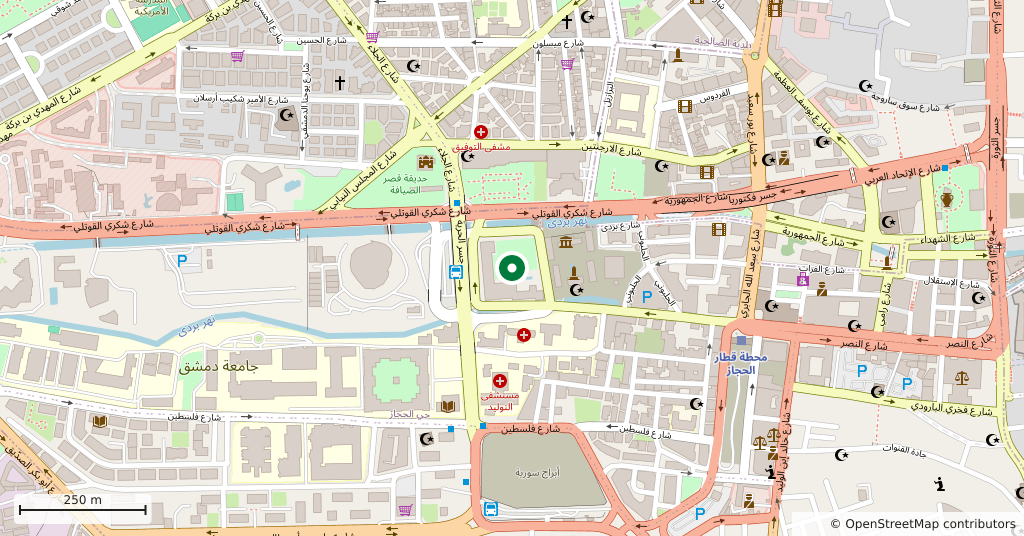
On Shukri al-Quwatli Street, between Damascus University and the Takiyya al-Sulaymaniyya. From the west end of the Al-Hamidiyah Souq it is about twenty minutes on foot heading west; coming from Marjeh Square is the same distance. The garden opens onto the street and the entrance sits behind it.
What to see
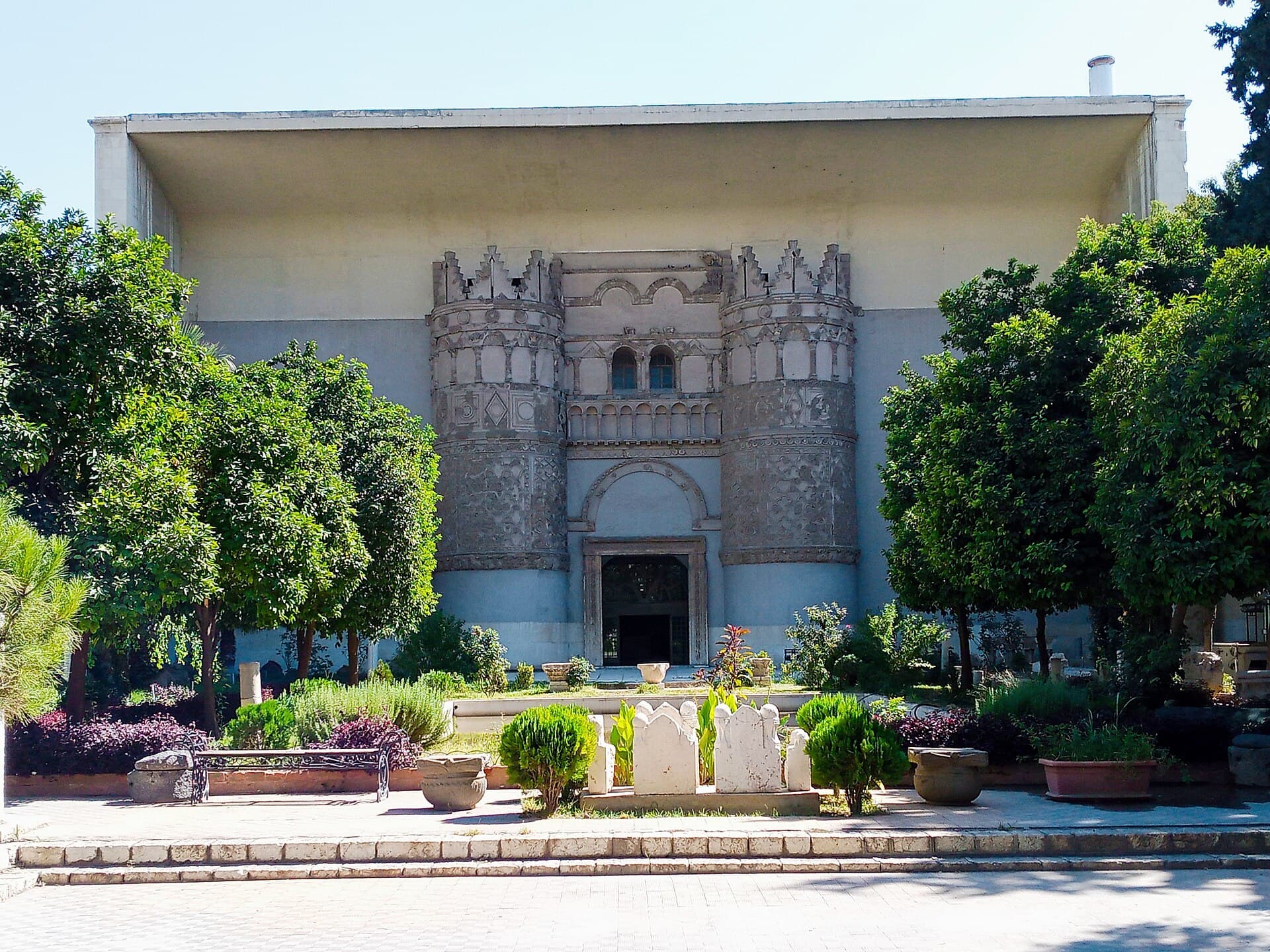
Look at the doorway first: the facade of Qasr al-Hayr al-Gharbi, an Umayyad desert palace of 727, was taken apart in the steppe and rebuilt here as the museum’s entrance. Inside is the clay tablet from Ugarit that carries the earliest known alphabet. The same section holds the oldest piece of written-down music. The Dura-Europos synagogue was brought in piece by piece in the 1930s and reassembled with its wall paintings; the Palmyra hall has funerary reliefs and textiles that the desert sand preserved.
Is it open
This is the most important line on the page. The museum closed in 2012 and most of the collection went into hidden stores. Four of its five wings reopened on 29 October 2018. On 7 December 2024 the museum closed again, and it reopened on 8 January 2025. In November 2025 six Roman-era marble statues were stolen from the classical department; in December 2025 the museum was presented in its restored form. Hours can change within a year, so ask before you set out.
What most people miss
The Hypogeum of Yarhai, an underground Palmyrene tomb taken from the Valley of the Tombs and moved here in 1935, is in the basement. You reach it by the stairs from room 15, and most visitors walk the ground floor and leave without seeing it.
Tips
- The garden is part of the museum: look at the sarcophagi and capitals before you go in
- The Yarhai tomb is down the stairs from room 15; the basement is easy to skip
- Ask whether it is open before you set out — it has closed twice in the past decade
Transparency
- How this was chosen
- Written by hand; opening hours, entry fee and coordinates are kept as data. A field that is not known for certain is marked as variable rather than guessed.
- Facts checked
- September 2026
- Last updated
- September 15, 2026