Qasr al-Nasaan, Damascus
The courtyard house near Bab Sharqi was built in 1607 and the Nasaan family still lives in it. Visits are possible; ask at the door about hours and fee.
- Opening hours
- Variable — the family lives here, check at the door
- Entry
- Variable — check at the door
- Duration
- 45 minutes
- Best time
- Morning, while the courtyard is in shade and the pool is still
- Period
- Ottoman
- Address
- Near Bab Sharqi, Old City, Damascus
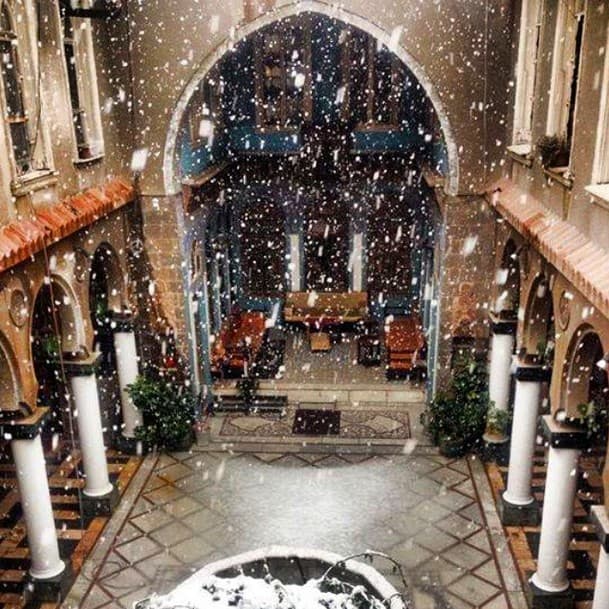
A courtyard house in old Damascus, near Bab Sharqi. Salim al-Nasaan had it built in 1607, in the classic Damascene manner: a blank wall from the lane, then courtyards with pools behind the door. Most of the other great houses on this site became museums or cultural centres. Here the family still lives in the house and the house is open to visits, so what you walk through is a home rather than an exhibition.
Getting there
Walk in from Bab Sharqi towards the Christian quarter; the house sits inside that web of lanes, near the eastern end of Straight Street. The address works by description rather than street number, so asking the shopkeepers nearby is the shortest route. The Chapel of Saint Ananias and Bab Touma are on the same walk.
How long it takes
Forty-five minutes is enough: two courtyards, the halls, the ornament. It is not laid out with labels to read one by one, so the time fills quickly. Keep in mind that you are inside somebody’s home — asking before you photograph and not pushing at closed doors is the minimum courtesy.
What to see
The house covers something in the order of 4000 square metres and stands two storeys high. There are many rooms and halls; pools and fountains in the courtyards, dense wood and plaster work in the halls. A visitors’ book carrying thousands of signatures is kept here, and the book itself reads like four centuries of hospitality recorded in one Damascene house. Next door a workshop turns out arabesque and mosaic.
Do not miss
The visitors’ book. The most photographed thing in the house is the pool in the courtyard, but the book is what carries its story. It does not come out unasked; ask and they show it.
What is not known
The only source behind this record is the Arabic Wikipedia article. The entry fee, the visiting hours and whether visits are still possible today could not be verified, which is why no invented price or time appears in the panel above. No coordinates are given either: not one confirmed position for this house could be found, so the page carries no map.
Tips
- The address works by description; ask the shopkeepers nearby for the house by name
- The family lives here; ask before photographing and leave closed doors closed
- Do not leave without asking for the visitors' book — the record of the house is in it
Transparency
- How this was chosen
- Written by hand; opening hours, entry fee and coordinates are kept as data. A field that is not known for certain is marked as variable rather than guessed.
- Facts checked
- September 2026
- Last updated
- September 15, 2026