Salamiyah
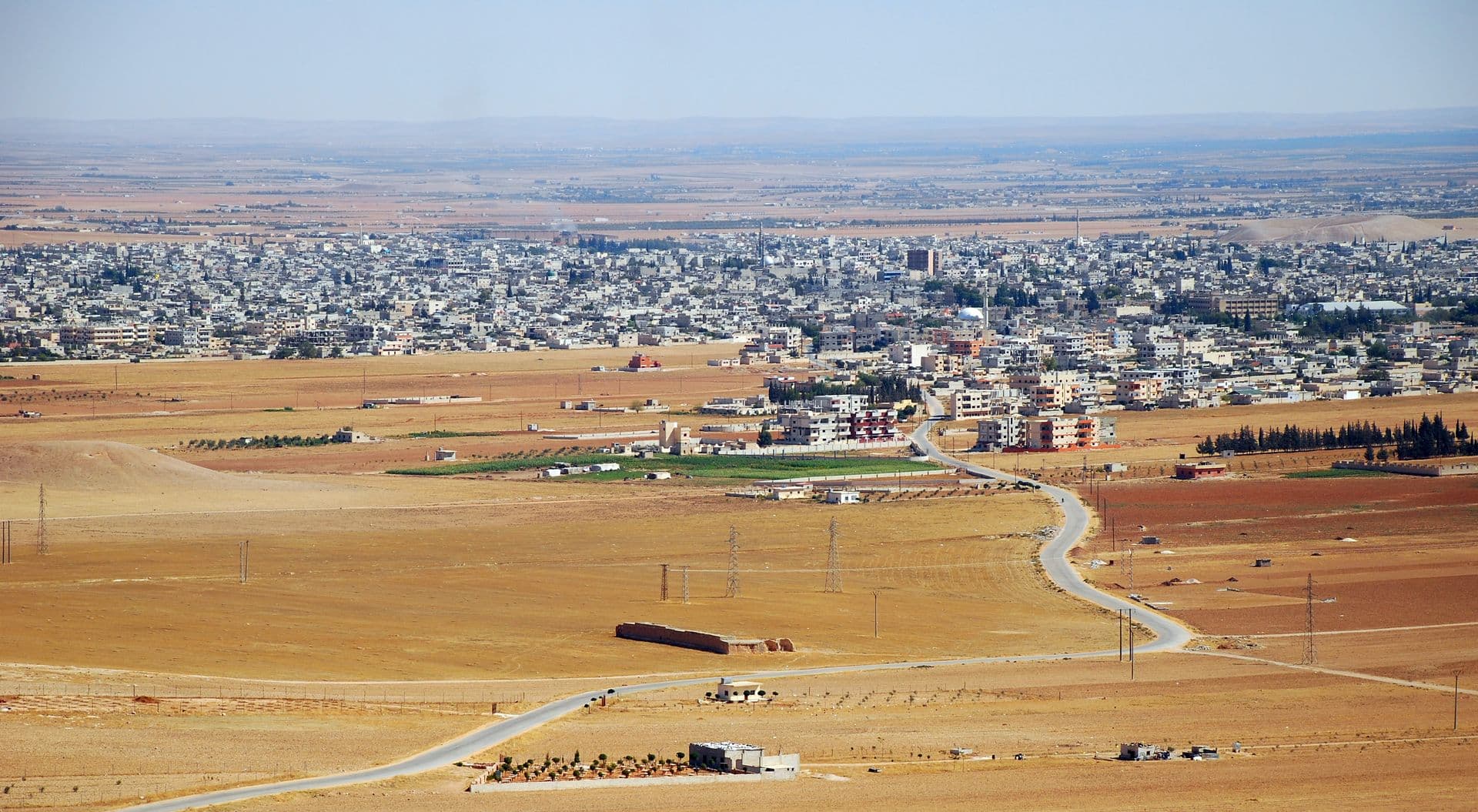
A city on the edge of the steppe south-east of Hama: the birthplace of the Fatimid caliphate, the largest Ismaili centre in the Arab world, and Shmemis castle.
- Opening hours
- Open city, all day
- Entry
- Free
- Duration
- 180 minutes
- Best time
- Spring, while the steppe is green and before the heat sets in
- Period
- Byzantine — Ottoman
- Address
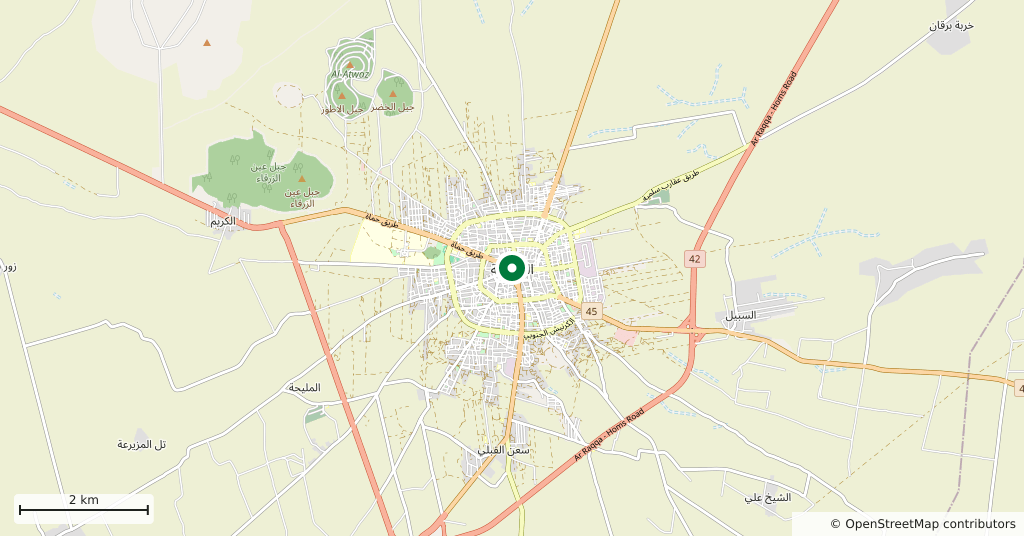
- Salamiyah, 33 km south-east of Hama, Hama governorate
Salamiyah lies 33 kilometres south-east of Hama and 45 north-east of Homs. It sits on a fertile plain at the edge of the Syrian steppe, some 460 metres above sea level. The 2004 census counted 66724 people, and more than half of them are Ismaili; the city is now the largest Ismaili centre in the Arab world.
Getting there
Under an hour east from Hama on the main road, with a second road running in directly from Homs. The city lies on flat ground, its streets wide and easy to walk.
How long it takes
Three hours. The centre does not need half a day; give what is left to the road out into the steppe.
Its history
Under the Byzantines the town was called Salaminias and sat on the road network linking Homs, Chalcis and Resafa. It was a bishopric by 512, and an inscription of 604 records the building of a church of the Theotokos here. After the Arab conquest the Abbasid Salih ibn Ali and his son Abdallah rebuilt the town and laid its irrigation network. Abdallah al-Mahdi Billah, born here in 873 or 874, would go on to found the Fatimid Caliphate. The Qarmatians razed the town in 903. The Ayyubids rebuilt the fortress of Shmemis on a nearby hilltop in 1229, and in 1299 the Mamluk army was beaten by the Mongols here.
What to see
The decision that made the modern city came in 1849, when a firman from Sultan Abdulmecid allowed Ismail ibn Muhammad, the Ismaili emir of Qadmus, to settle here with his followers. The first arrivals lived inside Shmemis castle while the new town went up, and they named it after the sultan. By the end of the century Salamiyah, with 6000 inhabitants, was the largest Ismaili centre in the Ottoman Empire. Aga Khan III paid for schools and an agricultural institution. Prince Aly Khan is buried in the city, and the Ismaili Higher Council of Syria has its headquarters here.
What most visitors miss
The Mosque of Imam Ismail. Dawoodi Bohra visitors from Yemen built it in 1991 beside the grave of Imam Ismail, and an inscription on the wall names who ordered it. Sunni Muslims worship there today while Bohra pilgrims come from around the world. Shmemis castle, on its hill outside the city, earns half a day of its own; the poet Muhammad al-Maghut was born here in 1934.
Tips
- Shmemis castle sits on a hill outside the city; you need a car
- The Mosque of Imam Ismail is in use — ask at the door about visiting hours
- The steppe is windy; a light layer earns its place in the evening
- It fits into one day with Hama, and equally with Homs
Transparency
- How this was chosen
- Written by hand; opening hours, entry fee and coordinates are kept as data. A field that is not known for certain is marked as variable rather than guessed.
- Facts checked
- September 2026
- Last updated
- September 15, 2026