The Salihiyya Quarter
The historic quarter on the slope of Mount Qasioun. Madrasas, domed tombs and narrow lanes, in the district where Damascus first spilled outside its walls.
- Opening hours
- Streets at any hour; buildings follow prayer times
- Entry
- Free
- Duration
- 120 minutes
- Best time
- Morning; the climb is hard in the midday heat
- Period
- Ayyubid — Mamluk — Ottoman
- Address
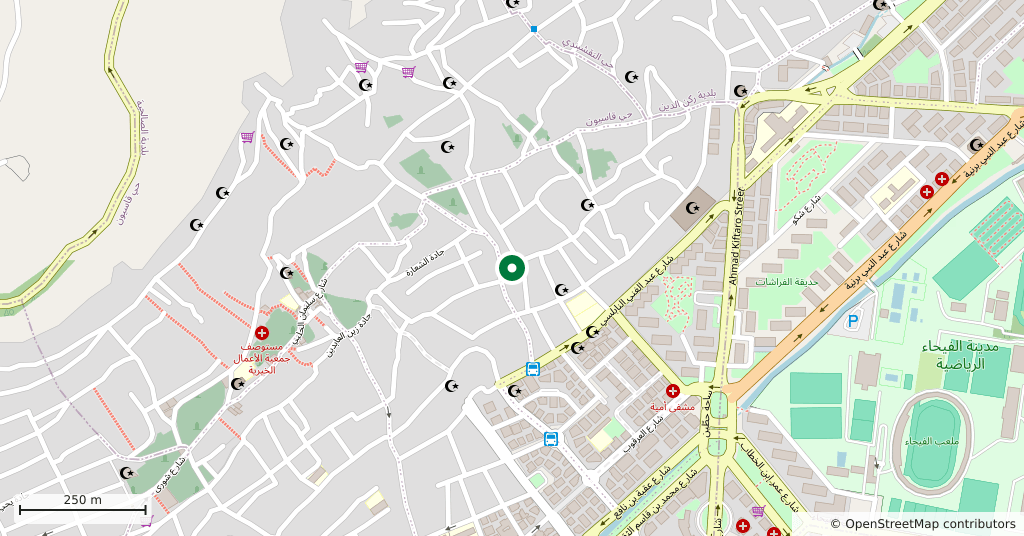
- Foot of Mount Qasioun, 3 kilometres northwest of the Umayyad Mosque, Damascus
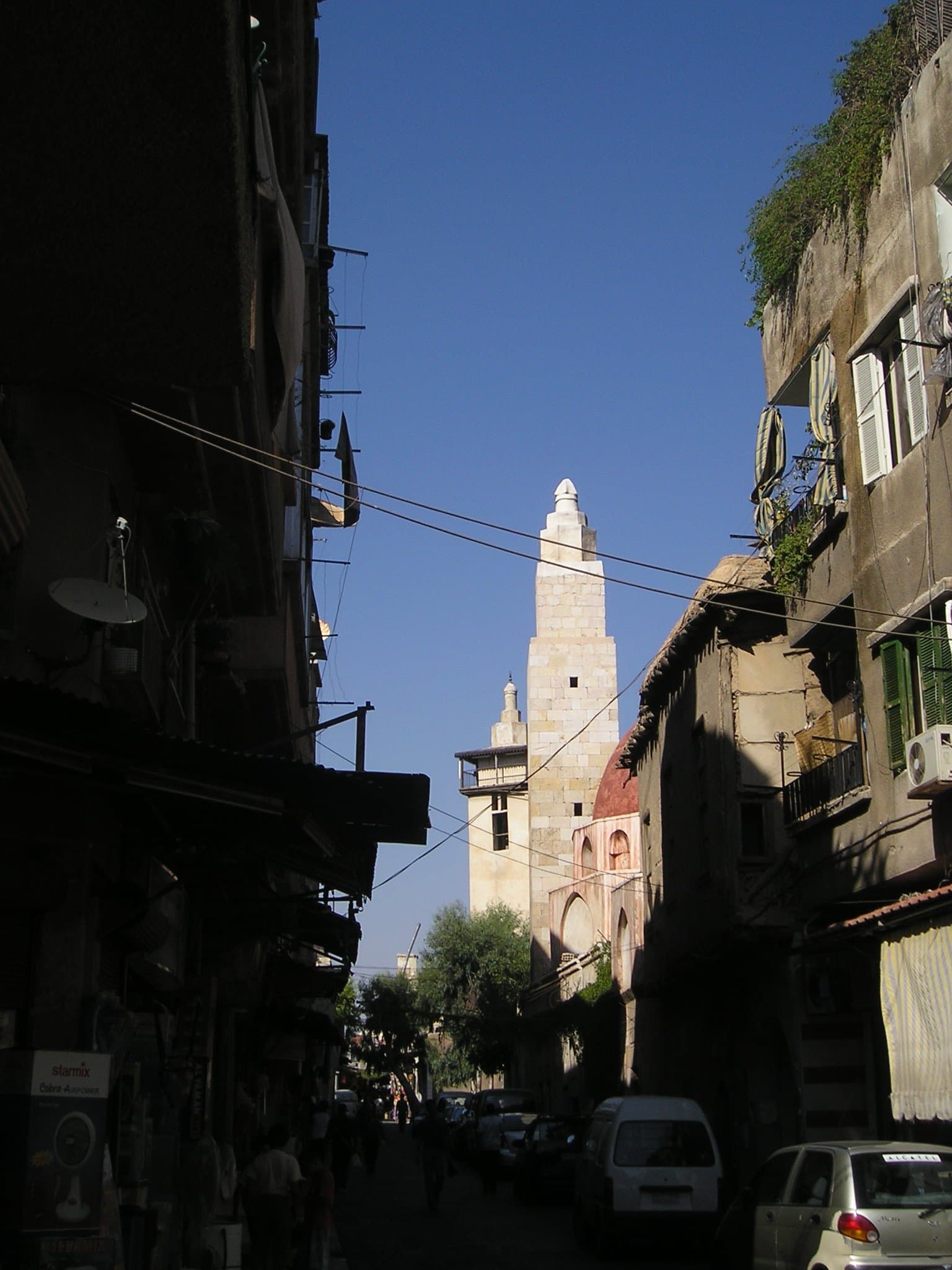
Salihiyya is not a single building but a quarter. It grew on the lower slope of Mount Qasioun, northwest of the walled city, and its madrasas, mosques, bath houses and tombs are embedded among ordinary houses and shops. Walking the lanes, you recognise the old buildings by their roofs: red domes scattered across the district.
How the quarter began
In the second half of the 12th century, Hanbali scholars and their families, displaced from the country around Jerusalem, settled here. Ahmad ibn Muhammad ibn Qudama al-Maqdisi arrived in 1156 from his village near Nablus with his relatives, settled by the Yazid river at the foot of Qasioun, and built on the ruins of an abandoned monastery. That house, known as the Monastery of the Hanbalis, became the seed of the quarter, and Saladin supported the migration. A generation later the geographer Yaqut al-Hamawi described the place as a large village with markets and a Friday mosque on the flank of Qasioun. Migration continued under the Zengids, Ayyubids and Mamluks, and the crowded old city spilled uphill as well; for a time the district was called New Damascus. The Kurdish quarter next to it, Hayy al-Akrad, is today’s Rukn al-Din.
Getting there
3 kilometres northwest of the Umayyad Mosque: 45 minutes on foot, with the last stretch uphill, or a short taxi ride. Do not confuse it with the Qasioun viewpoint, which is higher up and a separate trip.
What to see
The oldest mosque in the quarter is the Hanabila Mosque, once the centre of Hanbali jurisprudence in Damascus. From the Ayyubid period, the Rukniyya Madrasa, the Muqaddam bath house and the Kurdish cemetery still stand. The Ottoman-era mosque of Sheikh Muhyi al-Din ibn Arabi holds his tomb; the Emir Abd al-Qadir al-Jazairi was also buried there for a time, until his remains were moved to Algeria after the French withdrawal. Two branches of the Barada, the Yazid and the Tora, run through the district.
How long it takes
Two hours at least. The buildings are close together, but the lanes are narrow and steep, and most doors open around prayer times.
What most people miss
Turn one street off the main road. Most of the tombs carry no sign and are wedged between newer buildings; from the road you see only the top of a dome. This is a lived-in quarter rather than a museum: do not walk into courtyards uninvited, and ask before photographing.
Tips
- Turn one street off the main road; the tombs are in there
- Watch the roofline — the red domes give the old buildings away
- People live here: ask before entering a courtyard or taking a photograph
- The Qasioun viewpoint is higher up and a separate trip
Transparency
- How this was chosen
- Written by hand; opening hours, entry fee and coordinates are kept as data. A field that is not known for certain is marked as variable rather than guessed.
- Facts checked
- August 2026
- Last updated
- September 15, 2026