Tomb of Ibn Salama al-Raqqi, Damascus
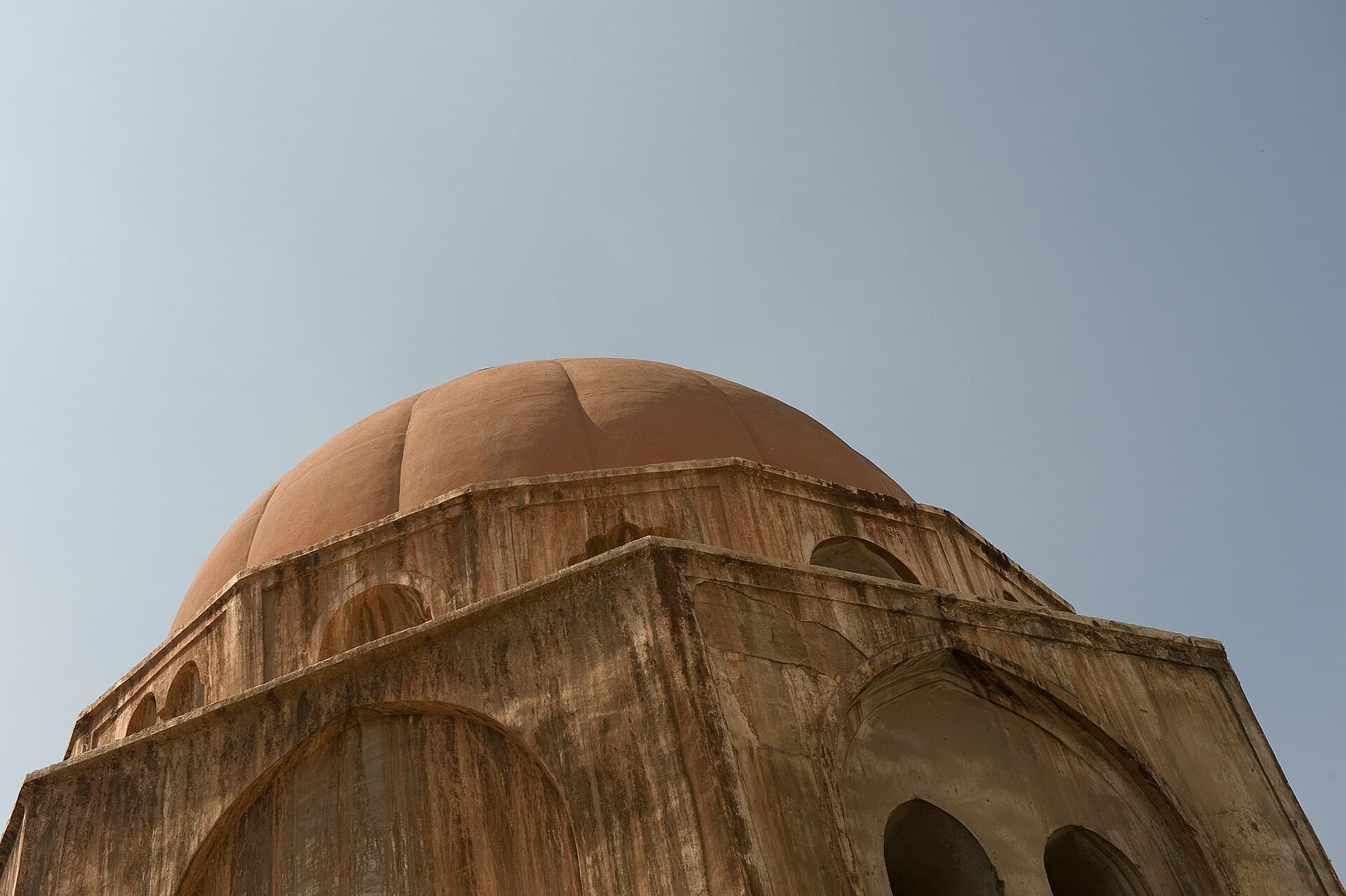
An Ayyubid tomb of 1213 in Salihiyya, Damascus: a 16-ribbed dome on a two-tier drum and a lintel inscription giving the date of death. West of the Al-Sahiba Madrasa.
- Opening hours
- Variable — current state and visiting hours not verified; the dome is visible from the street
- Entry
- Variable — confirm on site
- Duration
- 15 minutes
- Best time
- Morning, before the shop awnings go up and the front is clearer
- Period
- Ayyubid
- Address
- Corner of Al-Bara ibn Malik Street, Abu Jarash quarter, Salihiyya, Damascus
A domed Ayyubid tomb on a street corner in the Abu Jarash quarter of Salihiyya, on the lower slopes of Mount Qasioun. The Ayyubids were the dynasty founded by Saladin, and they ruled Damascus until the mid-13th century. Buried here is Abu Abdallah al-Hasan ibn Salama al-Raqqi; his name tells us he came from Raqqa. He died in Rabi al-Akhir 610 of the Islamic calendar, that is 1213. What we know of him is written on the tomb’s own stone. The reason to come is the dome: 16 ribs, set on a two-tier drum and painted tile-red on the outside.
What the inscription says
The lintel over the window on the north side carries an inscription. It opens with the basmala, the invocation in the name of God, followed by the verse from Surat al-Rahman saying that everything on earth passes away. Then comes a sentence to this effect: this is the tomb of the stranger and poor servant Abu Abdallah al-Hasan ibn Salama al-Raqqi. The text ends with the date of his death. A man who called himself a stranger, someone far from home, owes the survival of his name to that lintel.
What you see
The plan is square: 78 square metres, with sides of 883 centimetres. The walls are built of large limestone courses, on average 45 centimetres high. The dome is a hemisphere divided into 16 ribs and pierced by 16 small round openings.
A drum of two tiers carries the dome. The upper tier has 16 sides: pointed-arch windows at the four cardinal points, and between them four decorative niches, four seven-lobed shell niches and four plain niches. The lower tier is octagonal and taller; its main faces have twin windows framed by a pointed arch, and the faces between them have blind arches. The dome is painted tile-red on the outside and the drums white. The east front is symmetrical: two rectangular windows with lintels and low arches over them. A chamfered moulding runs around every side.
Where it is and how to find it
The tomb stands on the corner of Al-Bara ibn Malik Street and the lane the Awqaf record calls Harat Haytham Arnaout. The Abd al-Ghani al-Nabulsi Mosque is about 125 metres to the south-west and the Al-Sahiba Madrasa about 80 metres to the east; both have their own pages on this site. In the 2008 photographs on Wikimedia Commons, shop awnings lean against the base of the building and the dome shows above the canvas and the power lines.
Is it open, and how long to allow
The most recent dated records we have are the 2008 photographs and a 2012 page from the Damascus Directorate of Awqaf, the office that manages religious endowments. No source shows whether the tomb can be entered today; its current state and visiting hours are not verified. The dome and the fronts can be seen from the street. Fifteen minutes is enough to look from outside.
Don’t miss
The lintel over the north window. The eye goes to the dome first, and the window sits among the shops. Yet that is the place that says whose tomb this is and when it was built: a verse, a name and the date 610.
Tips
- Look at the lintel over the north window; the inscription naming the dead man and his date of death is there
- Find the four seven-lobed shell niches on the upper drum; they sit between the main windows
- The Al-Sahiba Madrasa is 80 metres east; see both buildings on the same walk
Transparency
- How this was chosen
- Written by hand; opening hours, entry fee and coordinates are kept as data. A field that is not known for certain is marked as variable rather than guessed.
- Facts checked
- September 2026
- Last updated
- September 15, 2026