Inside Bab Qinnasrin: Aleppo’s southwest quarter from the Bimaristan to al-Rumi Mosque
A short walk inside Bab Qinnasrin in Aleppo: a Mamluk hospital of 1354, a khan of 1450, a mosque with a footprint stone, the gate itself and al-Rumi Mosque.
- Duration
- 3.5 hours
- Distance
- 1.3 km
- Difficulty
- Easy
- Best season
- March–June, September–November
- stops
- 5
- City
- Aleppo
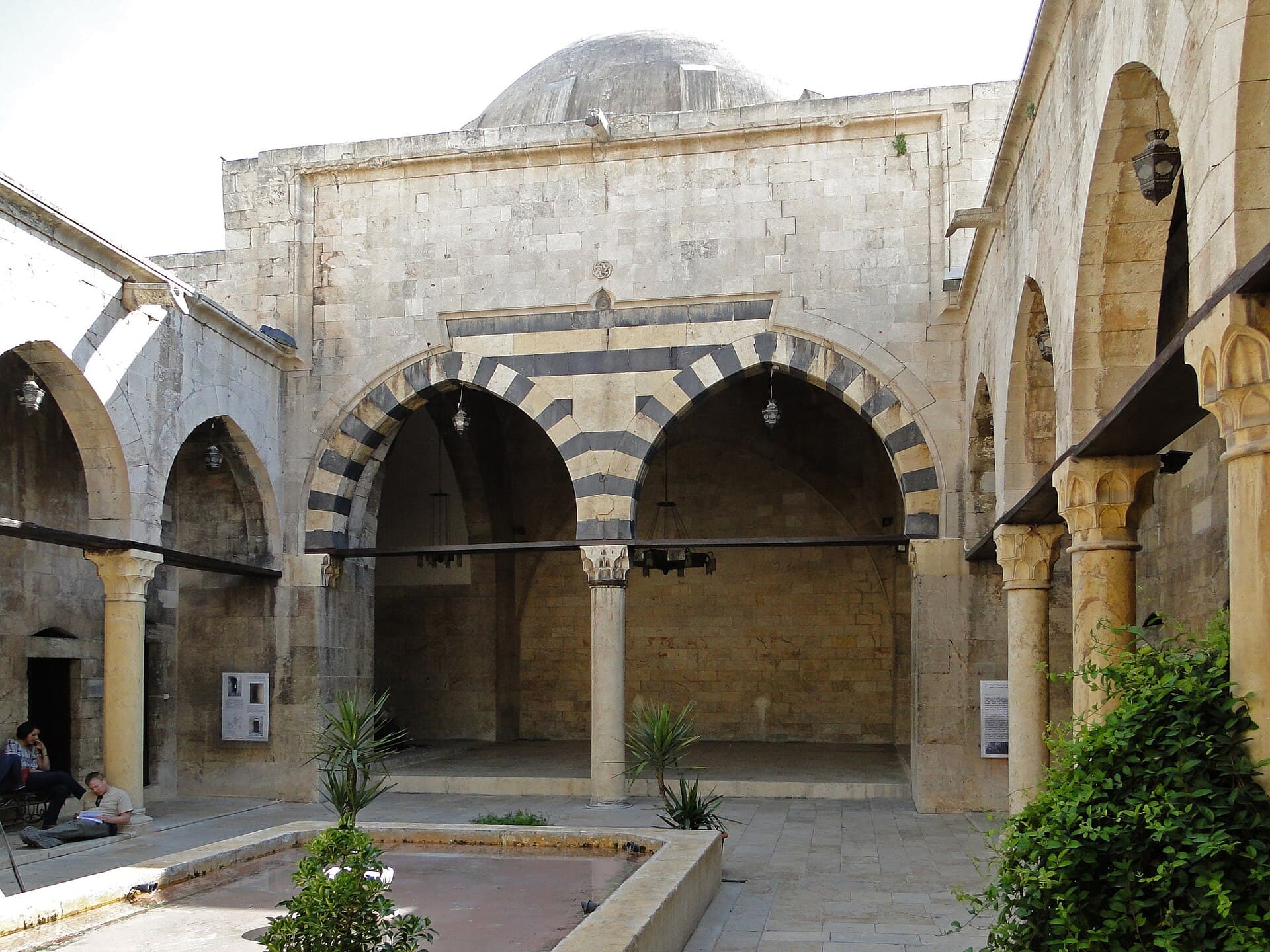
The inner side of Bab Qinnasrin, the southwest corner of Aleppo’s old city, is a quarter that stayed out of reach of the souq’s noise. This walk sets five stops in a row there. First come the Bimaristan Arghun, a Mamluk hospital of 1354, and Khan al-Qadi of 1450 across the street. Then the Al-Karimiyya Mosque, with a footprint stone in its wall, the gate itself, and al-Rumi Mosque, known for its minaret. The route is short. As the crow flies the stops add up to 380 metres, and the lanes bend enough to push the walk a little over a kilometre. What fills the half day is not the walking but the one detail worth stopping for at each building.
The route
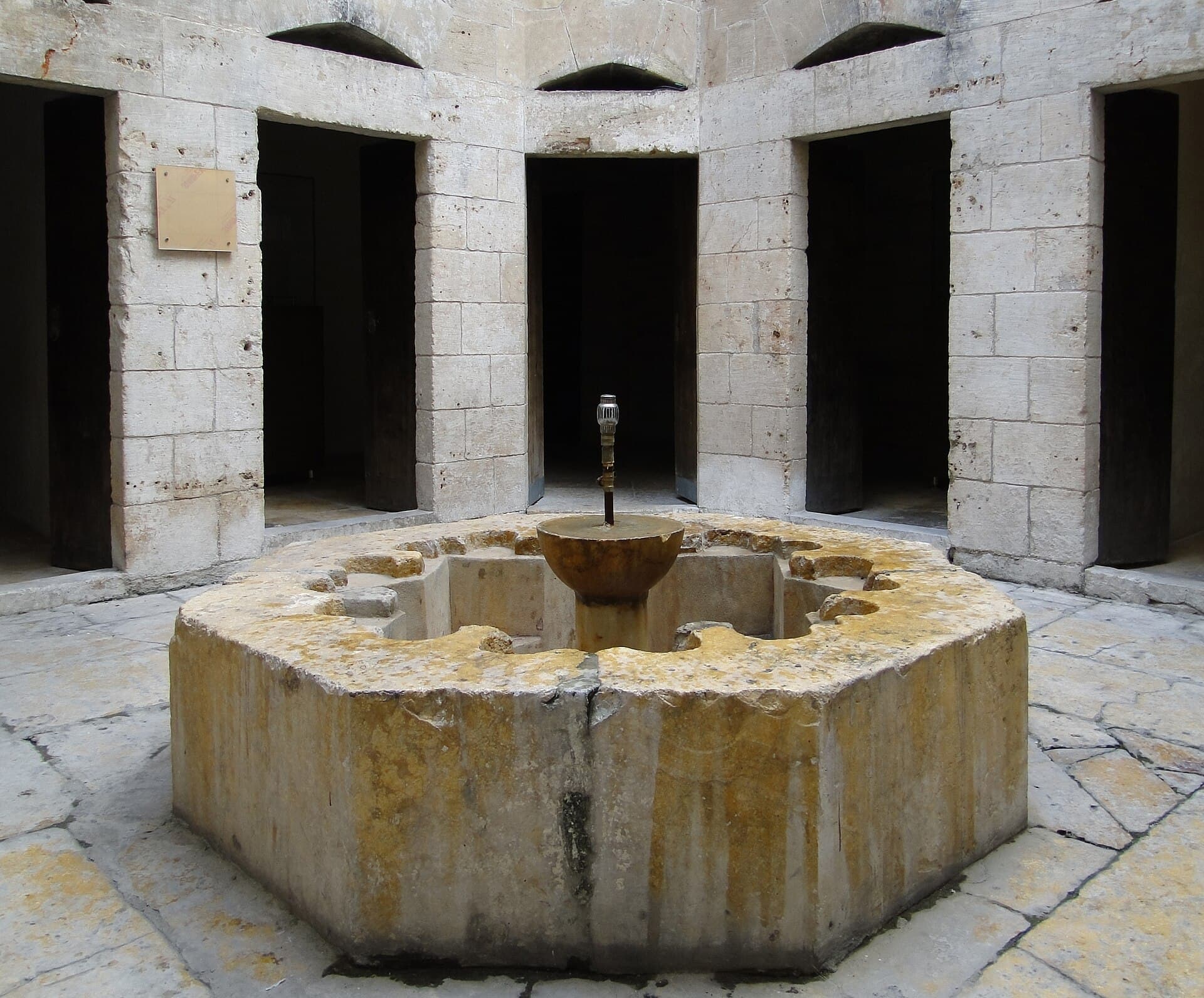
Start at the Bimaristan Arghun. Before you step into the courtyard, look at the brass-clad leaves of the door and the inscription above them, dated 755 of the Hijra, which is 1354; inside, the patients’ rooms are set around an octagonal basin. Khan al-Qadi stands directly across the street. See the stone stair that rises from its courtyard, and the endowment inscription that tied a quarter of its shops to the Hakimiyya Madrasa.
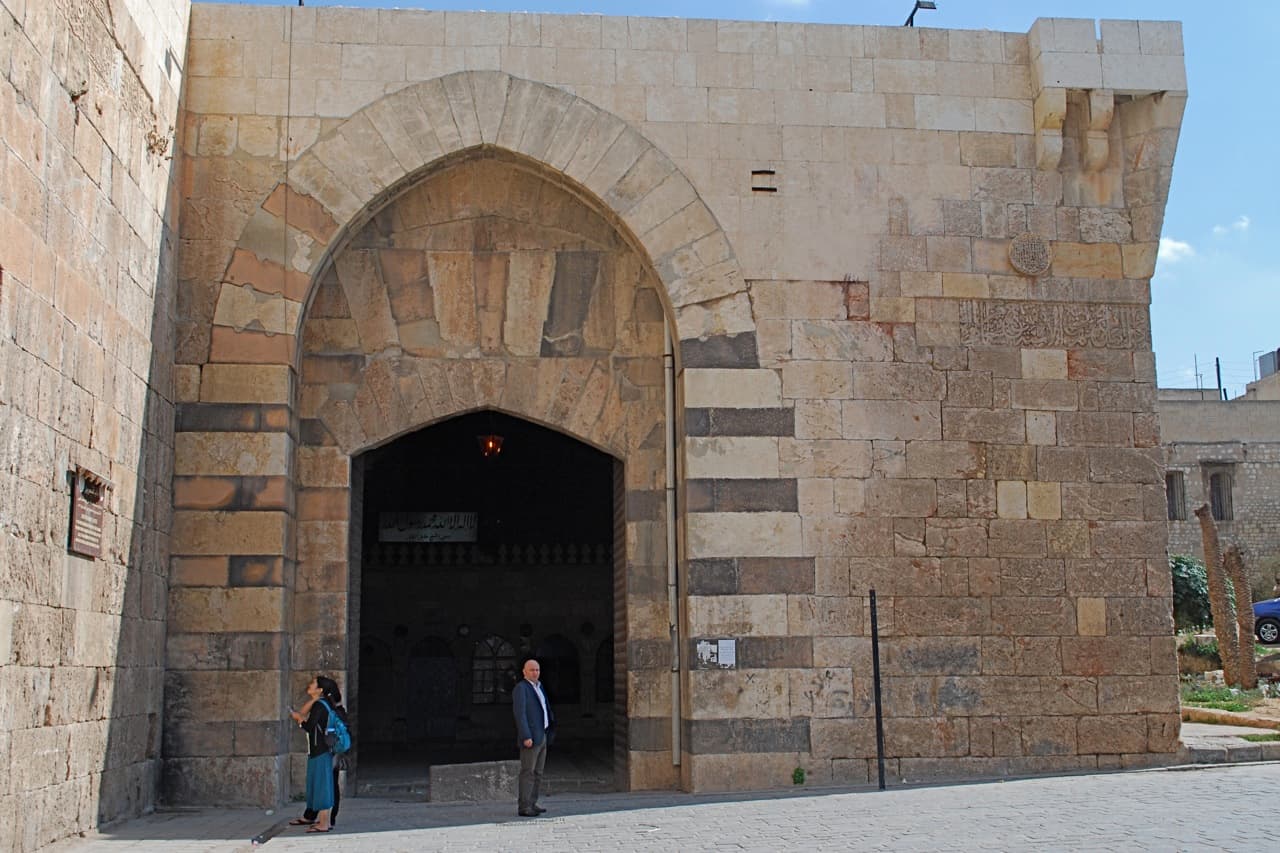
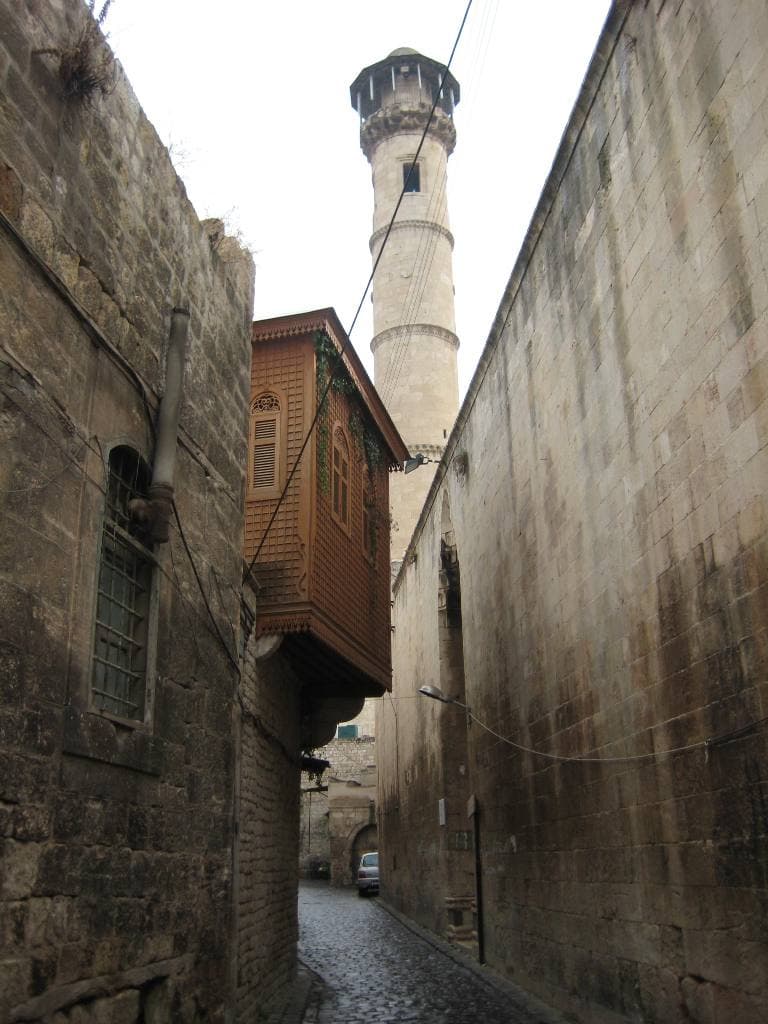
From there head down towards the gate. The Al-Karimiyya Mosque faces the Jawhari bath house, with the small Tarsusi mosque just in front of it. In the prayer hall, turn to the south wall: the yellow stone sits east of the mihrab, framed by a border and a horseshoe arch like a second mihrab. A few minutes later you are in the deep passage of Bab Qinnasrin. Its present form dates from 1256, and the story of its doors begins at Amorium in 838. The last stop, al-Rumi Mosque, also called the Mankalibugha Mosque, is on Bab Qinnasrin street. In the narrow lane the minaret rises alone above the houses; use it as your marker, and move to the north end of the lane to see the whole shaft.
Timing
Be at the Bimaristan at 10:00. The courtyard is small and fills with a handful of people, so the morning is the quiet time; 45 minutes is enough. Cross to Khan al-Qadi about 11:00, when its courtyard takes the midday light. Go into Al-Karimiyya before noon, while the south wall is lit; if you arrive at prayer time, wait. Be at Bab Qinnasrin around 12:30. Al-Rumi comes last because of the light: in the narrow lane the sun reaches the minaret only in the afternoon. The walk ends around 13:30.
Take care
The area around Bab Qinnasrin was on the front line in the fighting between 2012 and 2016 and was badly damaged. The damage to the minaret of al-Rumi Mosque is plain to see, and repair work continues at the gate and in the streets around it. Whether the Bimaristan’s door is open changes from day to day. We found no dated record of the present state of Al-Karimiyya; ask in the quarter whether its door is open. Opening hours had not been verified as of September 2026. At both mosques, come outside prayer times and cover shoulders and knees. Aleppo also has an al-Qadi Mosque, which is a different building; when you ask the way, say you mean the khan.
The route on a map
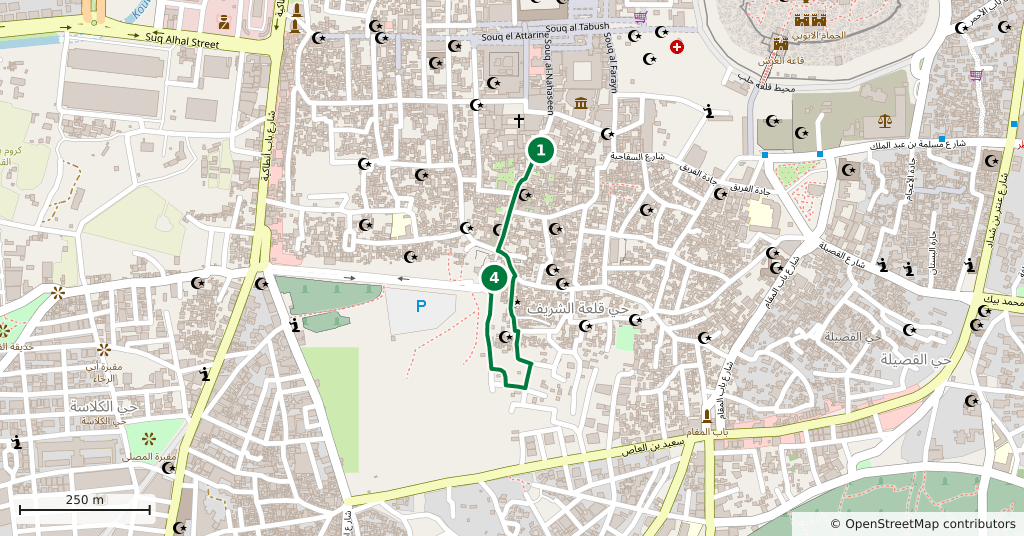
Stops along the route
- 01
- 02
- 03
- 04
- 05
Transparency
- How this was chosen
- The stops and their order were set by hand. The line on the map is real road geometry, not a straight hop between pins; distance and duration belong to that itinerary.
- Facts checked
- September 2026
- Last updated
- September 15, 2026