The Bimaristan Arghun
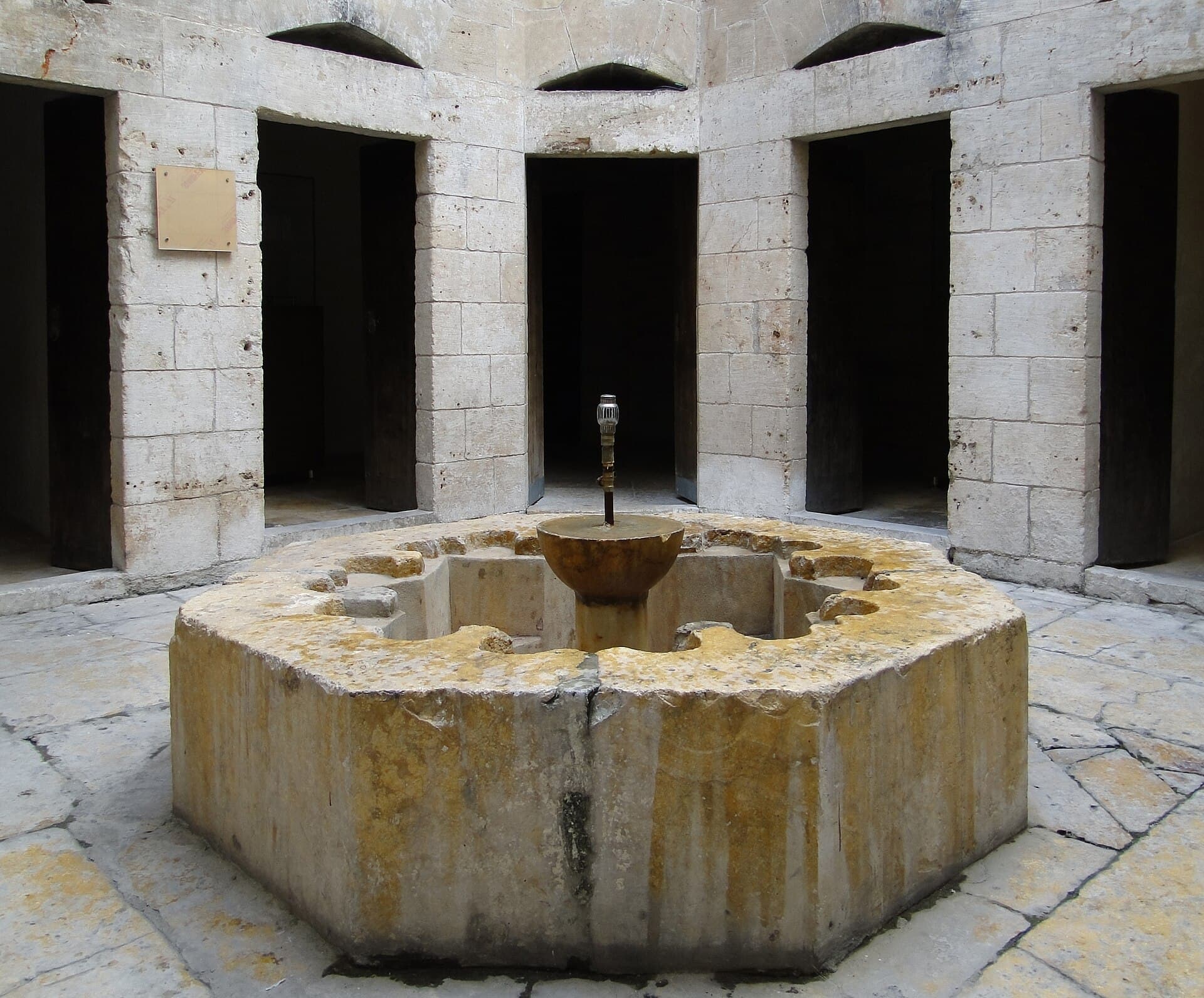
A Mamluk hospital founded in 1354: a courtyard with iwans, patient rooms around it, a fountain at its centre. Light, water and music were the treatment.
- Opening hours
- Varies — confirm at the door
- Entry
- Varies — confirm at the door
- Duration
- 45 minutes
- Best time
- Morning; the courtyard is small and a few people fill it
- Period
- Mamluk
- Address
- Bab Qinnesrin road, al-Jalloum quarter, Old City, Aleppo
Aleppo’s Mamluk hospital. Arghun al-Kamili had it built in 1354, and it worked as a hospital into the early 20th century. In its later years it took mainly patients with mental illness. They were not shut into a dark room but housed around a courtyard with light and water in it — you can read that in the plan.
Getting there
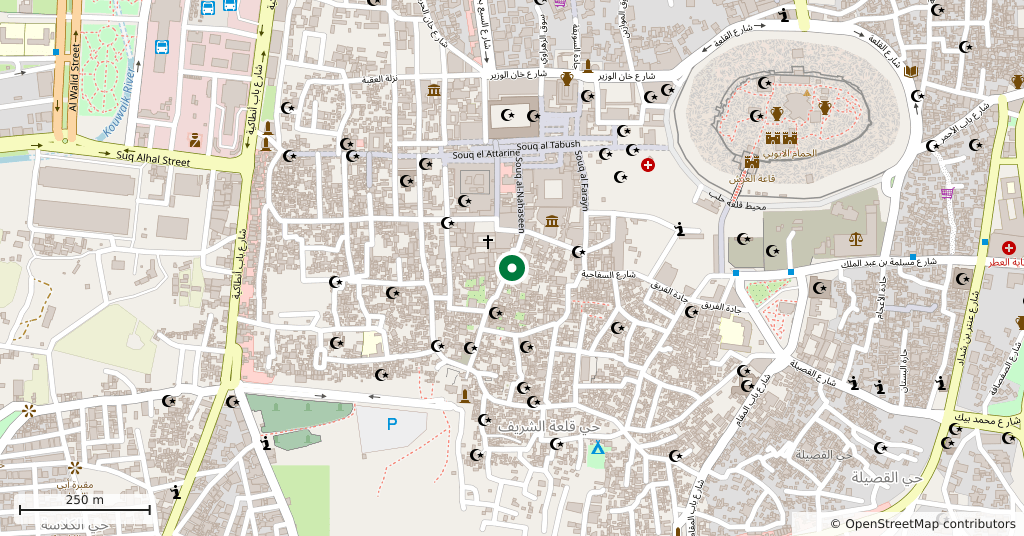
In the al-Jalloum quarter, on the road that runs up to Bab Qinnesrin. Walk north from the gate and the road brings you straight here. You stay inside the old city; no taxi needed.
What to see
The plan is simple and reads at a glance. An entrance corridor, then the courtyard; an iwan on the north side and another on the south, patient rooms east and west. An octagonal stone basin with a small fountain stands in the middle. The doors of the rooms are narrow, the courtyard wide open.
How patients were treated
The method recorded here does not sound strange today: plenty of light, fresh air, running water and music. The fountain was not an ornament. Its sound counted as part of the treatment, and the rooms are set out exactly where that sound carries.
How it stands today
Al-Jalloum and its surroundings were on the front line between 2012 and 2016, and roughly a third of the old city was destroyed. Repair work in the souqs continues and the shops are reopening in turn. Whether the bimaristan’s door is open varies from day to day, so confirm it on the spot.
Do not miss
The entrance door itself. The wooden leaves are sheathed in brass and worked in geometric panels, and the marble inscription above them gives the year 755 in the Islamic calendar, that is 1354. Most visitors walk through it into the courtyard and never turn round to look.
Tips
- The road running north from Bab Qinnesrin brings you to the door
- Look at the brass-sheathed leaves of the entrance door before you step in
- The octagonal basin sits at the centre of the rooms; the sound of water was part of the cure
Transparency
- How this was chosen
- Written by hand; opening hours, entry fee and coordinates are kept as data. A field that is not known for certain is marked as variable rather than guessed.
- Facts checked
- August 2026
- Last updated
- September 15, 2026