The west end of Straight Street: from Khan al-Dikka to Khan al-Zafaraniyya
A half-day walk in Damascus along the covered west end of Straight Street: four khans, a Mamluk minaret and a bathhouse turned souq, all within half a kilometre.
- Duration
- 3 hours
- Distance
- 0.5 km
- Difficulty
- Easy
- Best season
- Year round, except Fridays
- stops
- 6
- City
- Damascus
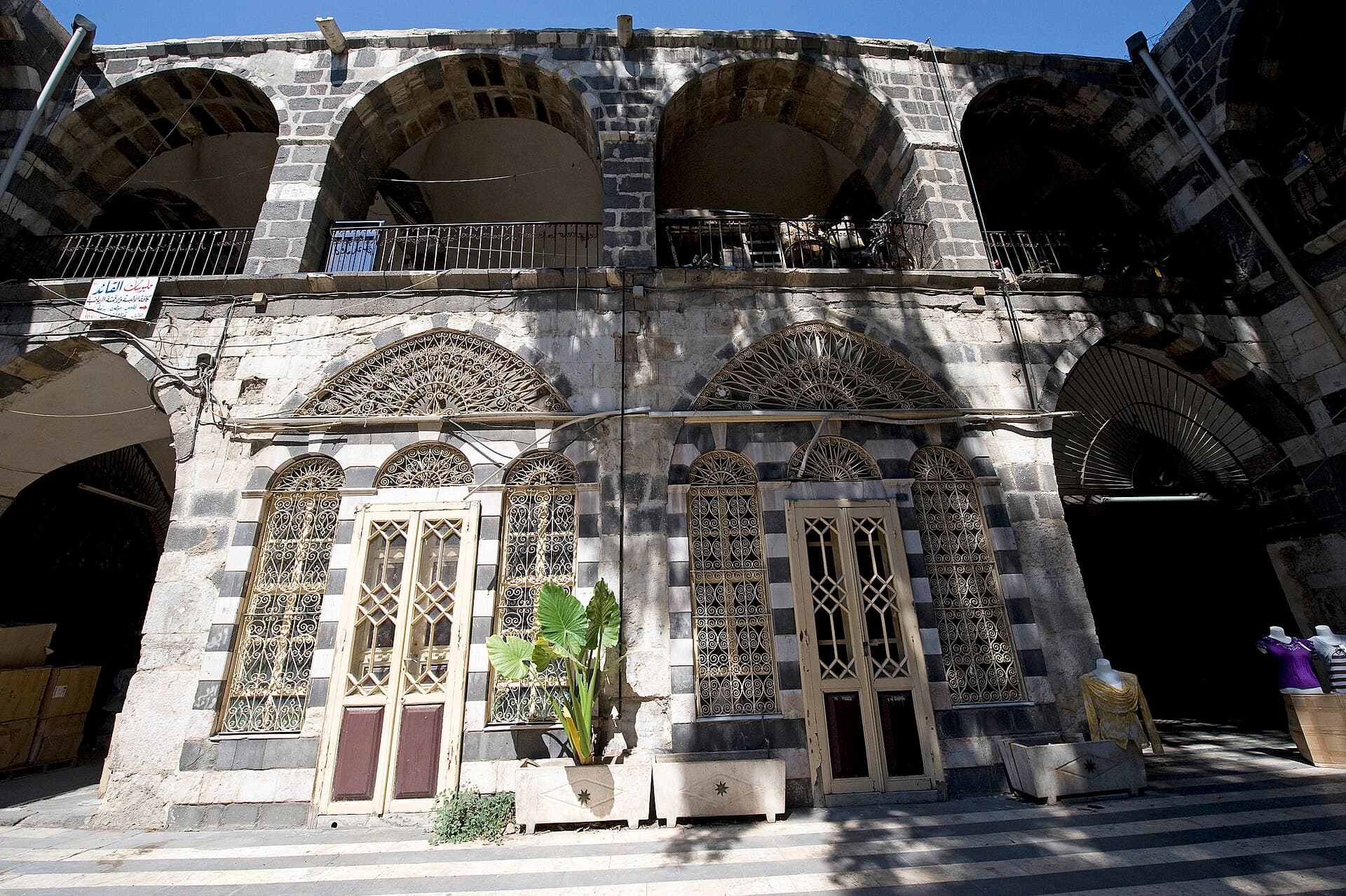
At its western end Straight Street runs under a roof and goes by the name Souq Midhat Pasha. Along this stretch, and in the Tailors’ Souq that branches north from it, four khans, a small mosque and a former bathhouse stand a few steps apart. A khan is a merchants’ inn built around a courtyard. The walking distance is under half a kilometre, but every stop is a working workshop or shop, so the walk fills half a day. It starts at Khan al-Dikka, from the Mamluk period, and ends at Khan al-Zafaraniyya, named after the saffron trade.
The route
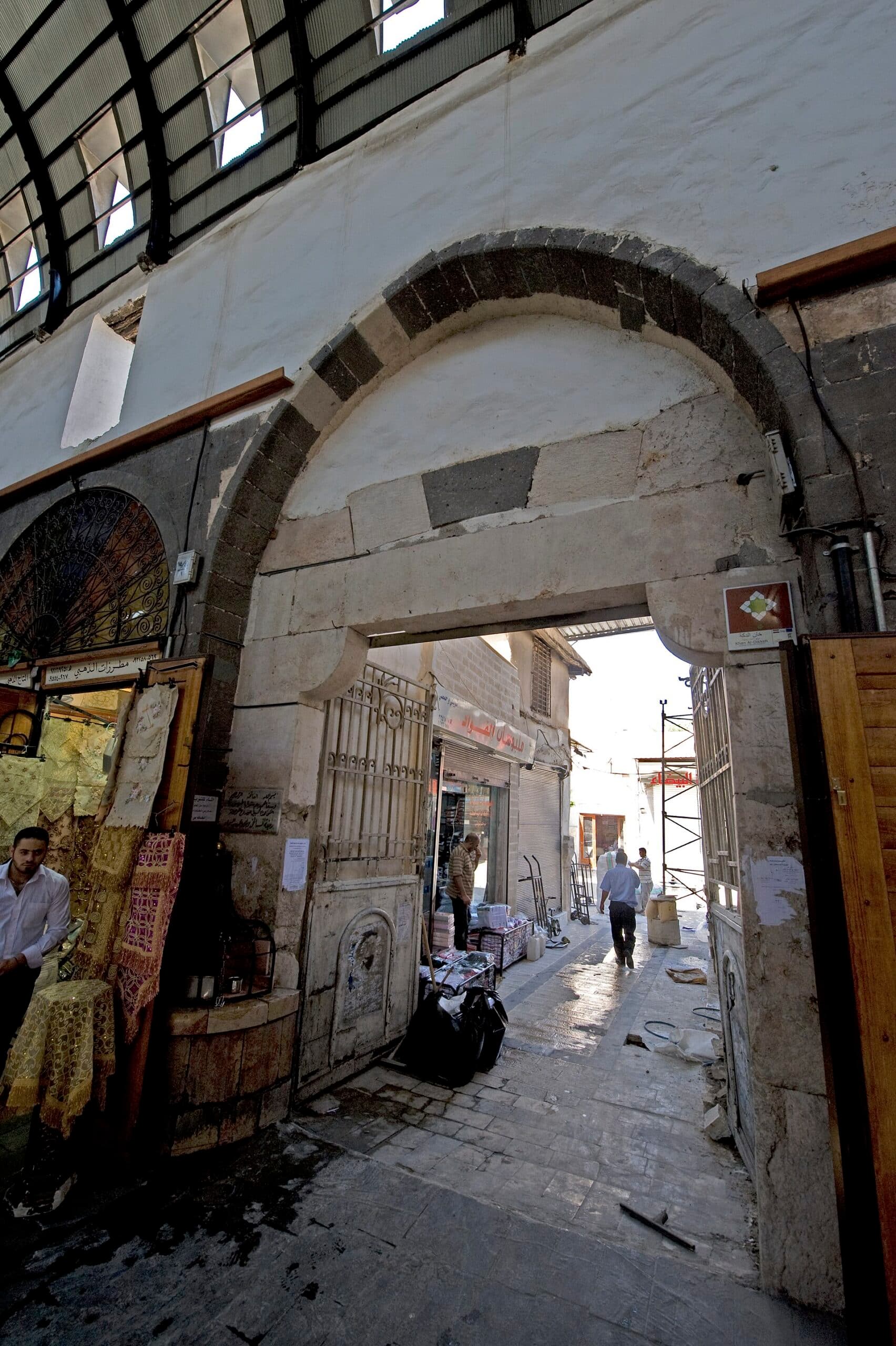
On Souq Midhat Pasha, in the stretch near Khan Jaqmaq, a wide arch in black and white stone and a small sign beside it mark Khan al-Dikka. It is thought to be the oldest khan still standing in Damascus. The name comes from the stone platform, the dikka, in its courtyard: slaves were once put up for sale on it, which is why the building is also called Khan al-Jawari. The platform itself is gone.
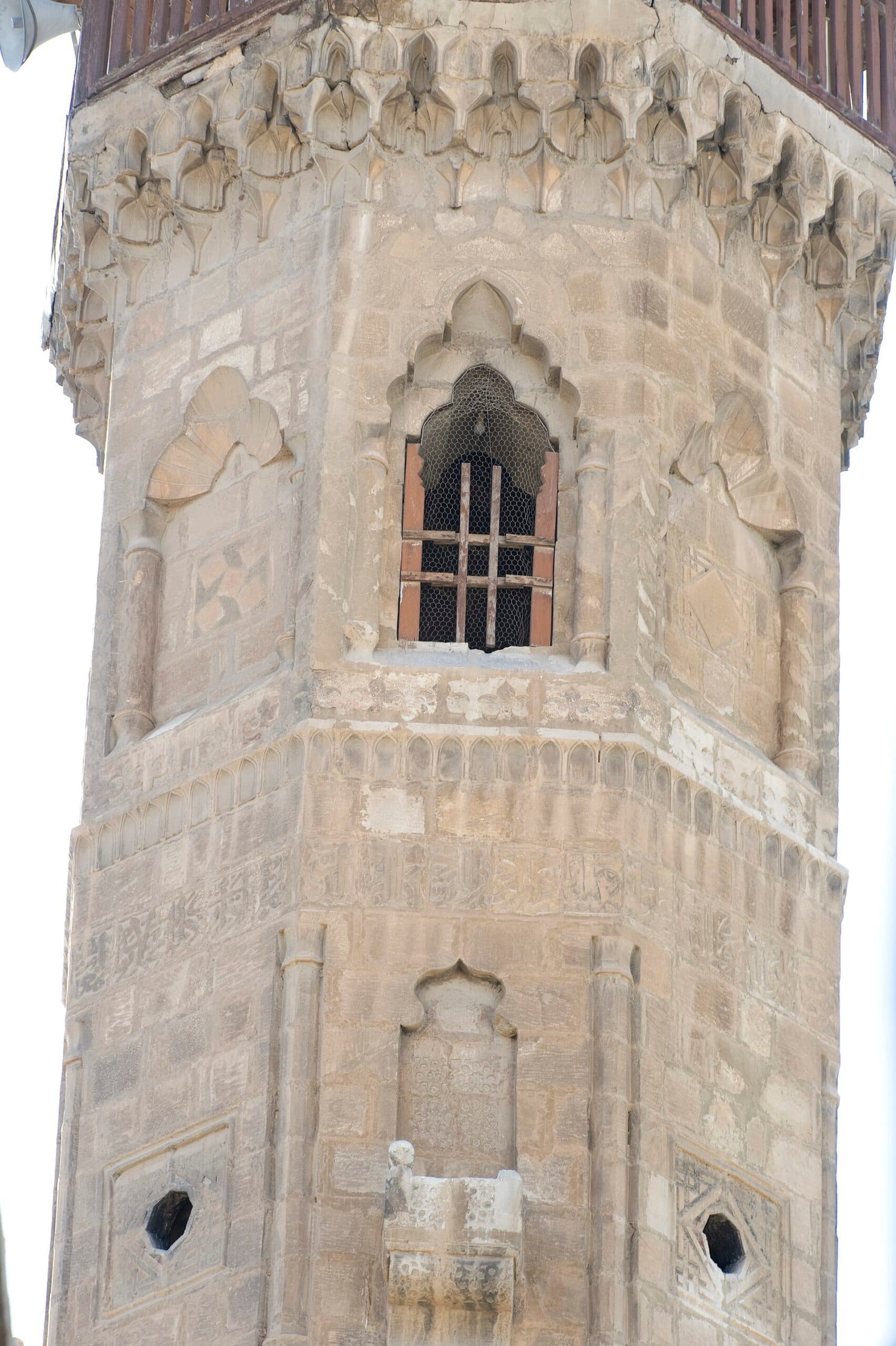
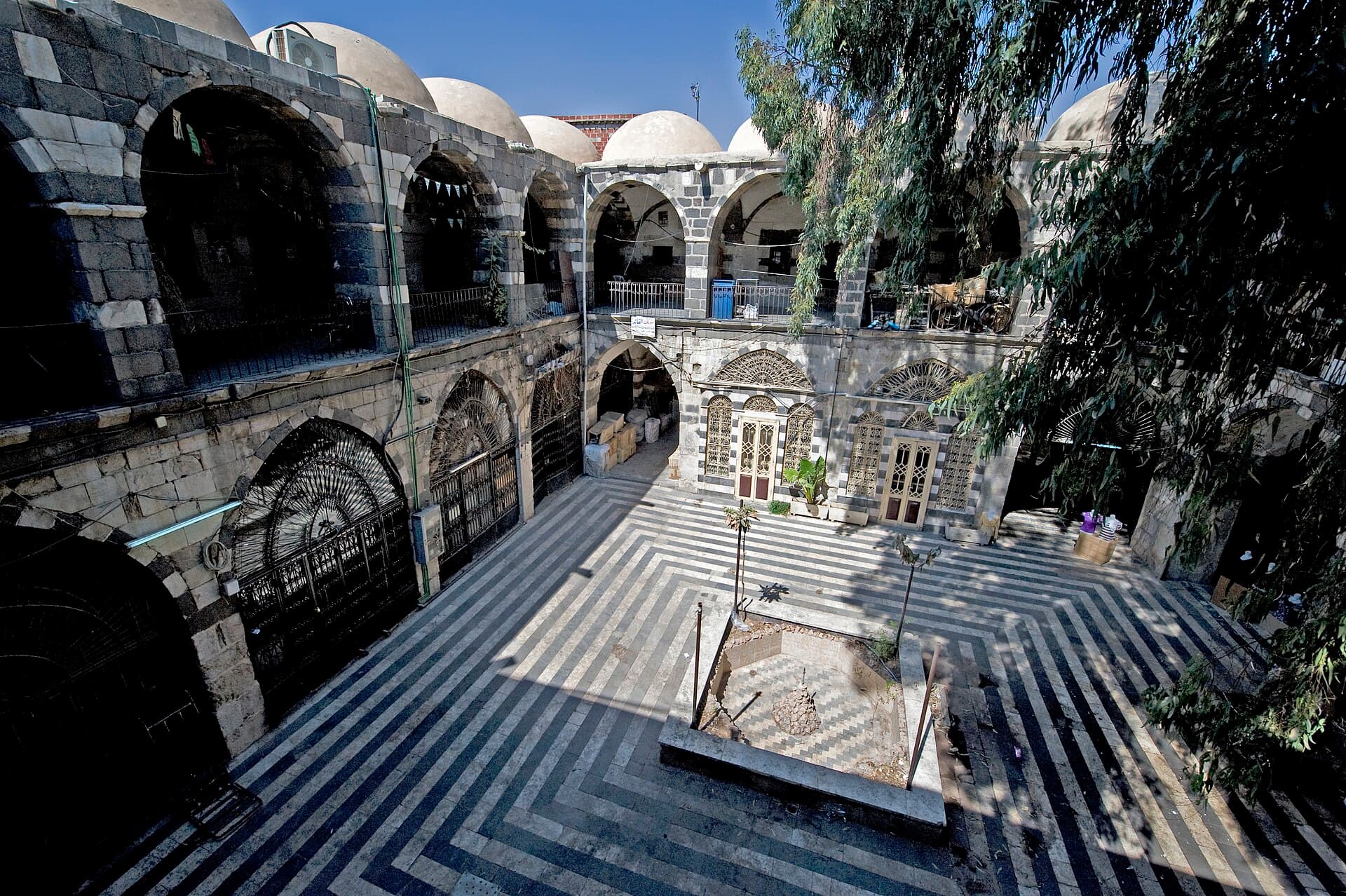
The next two stops are a few steps apart: the Mosque of Hisham ibn Ammar, and Khan al-Zayt on the north side of the souq. Which one you reach first depends on the end you came in from. The only part of the mosque you can see from the street is its octagonal minaret; find a gap between the awnings and look up. In the courtyard of Khan al-Zayt the black and white stone bands run right down onto the floor, and the cells are workshops today.
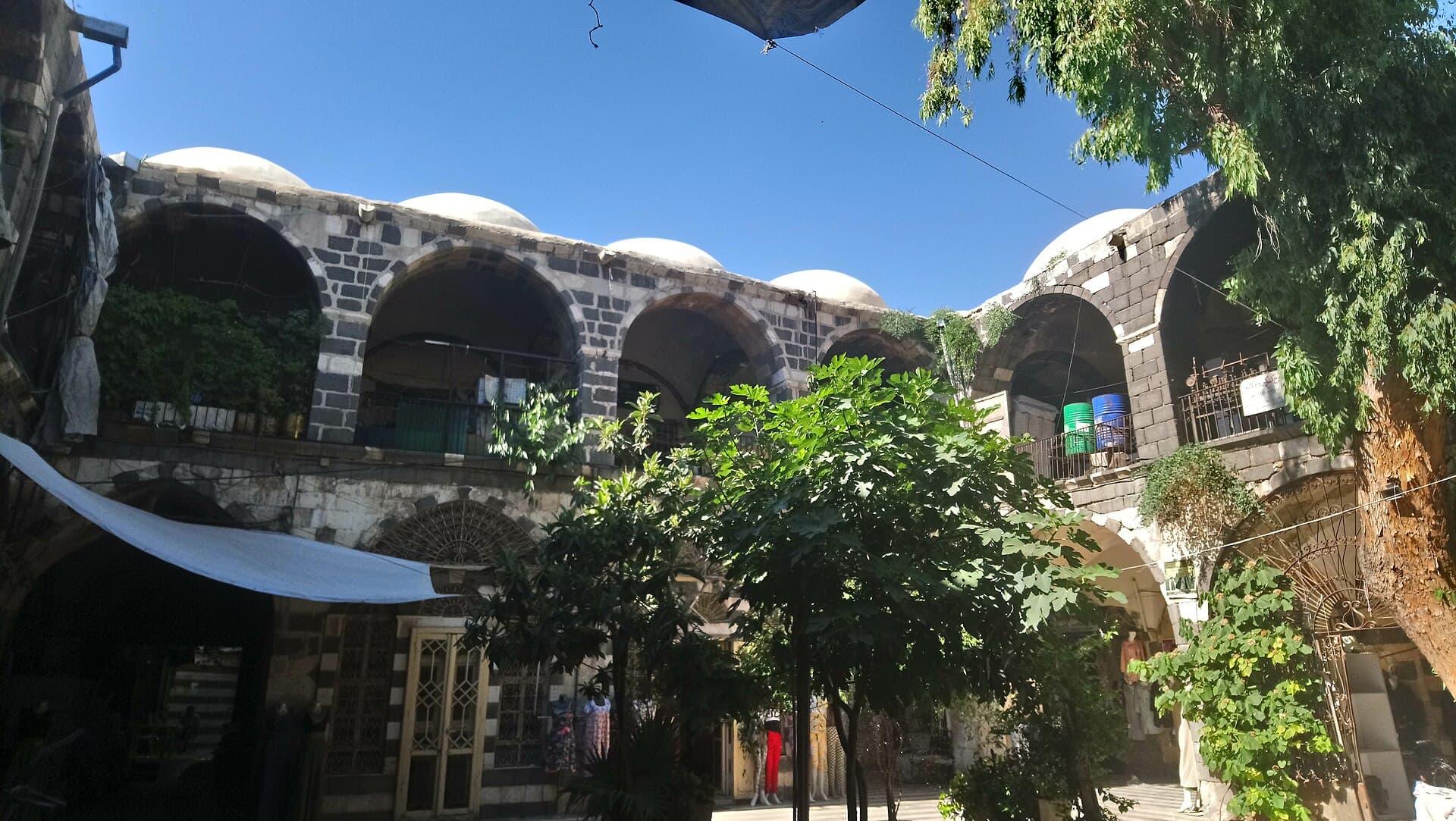
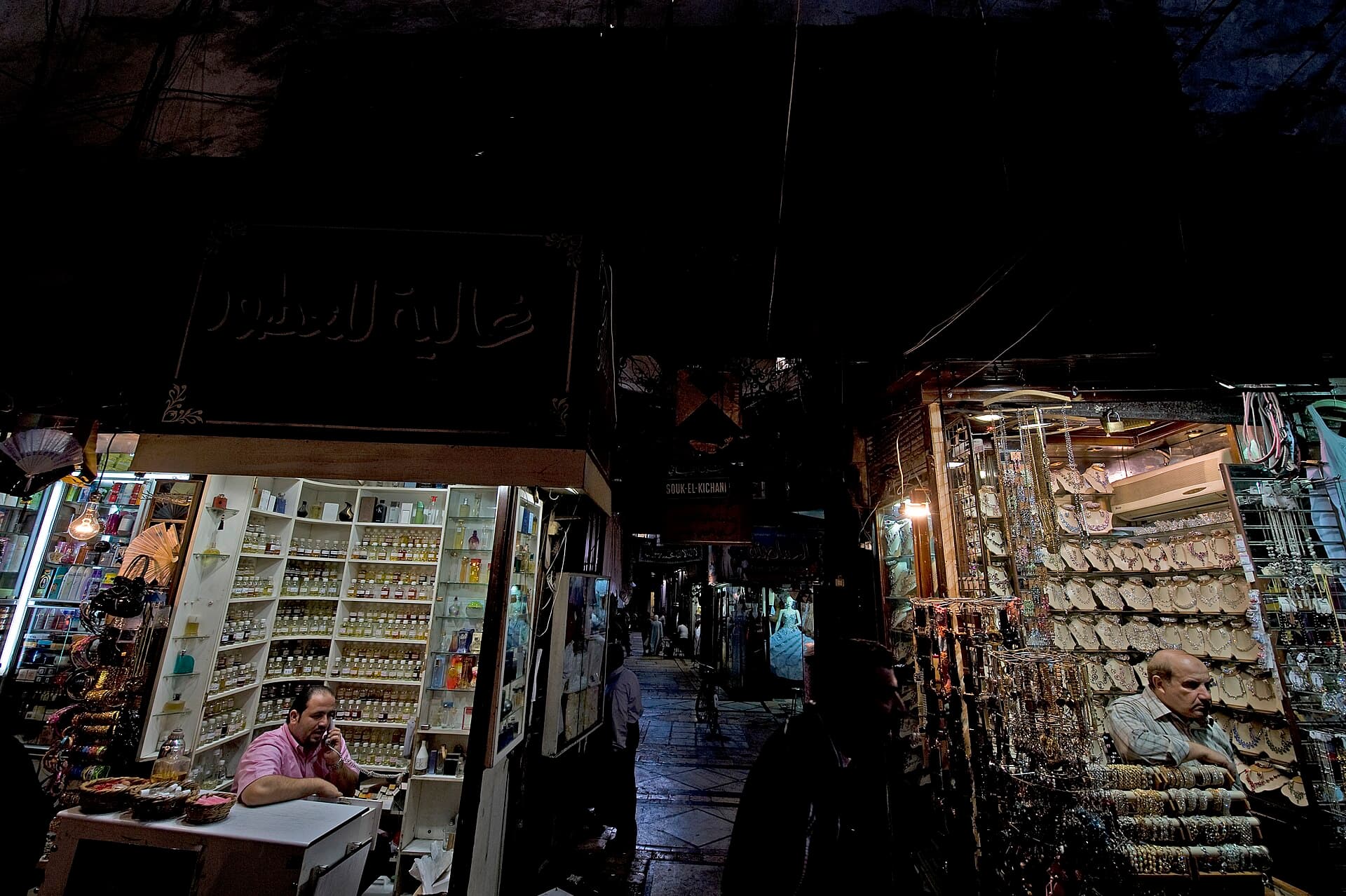
Khan Jaqmaq is a few steps further on, behind a tall doorway among the rows of shops. For a long time the souq took its name from this khan and was known as Souq Jaqmaq. From here walk east along the souq and turn left, north, into the Tailors’ Souq (Souq al-Khayyatin). Hammam al-Qishani is on its east side, and the “Souq al-Qishani” sign at the entrance gives it away. Khan al-Zafaraniyya stands directly opposite, on the west side.
Timing
Be outside Khan al-Dikka at 10:00. The shops are open by then, and the workshops in Khan al-Zayt are starting work. The mosque does not take visitors during prayer times; if you hear the call to prayer, go into Khan al-Zayt first and look at the minaret on the way back. Reach Khan Jaqmaq around 11:00, when the courtyard takes its light from above and the domed gallery shows most clearly. Keep Hammam al-Qishani for midday. Around 12:00 the light falls straight down through the glass openings in the dome, and you can read the plan of the old bath above the shops. The Tailors’ Souq fills up in the afternoon, so be at Khan al-Zafaraniyya before 13:00 to look at its columns in peace.
What to look for in the stone
Khan Jaqmaq was built in 1421 by Sayf al-Din Jaqmaq, the Mamluk emir who governed Damascus, and largely rebuilt in 1601. Its upper gallery rests on basalt arches under rows of small domes. The Mosque of Hisham ibn Ammar dates from 1427. The shaft of the minaret carries a geometric band at the bottom, an inscription band in the middle and a row of muqarnas at the top. Local tradition links the mosque to Hisham ibn Ammar, a scholar of hadith said to be buried inside; the sources do not agree on this. Khan al-Zayt is from the 16th century. Above its ground-floor shops sit iron grilles shaped like fans. In Hammam al-Qishani the cold and warm rooms have been split into shops, and the dome has stayed in place. In Khan al-Zafaraniyya some of the arches around the courtyard rest on reused ancient columns: some capitals were recut to carry an arch, others were left as they were.
Take care
Friday is not the day for this walk: most workshops and shops in the khans are closed, and the shops in Hammam al-Qishani work half a day. None of the stops charges for entry. The khans and souqs are workplaces and the mosque is a place of prayer, so ask before photographing in a courtyard. Someone who photographed Khan al-Dikka in 2008 noted that it was badly run down. Whether you can go inside had not been verified as of September 2026; ask the shopkeepers nearby. Khan Jaqmaq has no sign over its door, so look for the high arch rather than a name. Parts of Souq Midhat Pasha are open to traffic; keep to the side. Khan al-Zayt is often confused with the souq of the same name in Jerusalem, so mention Khan Jaqmaq when you ask the way.
The route on a map
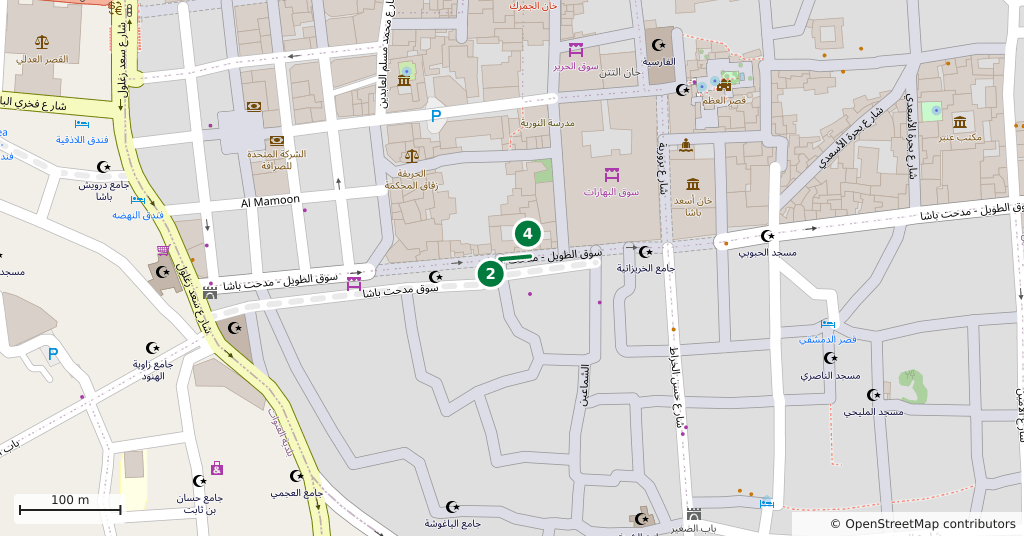
Stops along the route
- 01
- 02
- 03
- 04
- 05
- 06
Transparency
- How this was chosen
- The stops and their order were set by hand. The line on the map is real road geometry, not a straight hop between pins; distance and duration belong to that itinerary.
- Facts checked
- September 2026
- Last updated
- September 15, 2026