Pharmacies and medicine in Syria
The pharmacy is the first stop in Syria and no prescription is needed to ask. Most medicine is made locally. How to carry your own and find a night duty counter.
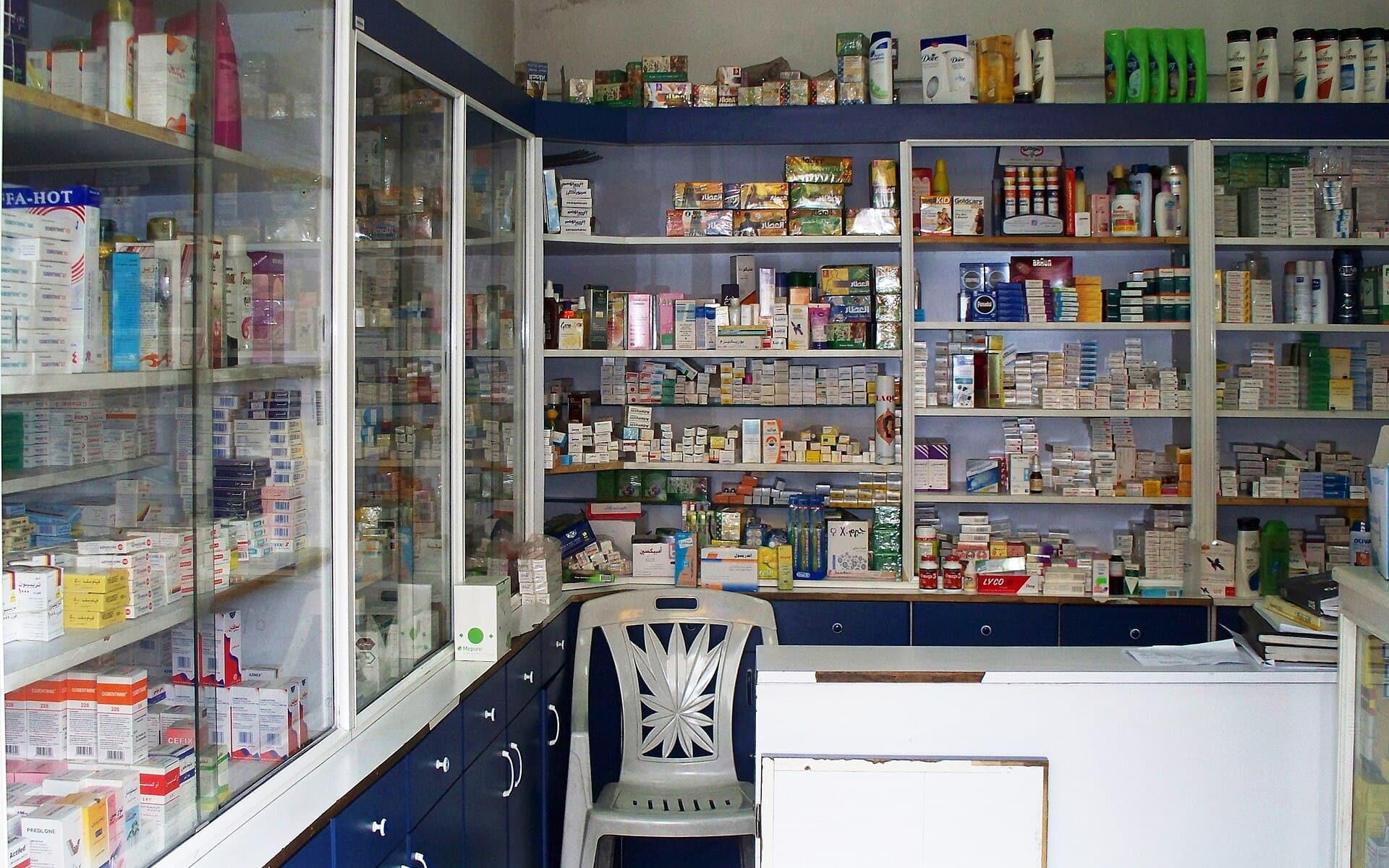
The pharmacy is the part of Syrian healthcare that stayed standing. For anything small it is the first stop: you explain the problem, and the pharmacist either hands you a box or sends you to a doctor. This page is about what happens at that counter.
No doctor needed to walk in
Pharmacists here hold a university degree and in the cities some of them speak English. A headache, an upset stomach, a sore throat, a cut, sunburn: all of it is dealt with over the counter, with no appointment. Prescription rules are looser than in Europe. Even so, if the pharmacist tells you to see a doctor, take it seriously — they know where that line falls.
Finding one is easy. In the cities the green cross sits on almost every street. In the countryside they thin out fast: a small town may have a single pharmacy, closed over the long lunch break. The health and emergencies page covers the wider ground, from jabs to hospitals; this one stays at the counter.
A Syrian pharmacy sells more than medicine: baby formula, bottles, skin creams, sunscreen, lens solution, oral rehydration salts, and often a quick blood pressure check. The small things you run out of on the road are found here rather than in a supermarket.
The box on the shelf was probably made here
Syria makes most of its own medicine. The deputy health minister for pharmaceutical affairs puts local production at around 80 percent of what the country needs. Syria also sells medicine to 23 countries. Some plants were destroyed during the war; others never stopped running.
What that means for you is concrete: even when your brand is missing, a local version of the same active ingredient is usually on the shelf. The name on the box may mean nothing to you. Read the small print instead of the brand — the active ingredient is the same word in every country.
Where the gaps are
The problem is not access but continuity. Raw material costs and thin margins leave some items running out from time to time; a box you find this month may be gone the next. The worst gap is in cancer treatment. In April 2026 the ministry held roughly 20 percent of the real need for part of its oncology list, and for some types nothing at all.
Money sits behind that. Humanitarian funding for the health sector covered about 19 percent of need in 2025 and fell to between 11 and 14 percent in early 2026. A visitor feels none of this buying a day of painkillers, and all of it hunting for a drug that treats something long.
If the box is not there, two moves work: ask the pharmacist for another brand of the same ingredient, then try a different district. Damascus and Aleppo carry more depth. In a small city the same search eats an afternoon.
Bringing your own
The rule is plain. Carry enough of your regular medicine for the whole trip, then add a few days on top. Split it, and keep half in your hand luggage in case a bag goes missing.
Bring it in its original box with the label on. Ask your doctor for a letter in English that names the active ingredient rather than the brand: brands change from country to country, ingredients do not. Prescription painkillers and psychiatric medicines can fall under separate rules. Ask your consulate before you travel and ask for the answer in writing.
The cold chain runs on electricity
For insulin and anything like it, plan around the power supply rather than the fridge. Cuts are daily and the hours move. A hotel fridge often runs on generator hours, which means it may not cool through the night.
Bring an insulated bag and freezable gel packs. When you check in, ask what hours the generator runs; that question matters more than the view from the room. How the grid actually behaves is set out on the power and infrastructure page.
Looking for a pharmacy at midnight
Night duty is a real system. Provincial branches of the pharmacists syndicate publish a monthly rota and keep evening duty separate from night duty; the night shift typically runs from 21:00 until morning. The Damascus branch posts its rota at damaspharmacy.sy. Two sites gather the whole country: syrpharma.com and munaweb.com.
In practice the reception desk is faster. The night clerk finds out which pharmacy is on duty with one phone call and writes the address in Arabic for the taxi. Finding the taxi is the harder half.
Do not prescribe yourself antibiotics
The ease of the counter has a flip side: a box you can buy without a prescription can also be bought when nothing calls for it. Antibiotics are the common mistake. Most sore throats and most upset stomachs are viral, antibiotics do nothing for them, and a course abandoned halfway breeds resistance.
The measure is simple. Go to a doctor if there is fever, blood, a complaint running past three days, or anything getting worse quickly. The same caution applies to sedatives and sleeping pills. If a pharmacist declines to sell you something, there is a reason for it.
What to ask at the counter
Four questions finish the job: what is the active ingredient, what is the dose, how many days, and what should not be taken alongside it. Pharmacists are used to answering all four and will not rush you.
Payment is cash, in pounds; cards are not taken. Ask the price first. Check that the box is sealed and the expiry date readable. What belongs in your bag from the start is listed on the what to pack page: your own medicines, rehydration salts, painkillers, plasters, antiseptic.
Tips
- For anything minor, start at the pharmacy — no appointment, no prescription
- Ask by active ingredient, not brand; a local equivalent is usually in stock
- Bring your own medicine with room to spare, boxed, labelled, with a letter
- Anything needing cold storage needs an insulated bag; fridges run on generators
- Ask reception for the night duty pharmacy; rotas are on damaspharmacy.sy
Transparency
- How this was chosen
- This page carries the fastest-ageing information on the site: visa rules, exchange rates, border crossings and SIM prices change several times a year. The verification date above says when the facts were last put through their sources; for anything later, check your own foreign ministry travel advice and a Syrian consulate. No figure that is not known for certain is written here.
- Facts checked
- September 2026
- Last updated
- September 15, 2026