The Ain Dara Temple
An Iron Age temple on a mound above the Afrin valley: giant footprints carved into the entrance paving, basalt lions, and the facade destroyed in 2018.
- Opening hours
- Open site, daylight hours; check access in advance
- Entry
- Variable — confirm at the entrance
- Duration
- 60 minutes
- Best time
- Spring, when the plain is green and the basalt has not heated up
- Period
- Late Bronze — Iron Age (Hittite — Aramaean)
- Address
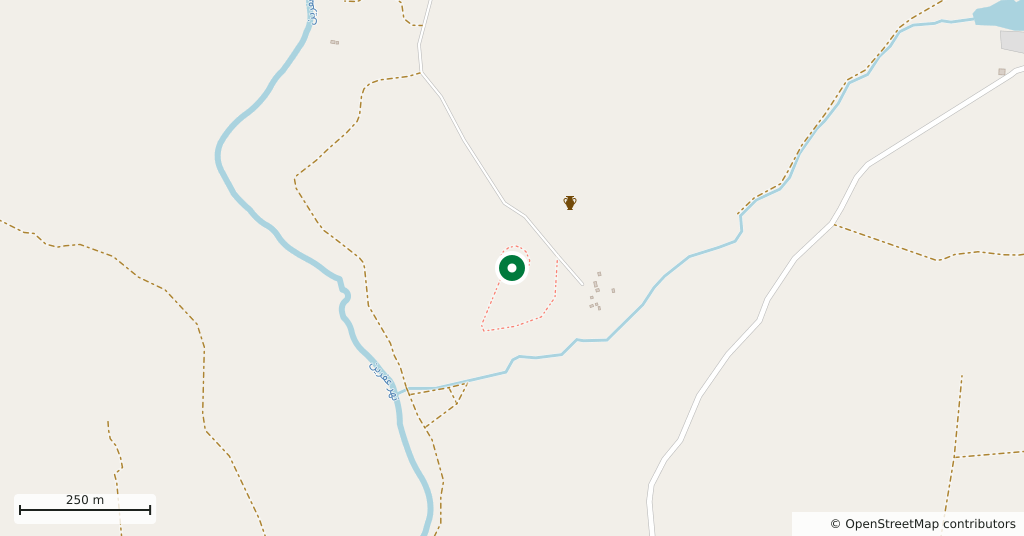
- Near Ain Dara village, Afrin, 50 km north-west of Aleppo
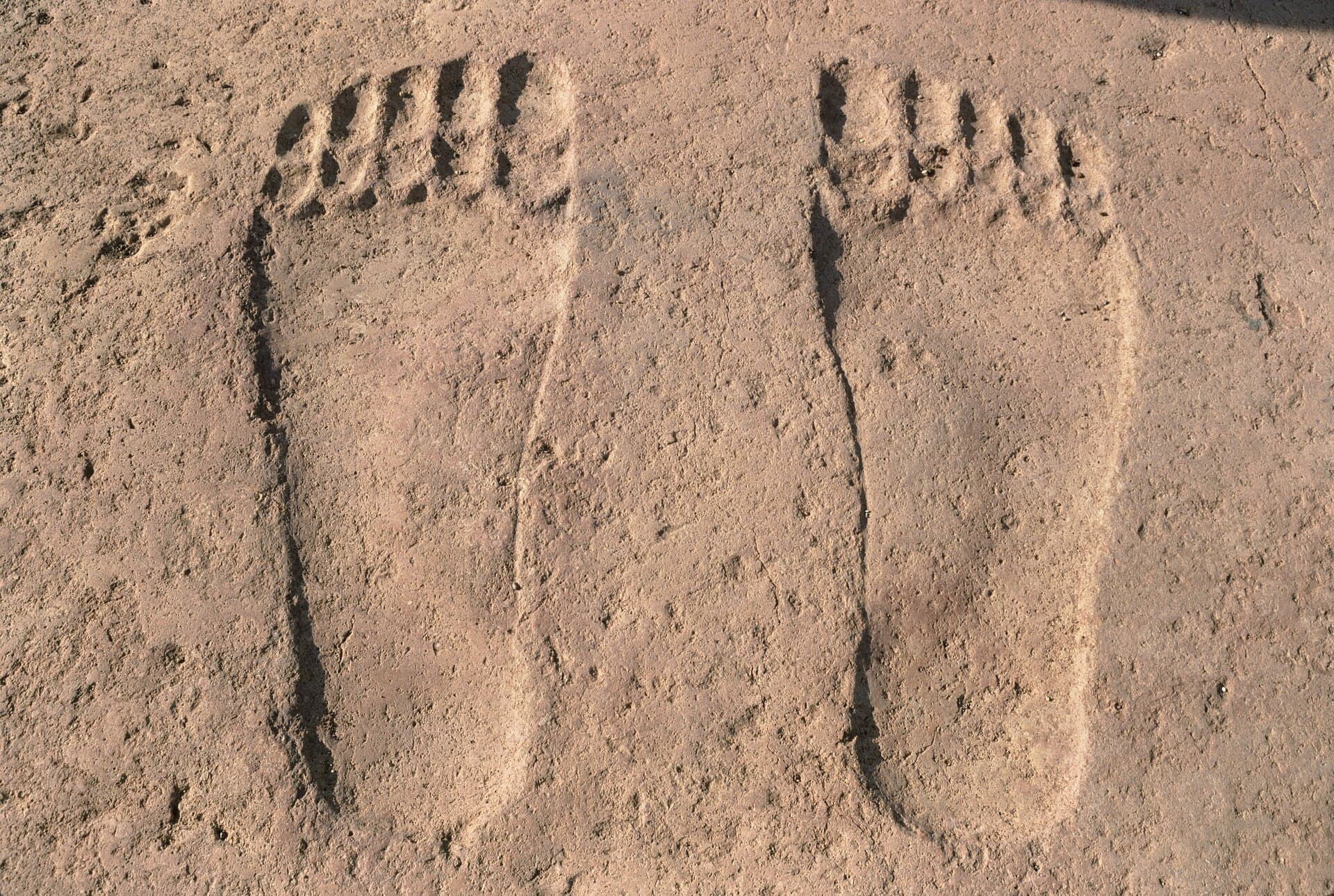
Ain Dara is an Iron Age temple standing on a mound above the Afrin valley. It was in use from about 1300 to 740 BC. It entered the archaeological literature for two reasons: a plan that matches the description of Solomon’s Temple in the Hebrew scriptures to a striking degree, and the giant human footprints carved into the paving at its entrance. It was heavily damaged in 2018.
Getting there
50 km north-west of Aleppo, in the Afrin district. The road is mountainous and winding, so the short distance still takes about an hour and a half by car. The mound rises out of the plain and the temple stands on the upper city.
What to see
The temple measures 30 by 20 metres and faces south-east. It is built of basalt blocks on limestone foundations; the superstructure is thought to have been mudbrick with wooden panelling, and none of that survives. The sequence is simple: a portico, a middle room, and at the back a main hall of 16 by 16 metres. Lion reliefs and false windows are carved into the wall panels, and sphinxes and lions once flanked the portico.
What not to miss
The footprints in the portico paving. Close to a metre long, with each toe cut separately, they trace a figure walking into the temple, and there is nothing else like them in Syria. The photograph circulates everywhere, but the scale only registers on site.
What remains
In January 2018, during the Afrin operation, the temple was hit in an airstrike; the whole front facade came down and much of the structure was reduced to rubble. The basalt lion that had become its emblem was removed from the site in December 2019. Satellite imagery shows that by 2022 the upper and lower mounds had been bulldozed, apart from the stone temple complex itself. So you go here not to see a temple but to see what is left of one. Ask about access before you travel; conditions change through the year.
Tips
- The footprints are in the portico paving; look down before you walk in
- The site is stony and uneven, so wear shoes with a firm sole
- The distance looks short but the road is mountainous; allow an hour and a half
- Access conditions vary; confirm the situation before setting out
Transparency
- How this was chosen
- Written by hand; opening hours, entry fee and coordinates are kept as data. A field that is not known for certain is marked as variable rather than guessed.
- Facts checked
- August 2026
- Last updated
- September 15, 2026