Tell Amarna near Jarabulus: Mound and Byzantine Basilica
Tell Amarna, 8 km south of Jarabulus on the Euphrates, has layers from the Halaf culture to Byzantium and a basilica whose mosaics went on show in Europe in 2005.
- Opening hours
- Excavation site; visiting arrangements unknown
- Entry
- Variable — confirm on site
- Duration
- 45 minutes
- Best time
- Spring or autumn; there is no shade on the mound
- Period
- Halaf — Byzantine
- Address
- Beside Amarna village, south of Jarabulus, west bank of the Euphrates, Aleppo Governorate
Tell Amarna is a mound 20 metres high on the west bank of the Euphrates, 8 kilometres south of Jarabulus, next to the village of Amarna. Its layers run from the Halaf culture of the 6th millennium BC — a farming society known for its painted pottery — to a Byzantine basilica of the 5th century AD. It has nothing to do with Tell el-Amarna in Egypt; only the names are alike.
Where it is
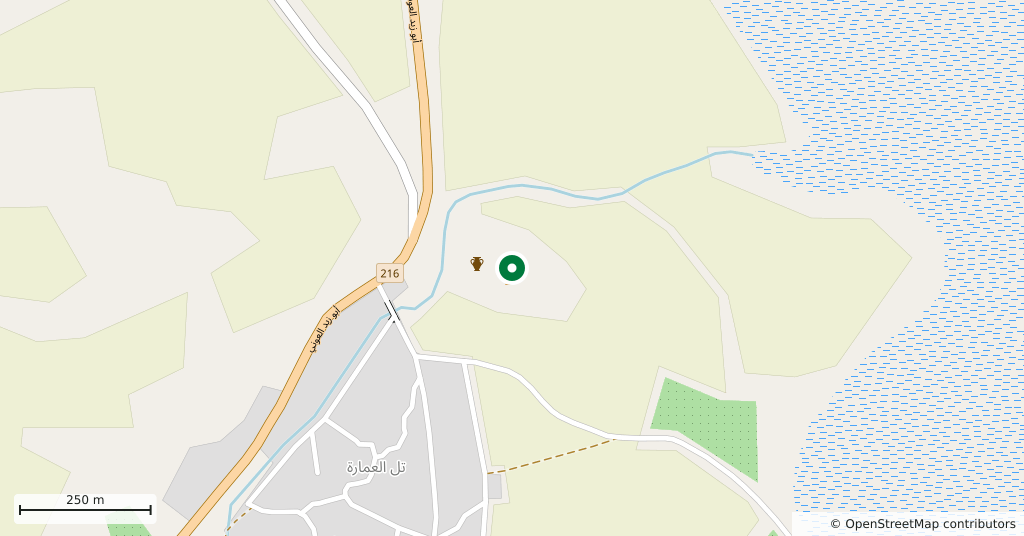
The mound is right beside the village of Amarna. The map pin marks the centre of the mound’s area record; because the site is large, a difference of a few dozen metres on the ground is normal. It makes a natural first stop heading south from Jarabulus.
The excavations
The mound was investigated as part of the rescue excavations carried out before the Tishrin Dam was built. Between 1991-1998 a team from the University of Liège led by Önhan Tunca dug for eight seasons. About half a kilometre from the main mound, on the edge of a valley that joins the Euphrates, a separate site came to light. Painted pottery from the late Halaf period (IIB, about 4900-4500 BC) was found there.
The Byzantine basilica and its mosaics
The excavations uncovered a 5th-century basilica. A team from the Polish Centre of Mediterranean Archaeology at the University of Warsaw, led by Tomasz Waliszewski and Krzysztof Chmielewski, joined the restoration work in 2000-2001. More than 40 mosaic fragments were moved to a storeroom in Damascus and conserved in 2004-2005. In 2005, 13 of them were shown in Belgium and at the State Archaeological Museum in Warsaw.
Publications
The results were published in a series of volumes. Tell Amarna V (2011) covers the basilica and its mosaics, and a volume issued in 2014 covers the Halaf period. They are the most reliable way to understand what lies where on the mound before you go.
The situation today
The mosaic fragments were taken to Damascus after the excavation; what can be seen on the mound is the excavation area itself. The site’s present condition and visiting arrangements need to be confirmed.
Don’t miss
The second site beside the main mound. Most accounts stop at the basilica, but the late Halaf site half a kilometre away shows that people lived here thousands of years before Byzantium.
Tips
- Do not look for the mosaics on the mound; the fragments were moved to Damascus after the dig
- To avoid confusion with Tell el-Amarna in Egypt, ask the way for “Tell al-Amara”
- Jarabulus is 8 km to the north; put both in the same day
- Check current road conditions in the area before you go
Transparency
- How this was chosen
- Written by hand; opening hours, entry fee and coordinates are kept as data. A field that is not known for certain is marked as variable rather than guessed.
- Facts checked
- September 2026
- Last updated
- September 15, 2026