The Al-Adiliyah Madrasa
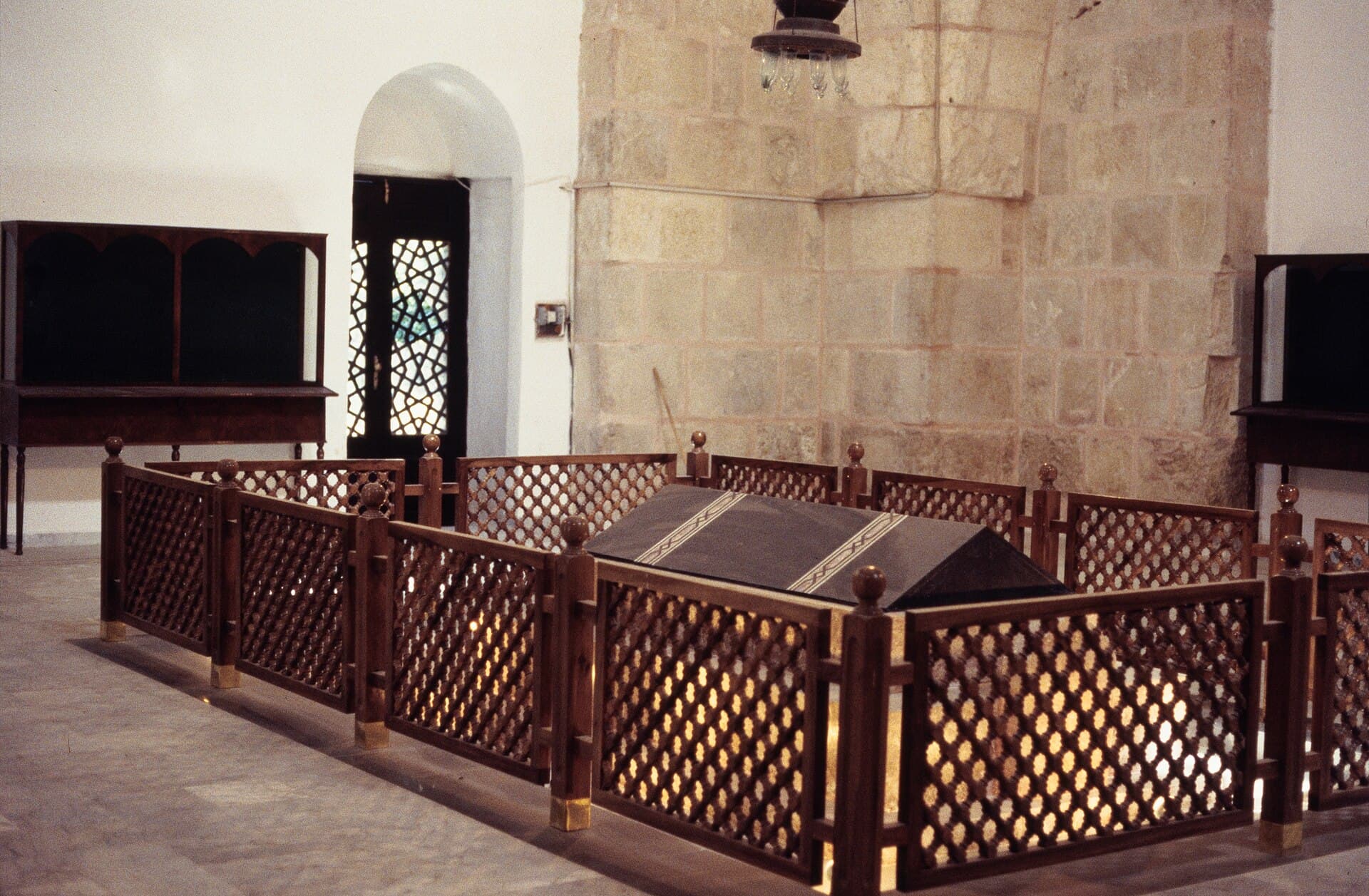
The Ayyubid madrasa facing the Zahiriyah in Damascus. Its pendant-stone portal, the chequerboard courtyard, and the tomb of al-Adil beneath the high dome.
- Opening hours
- Variable — an institutional building, ask about access
- Entry
- Variable — confirm at the door
- Duration
- 30 minutes
- Best time
- Late morning, when light reaches the courtyard
- Period
- Ayyubid
- Address
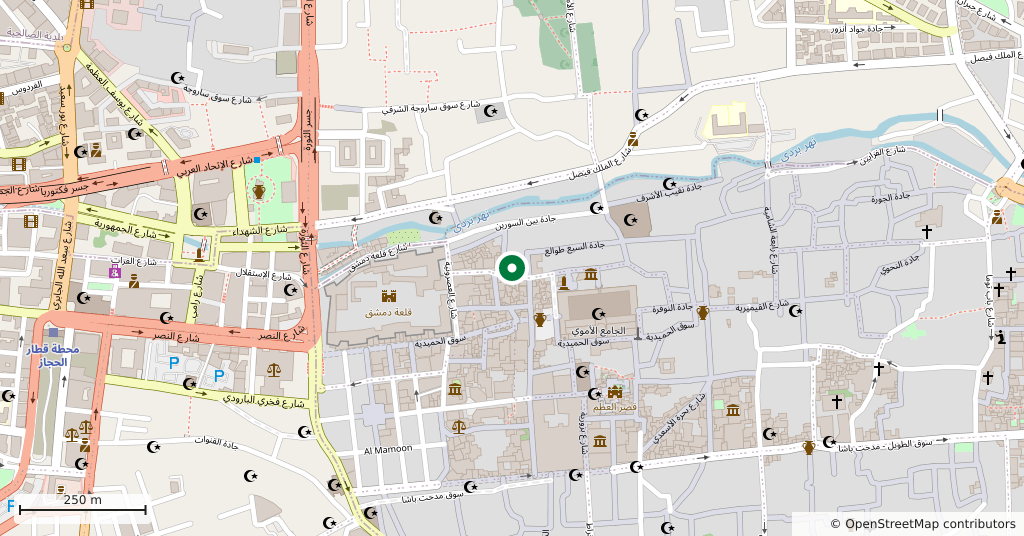
- Between Bab al-Faraj and Bab al-Faradis, opposite the Zahiriyah, Old City, Damascus
Between Bab al-Faraj and Bab al-Faradis two madrasas face each other across a narrow street. The Zahiriyah on the east side, the Adiliyah on the west. The Ayyubid sultan al-Adil Abu Bakr ibn Ayyub began it in 1215 and his son al-Muazzam Isa finished it in 1222; the sultan is buried inside.
Getting there
North-west of the Umayyad Mosque, a few minutes from the northern exit of the Al-Hamidiyah Souq. Once you are in the street, tell the two facades apart by the portal: the door of the Adiliyah sits deep inside a tall recessed hood.
What to see
The facade is dressed limestone finished with a cornice at the top. A pendant stone more than two metres long hangs at the centre of the portal, with lobed triple arches to either side, and the door frame is built up in courses of coloured stone. Inside, the door opens into a wide vaulted corridor, and a second door leads to the iwan that looks onto the courtyard. The square courtyard is paved in a chequerboard pattern around a square pool; the great iwan stands to the north, rooms to the west. The door on the south side opens into the tomb chamber: a high dome resting on wall arches, muqarnas in the corners, groups of windows between them, and the cenotaph of al-Adil in the middle.
How long it takes
Half an hour. The building is in institutional use today, the door is not always open to visitors, and whether you get into the courtyard depends on what it is being used for that day. Planned together with the Zahiriyah opposite, it counts as one stop.
Don’t miss
Syria’s first museum collection was assembled in this courtyard in 1919, and part of what you now see in the National Museum started out here. The building was later given to the Arab Academy of Damascus. Since it stopped teaching, the madrasa has always lived inside some other institution.
Tips
- The Zahiriyah is directly opposite, on the other side of the same street
- Look for the pendant stone at the centre of the portal, it identifies the facade
- The tomb door is on the south side of the courtyard; if it is shut the dome is still visible from outside
Transparency
- How this was chosen
- Written by hand; opening hours, entry fee and coordinates are kept as data. A field that is not known for certain is marked as variable rather than guessed.
- Facts checked
- September 2026
- Last updated
- September 15, 2026