The Al-Ajami Mosque
Just outside Bab al-Jabiya in Damascus, built in 1348 as the tomb and Quran school of a Persian merchant. Its marble portal is among the finest in the city.
- Opening hours
- Daylight hours, outside prayer times
- Entry
- Free
- Duration
- 20 minutes
- Best time
- Late morning, while the doorway recess takes the light
- Period
- Mamluk
- Address
- Saad Zaghloul Street, outside Bab al-Jabiya, Damascus
A small mosque just outside Bab al-Jabiya, on the corner that faces the Shaghour quarter. It was not built as a mosque. In 1348 it went up as the tomb and Quran school of a Persian merchant, Afridun al-Ajami, and the sources also call it the Afriduniya turba — a turba being a domed funerary chamber. The name follows from the man: al-Ajami means the Persian. The plan is cruciform, which is rare for a mosque in Damascus.
Getting there
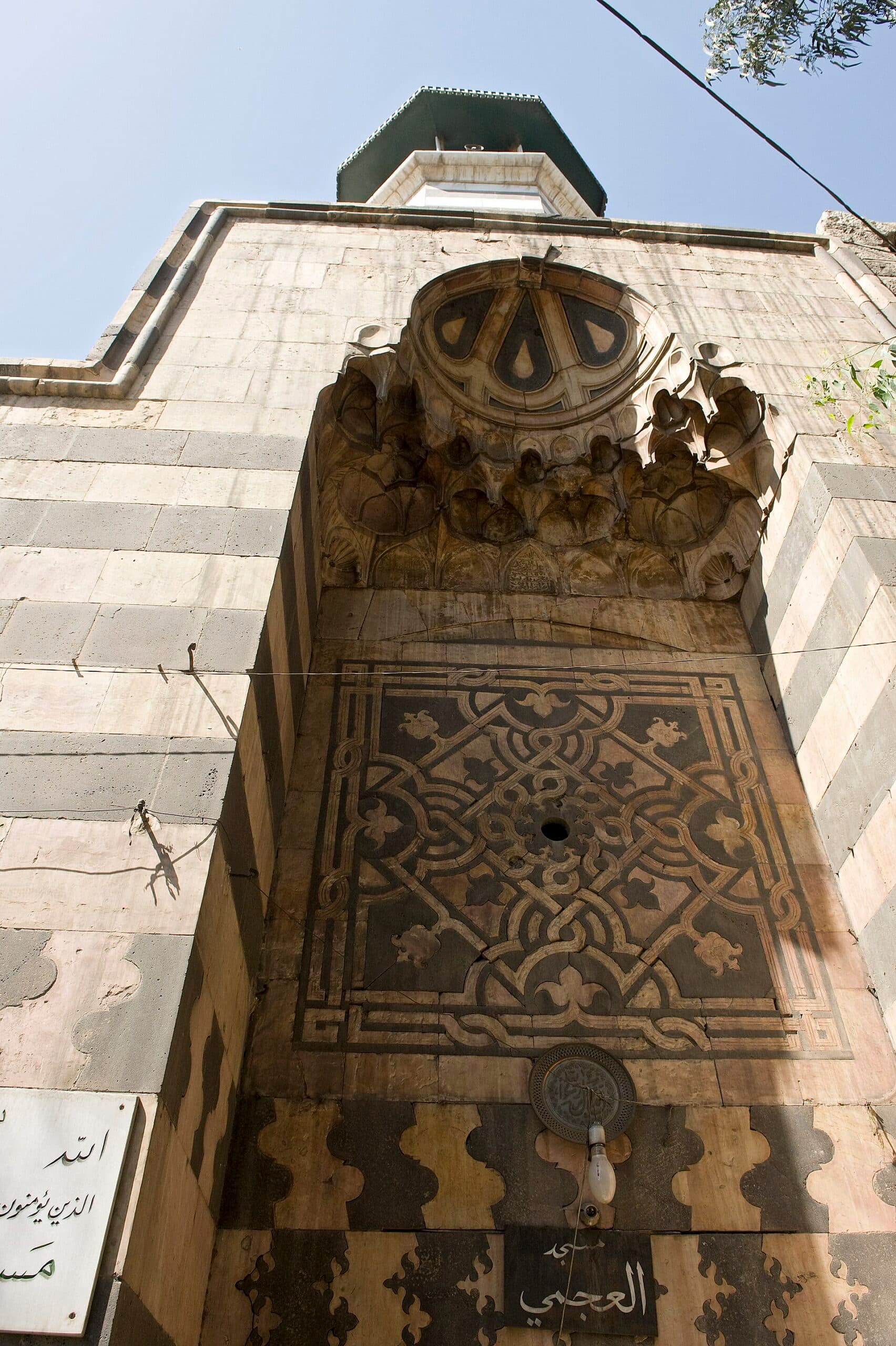
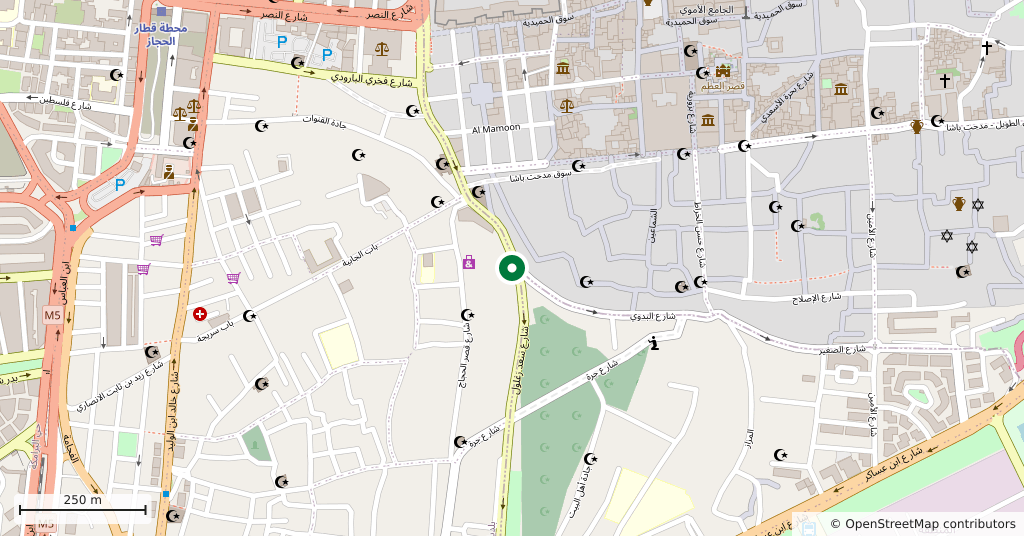
Leave Bab al-Jabiya to the south-west and turn into Saad Zaghloul Street. The building does not stand tall over the street; the marker is the green-painted top of its minaret. A plaque at the lower right of the doorway carries the name.
What to see
The doorway. The stone recess is hooded by a course of muqarnas, with a half-round relief at its crown, and the whole back of the recess is marble inlay. Dark and pale marble strips build interlocking stars and hooks, and a small opening sits at the centre of the panel. Near the bottom edge there is a round medallion, and below that a drinking fountain.
What most people miss
Break the habit of walking past the panel to look inside. The marble work does not stop at the back of the recess; it carries on into the upper corners, and the pattern there differs from the one below. And keep in mind what the building is — first a grave, then a school, a mosque only last.
How long it takes
Twenty minutes. Ten at the doorway, ten inside. Bab al-Jabiya and Souq Midhat Pasha are both a short walk away, so carrying on from here is the natural move.
Tips
- Look at the marble panel from the side rather than head-on; the depth of the inlaid strips only shows from there
- The pattern in the upper corners of the recess differs from the panel below — look at it separately
- Because it began as a tomb, the plan reads more like a madrasa than a mosque; walk the court with that in mind
Transparency
- How this was chosen
- Written by hand; opening hours, entry fee and coordinates are kept as data. A field that is not known for certain is marked as variable rather than guessed.
- Facts checked
- September 2026
- Last updated
- September 15, 2026