The Amara Quarter
The quarter north of the Umayyad Mosque, where Saladin’s tomb, the Zahiriyya library and the Sayyida Ruqayya shrine sit within one short walk of each other.
- Opening hours
- Lanes at any hour; buildings follow prayer times
- Entry
- Lanes and mosques free; check on the door for the Zahiriyya
- Duration
- 90 minutes
- Best time
- Morning; the courtyards fill at midday prayer
- Period
- Mamluk — Ottoman
- Address
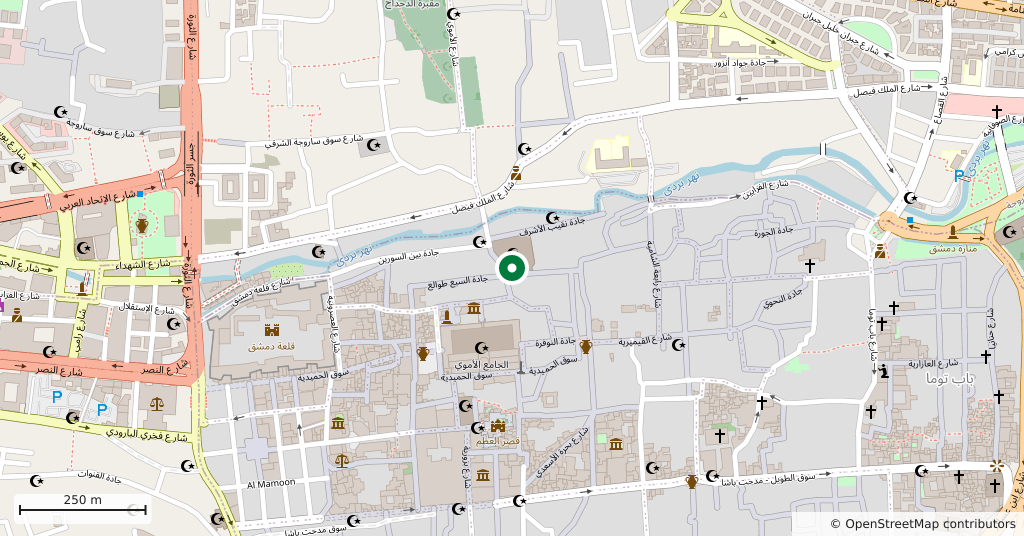
- North of the Umayyad Mosque, towards Bab al-Faradis, Old City, Damascus
Amara is the quarter between the northern wall of the Umayyad Mosque and Bab al-Faradis. Three of the most visited buildings in Damascus stand within a few hundred metres of each other here, yet the lanes between them are not a tourist route: a greengrocer, a carpenter, a weaver, a block of flats. The name comes from the Arabic root for building and settlement.
How the quarter began
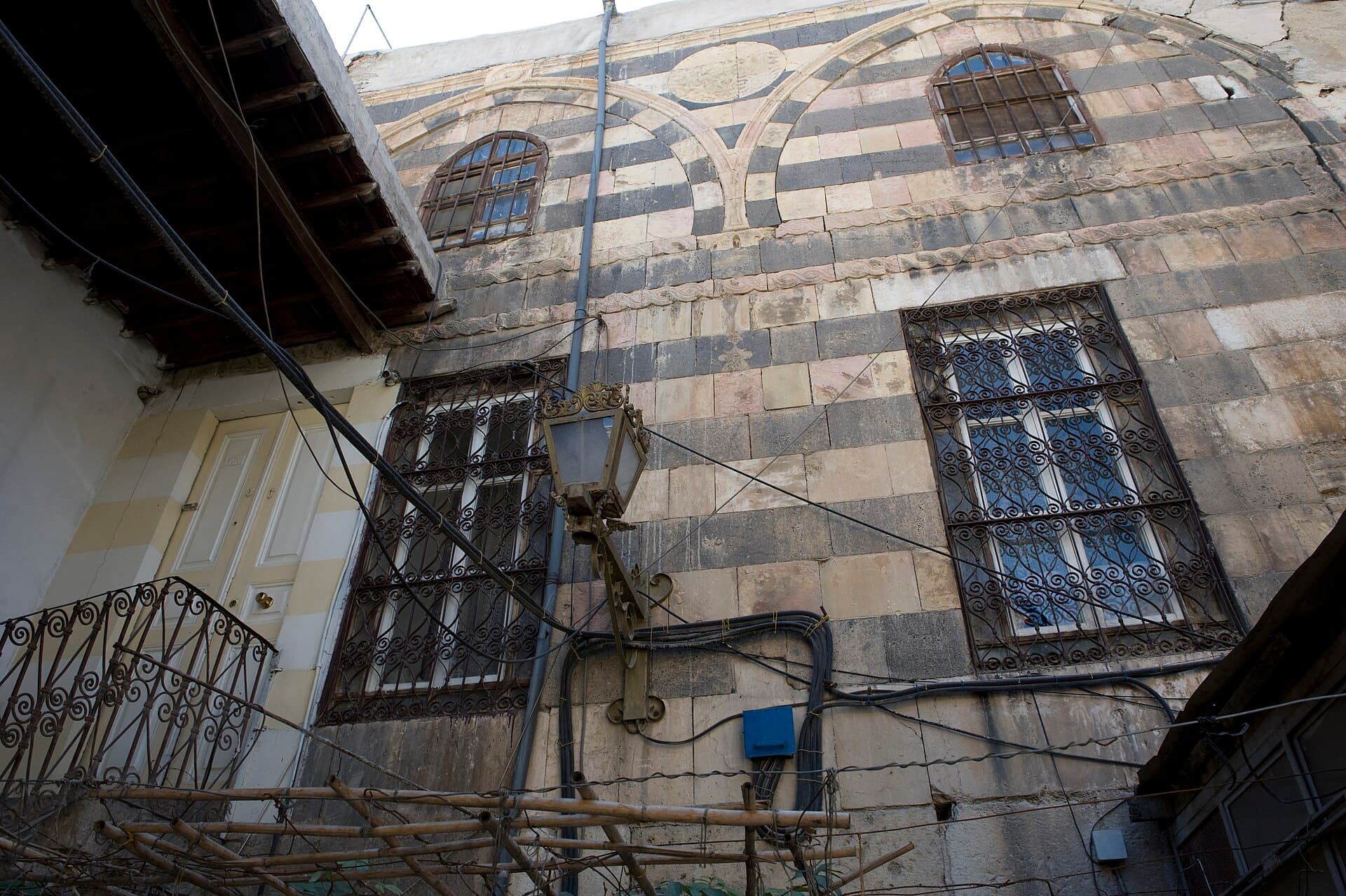
Amara has two halves: al-Amara al-Juwaniyya inside the walls and al-Amara al-Barraniyya spilling out beyond Bab al-Faradis. The inner half is as old as the walled city; the outer one filled up in the Ottoman period. Along both run Damascene houses that are closed to the street and open to a courtyard inside: stone facade, iron-grilled windows, a basin and a pomegranate tree in the yard. When French artillery shelled Damascus in 1945, this was one of the quarters that burned. In 2008 a plan was announced to demolish shops in part of the quarter to widen the road outside the walls; after public objection the plan was dropped.
Getting there
Step out of the northern gate of the Umayyad Mosque and you are already in the quarter. Saladin’s mausoleum stands at the mosque’s northwest corner, the Zahiriyya one lane further, and the Sayyida Ruqayya mosque three minutes north. Coming from the Hamidiyya souk, walk around the mosque and turn north.
What to see
Sultan Baybars built the Zahiriyya madrasa in 1277; its library served as the national library of Syria until the Assad Library took over in 1983, and Baybars is still buried there. The Sayyida Ruqayya mosque took its present form in 1985, in Iranian mirror and tile work, with a courtyard and a separate entrance for women. The lanes in between hold neighbourhood bakeries, joinery workshops and closed courtyard doors. Beside Bab al-Faradis the quarter crosses the old wall into al-Amara al-Barraniyya.
How long it takes
An hour and a half, including going inside both buildings. Sayyida Ruqayya is a place of pilgrimage and women need a headscarf; one is handed out at the entrance.
What most people miss
Do not turn straight back south when you leave the mosque. The doorway of the Zahiriyya faces the doorway of Saladin’s mausoleum, both at street level, and most visitors walk between them on the way back to the ticket gate without noticing either.
Tips
- The Zahiriyya and Saladin's tomb face each other; see them in one stop
- Headscarves are handed out to women at the Sayyida Ruqayya entrance
- Turn one lane off the main street; that is where the quarter is
- Walk north through Bab al-Faradis into al-Amara al-Barraniyya
Transparency
- How this was chosen
- Written by hand; opening hours, entry fee and coordinates are kept as data. A field that is not known for certain is marked as variable rather than guessed.
- Facts checked
- September 2026
- Last updated
- September 15, 2026