The Al-Buzuriyah Souq
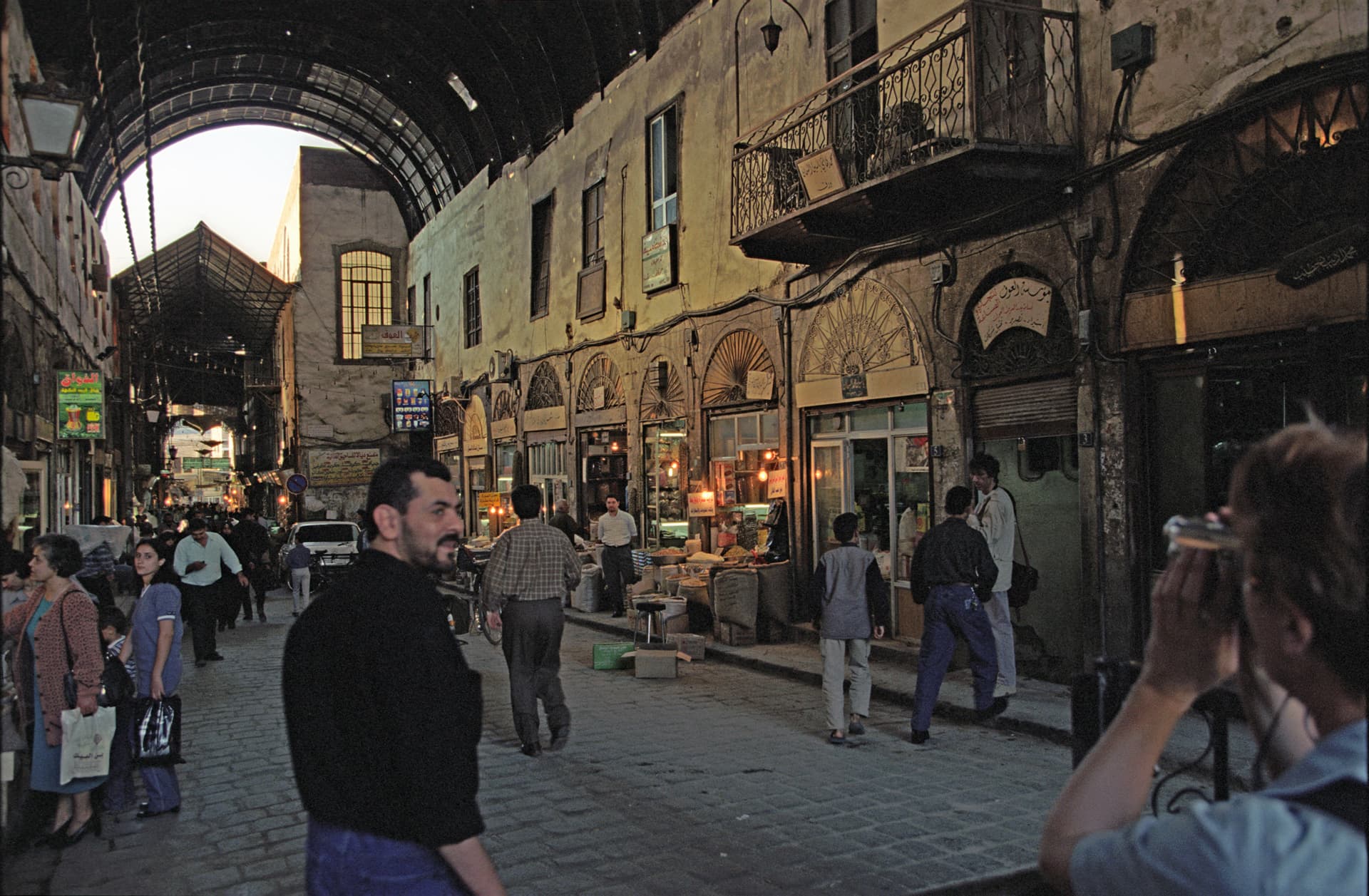
The spice and herb souq of Damascus, south of the Umayyad Mosque under an arched metal roof: apothecaries, dried fruit, laurel soap and sugared almonds.
- Opening hours
- Souq hours; shut around Friday midday prayers
- Entry
- Free
- Duration
- 60 minutes
- Best time
- Midday, when light comes down through the roof
- Period
- Ottoman
- Address
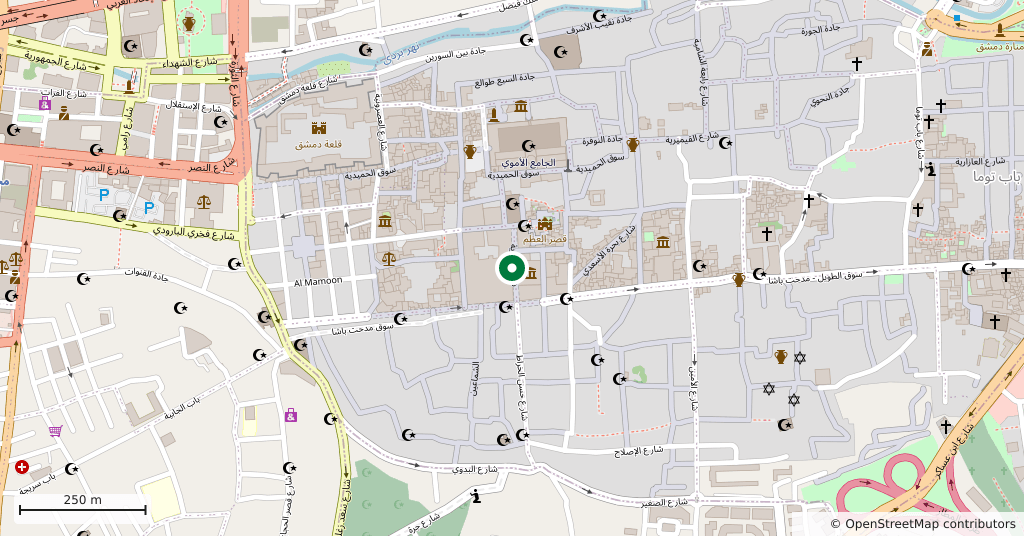
- South of the Umayyad Mosque, between the Azm Palace and the Midhat Pasha Souq
This is the street Damascus smells of. It runs from just south of the Umayyad Mosque down to the Midhat Pasha Souq, covered end to end by an arched metal roof. Most of the shops are apothecaries, selling spices, dried herbs, seeds, nuts, candles, olive oil soap and laurel soap. The city’s best known sweet is sold here too: malabbas, the sugared almonds handed round at weddings and at mawlid gatherings. The shops have passed down within old Damascene families, and behind some counters you are dealing with a third generation in the same trade.
Getting there
Its northern end lines up with the Azm Palace and the old goldsmiths’ souq, its southern end meets the Midhat Pasha Souq opposite the mouth of Midhanat al-Shahm lane. From there it bends east and takes in a stretch of the Straight Street. From the eastern end of the Al-Hamidiyah Souq it is five minutes, going round the south side of the Umayyad Mosque.
How long it takes
An hour. The souq itself is short. What stretches the time is stepping into shops and waiting while things are weighed out.
What to see
Open sacks stand in front of the shops on both sides: thyme, linden, hibiscus, rose buds, cinnamon bark, sumac, Aleppo pepper. Many of the apothecaries mix herbal remedies to order, and in Syria that is a real habit rather than a show put on for visitors. The confectioners sell malabbas, boiled sweets and chocolate. Two major buildings sit inside the souq: the Khan As’ad Pasha, the grandest khan in the city, and the Hammam Nur al-Din, a bathhouse still in use.
The name has changed over time. It was first the wheat souq, then the Duhaynatiyya, where oils such as almond oil were pressed, then the Attarin, where essences drawn from the Damascus rose were sold. The present name comes from bizr, meaning seed.
What most people miss
The holes in the metal roof. The souq is covered, but the sheeting is old and punctured in places, and around midday the shafts of light coming through it become visible in the spice dust hanging in the air. The same effect is more famous in the Al-Hamidiyah Souq and less crowded here. Try it between noon and two.
Tips
- Buy spices by weight rather than in ready packets; the same goods cost less loose
- With laurel soap the share of laurel oil sets the price, so ask for the percentage
- The Khan As'ad Pasha and the Hammam Nur al-Din are both inside this souq, so do not set aside a separate day
Transparency
- How this was chosen
- Written by hand; opening hours, entry fee and coordinates are kept as data. A field that is not known for certain is marked as variable rather than guessed.
- Facts checked
- September 2026
- Last updated
- September 15, 2026