The Al-Daqqaq Mosque
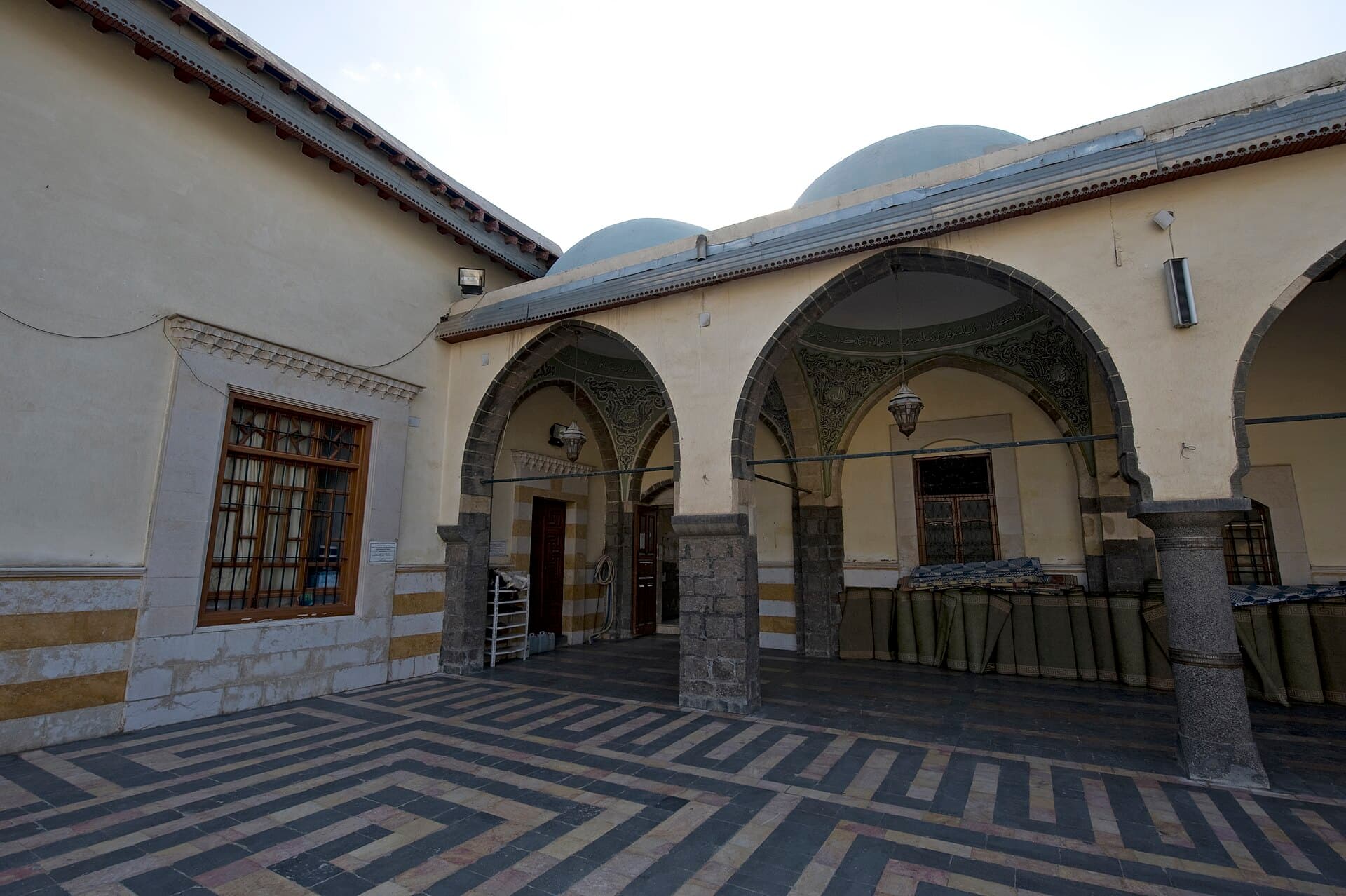
A Mamluk mosque of 1318 on the east side of Midan Street, Damascus. Founded by the judge Karim al-Din; its zigzag paving and domed portico still stand.
- Opening hours
- Daylight hours, outside prayer times
- Entry
- Free
- Duration
- 25 minutes
- Best time
- Morning, courtyard empty and the paving unshaded
- Period
- Mamluk
- Address
- East side of Midan Street, Qubaybat, Damascus
A Mamluk mosque in the Midan quarter of Damascus, on the east side of the main street that once carried pilgrims south to Mecca. The judge Karim al-Din Abd al-Karim ibn Hibat Allah ibn al-Sadid al-Misri founded it in 1318, and the building took a year. It answers to three names — al-Daqqaq, al-Karimi after its founder, and al-Qubaybat after the stretch of Midan it stands in.
Getting there
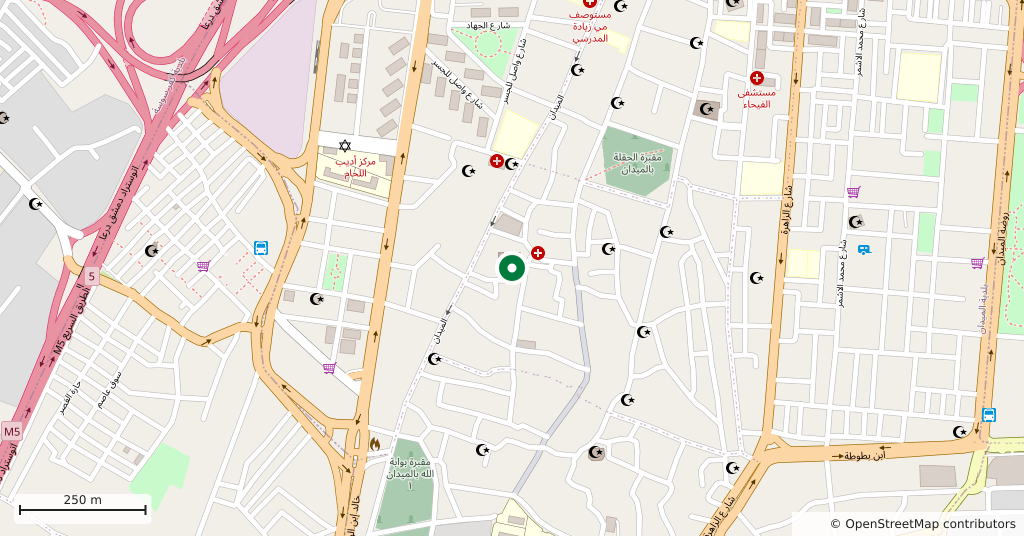
On the main Midan street, opposite Hammam al-Darb. Shops fill the whole west front, so it is easy to walk past without seeing it. One door opens at the north end of that front. The main entrance sits inside an alley running off the main street at a right angle. There is also an east door, wooden, under a projecting wooden hood.
How long it takes
Half an hour is enough. The courtyard is small and quiet outside prayer times.
What to see
The courtyard floor is laid in zigzag bands of black, yellow and white stone, and two low domes sit over the north portico. The spandrels above the portico arches are painted: scrolling foliage on a green ground with bands of Quranic script. On the south side the mihrab block projects and divides the facade down the middle; that wall carries four windows in the lower row and fourteen above.
Don’t miss
The minaret rises behind the middle of the north portico and can be seen properly from nowhere but the courtyard. The founder bought a watercourse and brought it here, and built a large basin beside the mosque for people and animals to drink from. The water no longer runs, but that channel explains why the mosque stands on this exact spot in Midan.
Its condition today
The Awqaf directorate renewed the mosque in 1931, and the courtyard, the porticoes and the north face of the historic prayer hall were repaired around 2006 and 2007. It is in use.
Tips
- Enter from the side alley, not the main street — shops close off the west front
- Look at the zigzag paving, then up at the painted spandrels of the portico
- The minaret is visible only from the courtyard, behind the north portico
Transparency
- How this was chosen
- Written by hand; opening hours, entry fee and coordinates are kept as data. A field that is not known for certain is marked as variable rather than guessed.
- Facts checked
- September 2026
- Last updated
- September 15, 2026