The Al-Jawza Mosque
A mosque with a wide courtyard in the Uqaybah quarter of Damascus, outside the walls. It is named after a walnut tree, and its minaret is worth the detour.
- Opening hours
- Daylight hours, outside prayer times
- Entry
- Free
- Duration
- 25 minutes
- Best time
- Afternoon, once the courtyard falls into shade
- Period
- Ayyubid core, Mamluk extensions
- Address
- Uqaybah, Amara al-Barraniya, south of the Sakakini bath house, Damascus
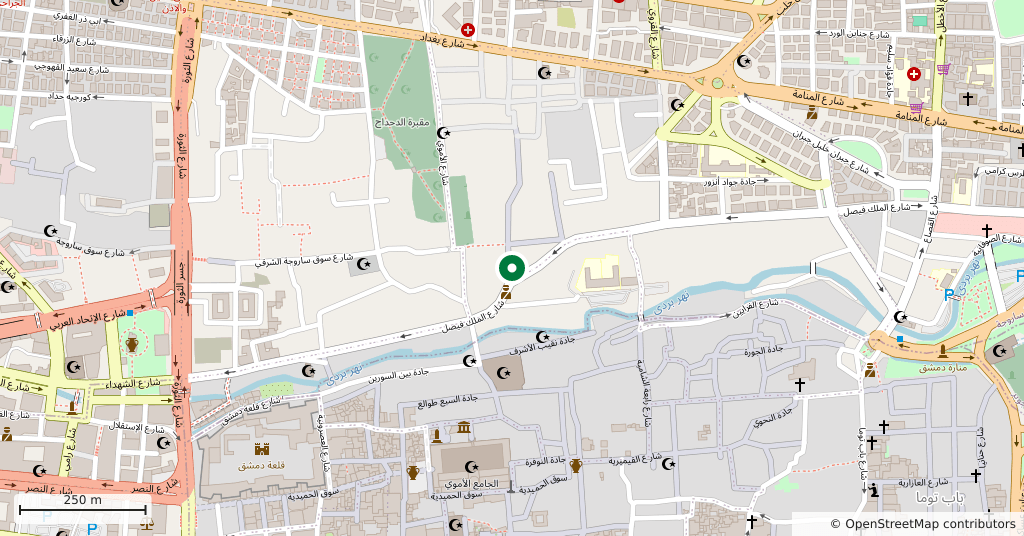
A mosque outside the walls, in the Uqaybah quarter of Amara al-Barraniya, south of the Sakakini bath house. Its name comes from a walnut tree that once stood beside it — Ibn Asakir records it that way. The courtyard counts as a wide one among the mosques outside the walls: 577 square metres in its present form.
Who built it, and when
The core is traced back to the Ayyubid period. In 804 of the Hijri calendar, that is 1401, the Mamluk amir Shahin al-Farisi, chamberlain of Damascus, renewed the building. The prayer hall was small at that date; in 830, or 1426, the army inspector and judge Badr al-Din Hasan extended it northwards, and the mosque became one where Friday prayers are held. One account credits the extension to his wife instead. The last major restoration was in 1987.
What to see
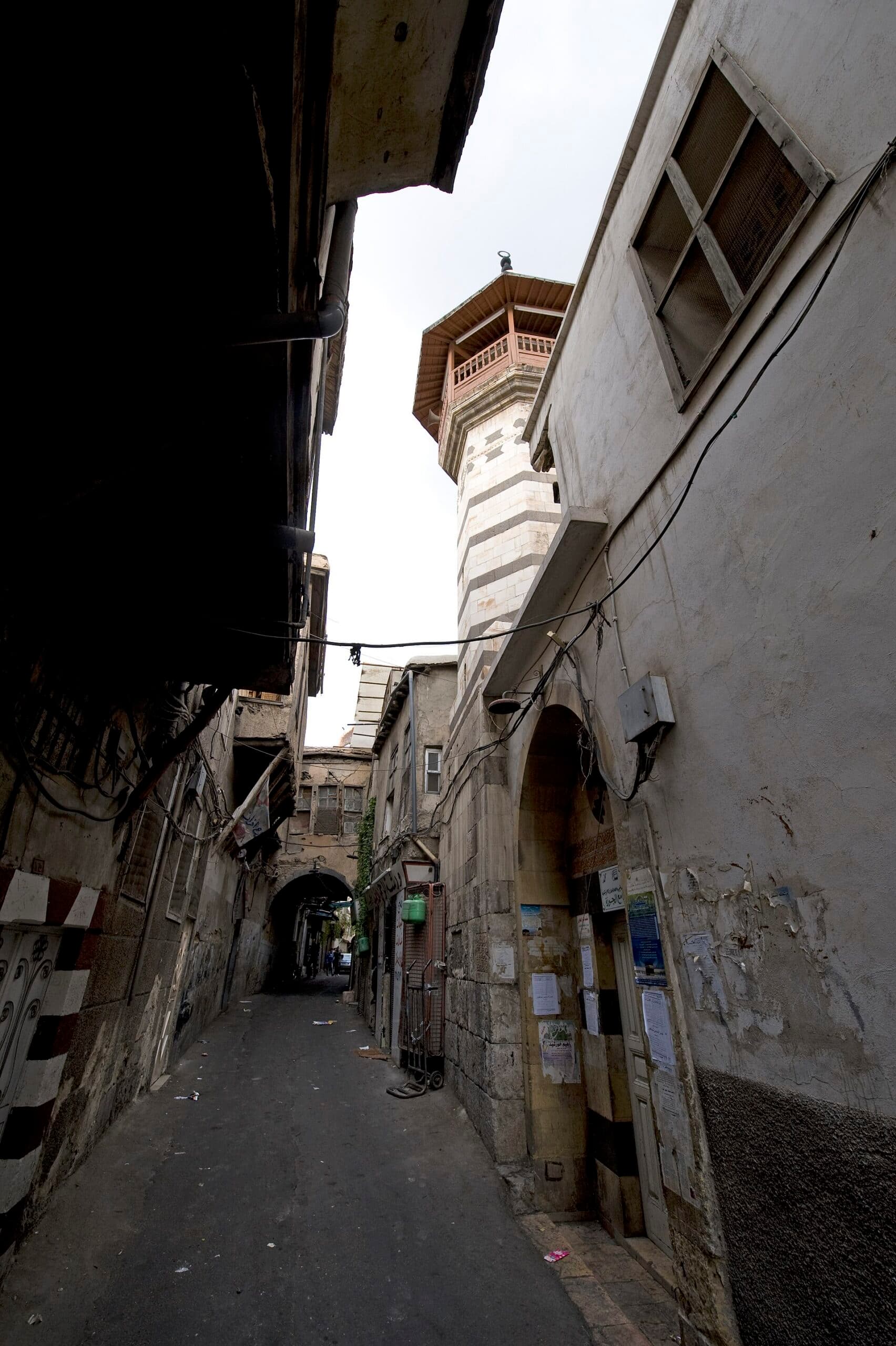
The minaret stands north of the entrance and rises close to 15 metres. The shaft is octagonal, laid in alternating courses of black and white stone, with rectangular openings on the four main sides for light and air and a copper crescent at the top. A wooden eave, carried on a projecting stone bracket, covers the gallery.
The courtyard is paved in pink and black stone. The basin at its centre is marble and eight-sided; its faces are clad in a geometric setting of yellow, white, black and red marble, and a marble cup in the middle stands higher than the basin walls. The men who look after the mosque say the basin once had twelve sides and was cut down to eight at the last restoration.
What most people miss
The inscriptions on the west face of the minaret base. About a metre and a half above the ground there are two carvings, one of them damaged past reading. The second runs to three lines in thuluth script and records that the minaret was renewed in 1676 by al-Hajj Muhammad ibn Bakri al-Saqqa. The minaret you are looking at, in other words, is younger than both the mosque and the courtyard.
How long it takes
Twenty-five minutes. The courtyard invites sitting, and the Aqsab Mosque and the market lanes of Uqaybah are both a short walk away.
Tips
- Move round to the west face of the minaret base and look for the three-line thuluth inscription, about a metre and a half up
- Count the sides of the courtyard basin: eight now, twelve before the last restoration
- The courtyard paving is pink and black, the same logic as the stonework of the minaret; read the two together
Transparency
- How this was chosen
- Written by hand; opening hours, entry fee and coordinates are kept as data. A field that is not known for certain is marked as variable rather than guessed.
- Facts checked
- September 2026
- Last updated
- September 15, 2026